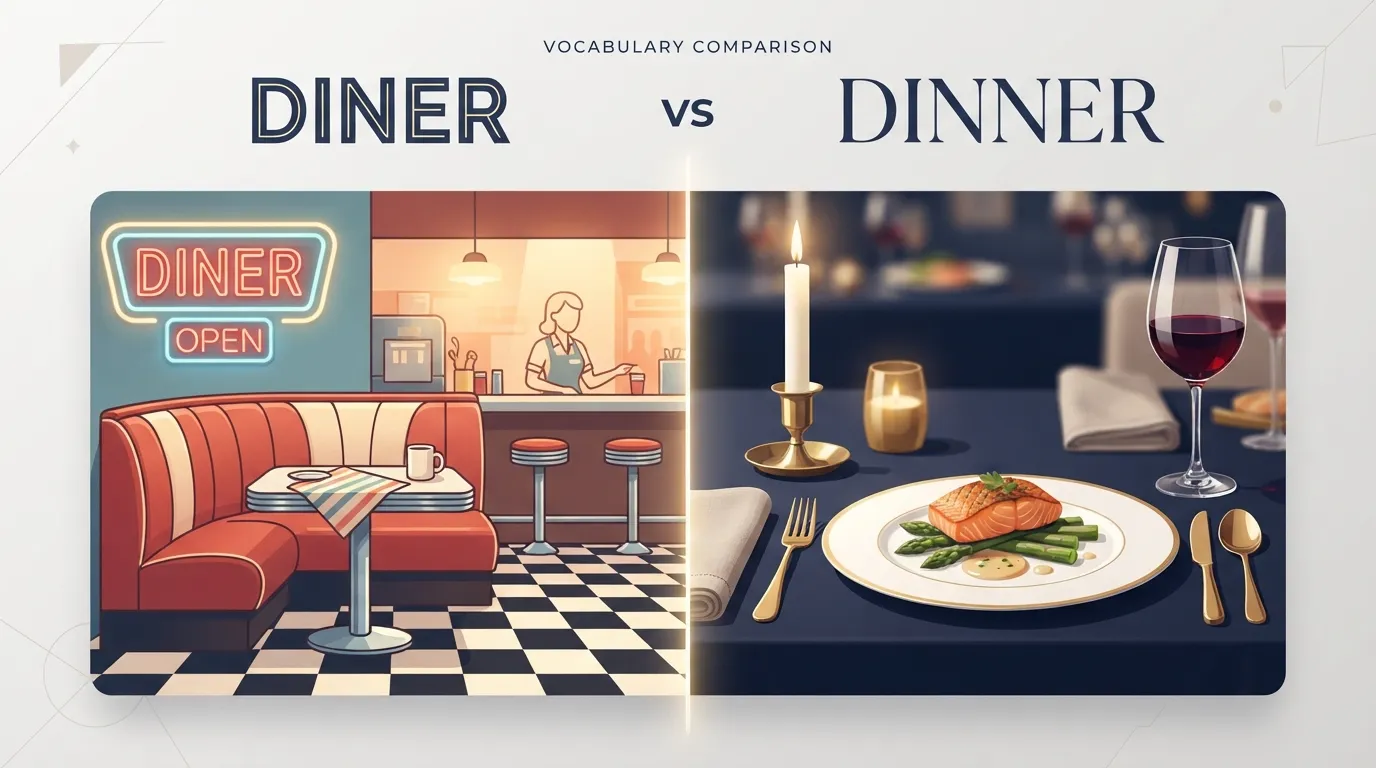
A diner is either a person eating a meal or a small, casual restaurant, while dinner is the actual meal itself, usually eaten in the evening. One letter apart, completely different meanings.
I once texted a friend “see you at the diner tonight” when I actually meant “see you at dinner tonight,” and she showed up confused at an actual roadside diner while I waited at home with a table set for two.
One missing or extra n, and suddenly the entire plan falls apart. This mix up happens constantly, especially when typing quickly on a phone or writing under pressure.
This guide breaks down exactly what separates diner from dinner, where each word comes from, and how to make sure you never send a confusing text like mine again.
Diner or Dinner: Quick Answer
A diner has two meanings. It can describe a person who is eating, as in “the diner finished her meal quickly.” It can also describe a small, casual restaurant, often open late, serving simple comfort food.
Dinner refers to the meal itself, typically the main meal of the day, often eaten in the evening, though usage varies by region and household.
Think of it this way. You eat dinner. A diner is either the place you eat it, or you, the person doing the eating.
The Origin of Diner and Dinner
Dinner traces back to the Old French word disner, meaning to break one’s fast, related distantly to breakfast. Centuries ago, dinner actually referred to the first substantial meal of the day, often eaten around midday, not the evening meal we associate it with now.
Over time, especially as work schedules and social habits shifted, dinner slowly moved later into the day for many households, eventually becoming the evening meal most people recognize today.
Diner, the word for a person eating, simply adds the agent suffix er to dine, following the same pattern as words like teacher or writer. The restaurant meaning came later, emerging in American English in the early twentieth century, originally describing small, railway car style eateries that served quick, affordable meals.
Key Differences and Variations
| Term | Meaning | When to Use | Region or Context |
| Dinner | The main meal, usually eaten in the evening | Describing the meal itself | Common worldwide, timing varies by region |
| Diner (person) | Someone who is eating | Describing a person during a meal | Common worldwide, formal and casual writing |
| Diner (restaurant) | A small, casual, often American style eatery | Describing a place to eat | Strongly associated with American culture |
| Supper | An informal term for the evening meal | Describing a lighter evening meal | More common in British and rural American English |
Notice how dinner describes timing and food, while diner splits into two very different meanings depending entirely on context, person or place.
Which Version or Approach Should You Use?
For describing the actual meal you’re planning, cooking, or eating, always use dinner. It’s the correct word for the food itself, not the person or the location.
For describing someone in the act of eating, especially in restaurant reviews or descriptive writing, use diner as a noun for the person, such as “the diner requested extra napkins.”
For describing a casual, retro style restaurant, especially in American contexts, use diner to describe the location itself, such as “we grabbed pancakes at the local diner.”
For British or more formal contexts describing a lighter evening meal, supper sometimes fits better than dinner, depending on regional habits and household tradition.
Common Mistakes with Diner and Dinner
Mistake 1: Typing diner when you mean the meal itself. Correction: Use dinner for the meal, reserving diner strictly for the person eating or the restaurant. This mistake happens most often through simple typos, especially on mobile keyboards where autocorrect sometimes makes things worse instead of better.
Mistake 2: Assuming diner only refers to a restaurant. Correction: Remember that diner also describes a person eating a meal, a meaning many people forget entirely.
Mistake 3: Writing dinner when describing a casual American restaurant. Correction: Use diner for the restaurant itself, since dinner never refers to a physical location under any standard definition.
Mistake 4: Assuming dinner always means an evening meal worldwide. Correction: In some regions and older usage, dinner can refer to the midday meal, so context and local custom still matter. This confusion happens because modern American usage strongly associates dinner with evening, overshadowing its more flexible historical meaning.
Diner and Dinner in Real World Examples
Professional email: “Please confirm the dinner reservation for six guests at seven o’clock this evening.”
News headline: “Historic Roadside Diner Celebrates Fifty Years of Serving Classic American Breakfast”
Social media caption: “Best diner in town, hands down. Their pancakes ruined every other breakfast for me.”
Formal invitation: “You are cordially invited to a dinner celebrating the company’s tenth anniversary.”
Notice how dinner appears in formal, meal focused contexts, while diner shows up almost entirely in casual, location focused, American flavored writing.
Diner and Dinner, Data, Trends, and Usage
Searches for diner vs dinner spike consistently among students learning English, writers double checking spelling, and people texting quickly who suddenly second guess themselves mid message.
Searches specifically for diner restaurant near me trend heavily within American English speaking regions, tied closely to road trip culture and nostalgic, retro style dining experiences.
Both search patterns fall under informational intent for the spelling question itself, while diner restaurant searches lean strongly commercial, aimed at finding an actual place to eat right now.
This distinction matters now because so much communication happens through quick texts and social captions, where a single missing letter can genuinely derail plans, exactly like it did for me and my very confused friend.
Standalone Comparison Table
| Term or Variant | Meaning | Region or Context | Best Used When |
| Dinner | The main evening meal | Global, timing varies | Describing the meal itself |
| Diner (person) | Someone eating a meal | Global | Describing a person during dining |
| Diner (restaurant) | Small, casual eatery | Strongly American | Describing a place to eat |
| Supper | Lighter evening meal | British and rural American | Describing an informal evening meal |
Frequently Asked Questions
Q: What does diner mean? A: Diner has two meanings. It describes a person who is eating a meal, and it also describes a small, casual restaurant, especially common in American culture.
Q: How do you use dinner correctly in a sentence? A: Use dinner to describe the meal itself, such as “we’re having pasta for dinner tonight,” never to describe a person or a restaurant.
Q: Diner vs dinner, what’s the difference? A: Dinner refers to the meal you eat, while diner refers either to the person eating it or to a casual restaurant serving that meal.
Q: Is diner acceptable in formal writing? A: Yes, diner is acceptable in formal writing when referring to a person eating or describing a specific type of restaurant, though dinner remains more common in formal invitations.
Q: Which word is correct for a restaurant, diner or dinner? A: Diner is the correct word for the restaurant itself, while dinner only ever refers to the meal, never the physical location.
Q: Where does the word dinner come from? A: Dinner comes from the Old French word disner, meaning to break one’s fast, originally referring to the first main meal of the day rather than an evening meal.
Q: Can dinner mean a midday meal? A: Yes, in some regions and older usage, dinner traditionally referred to the midday meal, though modern usage in many places now strongly associates it with the evening.
Final Thoughts
Diner and dinner might differ by a single letter, but they point to completely different things, a meal versus a person or a place. Getting them mixed up can turn a simple plan into a genuinely confusing situation.
Remember these key points. Dinner is the meal you eat. Diner is either the person eating it or the casual restaurant serving it. And double checking before you hit send can save you an awkward mix up.
Now you know exactly how diner and dinner differ, so go send that dinner plan text with total confidence.
Bookmark this guide so you never second guess diner or dinner again, and share it with a friend who’s made the exact same mix up before.
Read More: Lone Wolf vs Third Wheel: The Real Difference Explained

My name is Ayesha Sadiqah, the writer behind this website. I write in-depth articles on English spelling, word comparisons, grammar, and vocabulary to help learners make better language choices. Every guide is carefully researched and designed to provide accurate, practical, and easy-to-understand information.