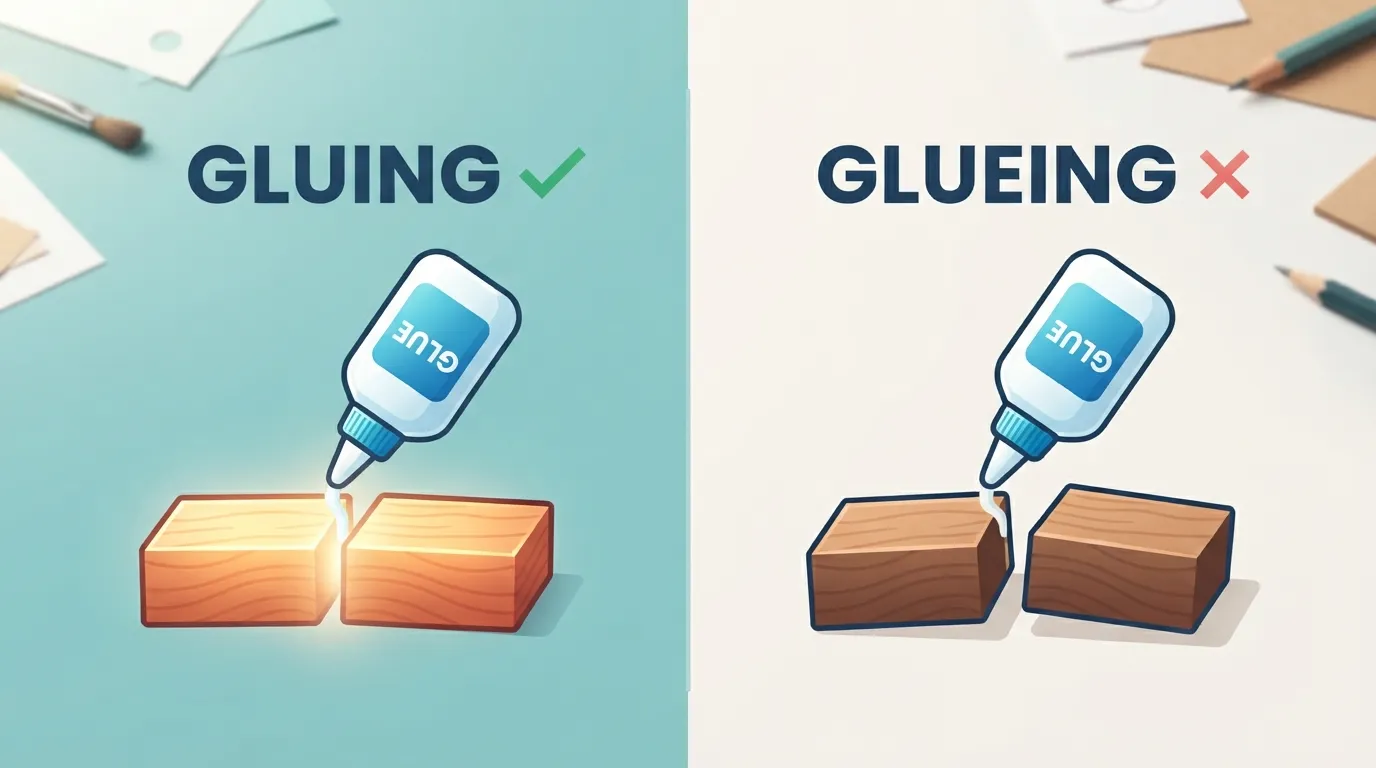
Gluing is the standard, correct spelling in modern English. Glueing is an older, less common variant that still appears occasionally, mostly in British English, but most style guides today recommend gluing.
I once spent way too long staring at a craft tutorial, convinced I had spelled gluing wrong, because the extra e in glueing looked oddly familiar from somewhere.
Turns out, I wasn’t imagining things. Both spellings have floated around English writing for decades, and that overlap is exactly why so many people freeze up mid sentence, unsure which one to type.
This guide settles the confusion for good. You’ll learn which spelling is correct today, why the other one still exists, and exactly when, if ever, you might see it used.
Glueing or Gluing: Quick Answer
Gluing is the spelling almost every modern dictionary and style guide recommends. It drops the silent e from glue before adding ing, following a common English spelling pattern.
Glueing keeps that silent e. You’ll still spot it occasionally in older British texts or informal writing, but it now reads as outdated to most native speakers.
If you’re writing anything today, a school essay, a work email, or a blog post, gluing is the safer, more widely accepted choice.
The Origin of This Spelling Confusion
English has a well known rule. When a word ends in a silent e, you usually drop that e before adding ing. Make becomes making. Bake becomes baking. Glue should logically become gluing.
But glue is a strange word. It ends in ue, not just e, and that extra vowel confused writers for generations. Some felt the silent e needed to stay to preserve the correct pronunciation and avoid any visual confusion with other words.
This uncertainty led to two competing spellings existing side by side for much of the nineteenth and twentieth centuries. Over time, especially with the rise of standardized American English and modern style guides, gluing pulled ahead as the accepted, dominant spelling worldwide.
Key Differences and Variations
| Term | Meaning | When to Use | Region or Context |
| Gluing | Correct, standard modern spelling | All writing, everywhere | Preferred worldwide, American and British English |
| Glueing | Older, less common variant spelling | Rarely used today | Occasionally seen in older British texts |
| Glued | Past tense of glue | Describing a completed action | Standard everywhere, no variation |
| Glue | Base noun and verb form | Naming the substance or the action itself | Standard everywhere, no variation |
Notice that only the ing form causes real disagreement. The past tense, glued, has never had a competing spelling, which shows just how specific and isolated this confusion really is.
Which Version or Approach Should You Use?
For students writing school assignments, always use gluing. Teachers and standardized tests almost universally expect the modern spelling.
For professional or business writing, always use gluing as well. It looks polished, current, and avoids any appearance of a typo.
For casual, personal writing, such as a diary entry or an informal message, glueing won’t confuse anyone, but gluing still remains the safer, more modern looking choice.
For anyone writing internationally or for a global audience, stick with gluing, since it works correctly across both American and British English audiences without raising eyebrows.
Common Mistakes with Gluing and Glueing
Mistake 1: Assuming glueing is the American spelling and gluing is British, or the other way around. Correction: Gluing is actually preferred in both American and British English today, so this isn’t a simple regional split like color and colour. This mistake happens because so many spelling differences really do split along American versus British lines, so people assume this one does too.
Mistake 2: Writing gluing with two e’s by mistake, like glueeing. Correction: The correct modern spelling only drops one e entirely, leaving gluing, with no double e anywhere in the word.
Mistake 3: Correcting someone who uses glueing as if it’s completely wrong. Correction: Glueing isn’t technically incorrect, just outdated and far less common, so a gentle note about modern preference works better than calling it a flat out error.
Mistake 4: Assuming spellcheck always catches this automatically. Correction: Many spellcheck tools accept both spellings without flagging either one, so relying on autocorrect alone won’t guarantee the modern spelling. This happens because dictionaries often list both forms, even while noting one is far more common.
Gluing in Real World Examples
Professional email: “Please confirm the gluing schedule for the furniture assembly line before Friday’s shipment.”
News headline: “Local Artist Wins Award for Innovative Gluing Techniques in Recycled Sculpture Project”
Social media caption: “Spent my entire Saturday gluing tiny beads onto this frame and I regret nothing.”
Craft instruction manual: “Begin gluing the edges together, holding firmly for thirty seconds before releasing.”
Notice how every single modern, professional example defaults to gluing, reinforcing just how rare and old fashioned glueing has become in everyday published writing.
Gluing, Data, Trends, and Usage
Searches for gluing vs glueing spike consistently among students, crafters, and writers double checking spelling before submitting work or publishing content online.
Interest in this exact comparison stays fairly steady year round, without major seasonal spikes, since it’s driven by ongoing writing needs rather than any specific event or trend.
This search falls almost entirely under informational intent. People aren’t shopping or comparing products. They simply want a fast, confident answer before hitting publish or submit.
This distinction matters now because so much writing happens quickly online, in comments, captions, and emails, where a quick spelling doubt can genuinely stall someone mid sentence until they find a clear answer.
Standalone Comparison Table
| Term or Variant | Meaning | Region or Context | Best Used When |
| Gluing | Modern, standard spelling | Global, all English | Any writing, formal or casual |
| Glueing | Older, less common spelling | Occasionally in older British texts | Rarely needed, mostly historical or stylistic |
| Glued | Past tense form | Global, all English | Describing a completed gluing action |
| Glue | Base noun and verb | Global, all English | Naming the substance or basic action |
Frequently Asked Questions
Q: What does gluing mean? A: Gluing is the present participle form of the verb glue, describing the action of sticking things together using an adhesive substance.
Q: How do you use gluing correctly in a sentence? A: Use gluing whenever describing an ongoing or general action involving glue, such as “she is gluing the pieces of the model together.”
Q: Gluing vs glueing, what’s the difference? A: Both spellings technically exist, but gluing is the modern, widely accepted spelling, while glueing is an older variant rarely used in current writing.
Q: Is glueing acceptable in formal writing? A: Glueing is generally considered outdated, so formal writing, including business documents and academic papers, should stick with gluing instead.
Q: Which version is correct, gluing or glueing? A: Gluing is considered correct by virtually every modern dictionary and style guide, making it the safer, more widely accepted choice today.
Q: Where does the confusion between gluing and glueing come from? A: It comes from glue’s unusual spelling, ending in ue rather than a simple silent e, which historically confused whether that extra e should stay before adding ing.
Q: Can glueing be used in British English specifically? A: While glueing appears occasionally in older British writing, gluing remains the preferred spelling in modern British English as well, not just American English.
Final Thoughts
Gluing and glueing might look like a simple regional spelling split, but the real story is about one word breaking a common English pattern for decades before finally settling down.
Remember these key points. Gluing is the correct, modern spelling everywhere. Glueing still exists but sounds outdated today. And spellcheck won’t always catch this one for you automatically.
Now you know exactly which spelling to trust, so go finish that craft project, essay, or email with total confidence.
Bookmark this guide so you never second guess gluing again, and share it with anyone still stuck adding that extra e out of habit.
Read More: Lone Wolf vs Third Wheel: The Real Difference Explained

I’m Zain. I got interested in commonly confused words while helping non-native English speakers prep for writing exams, where a single misused word could cost real marks. That experience shaped how I write now: I try to explain not just which spelling is correct, but why the confusion exists in the first place, since understanding the reason is what actually makes it stick.