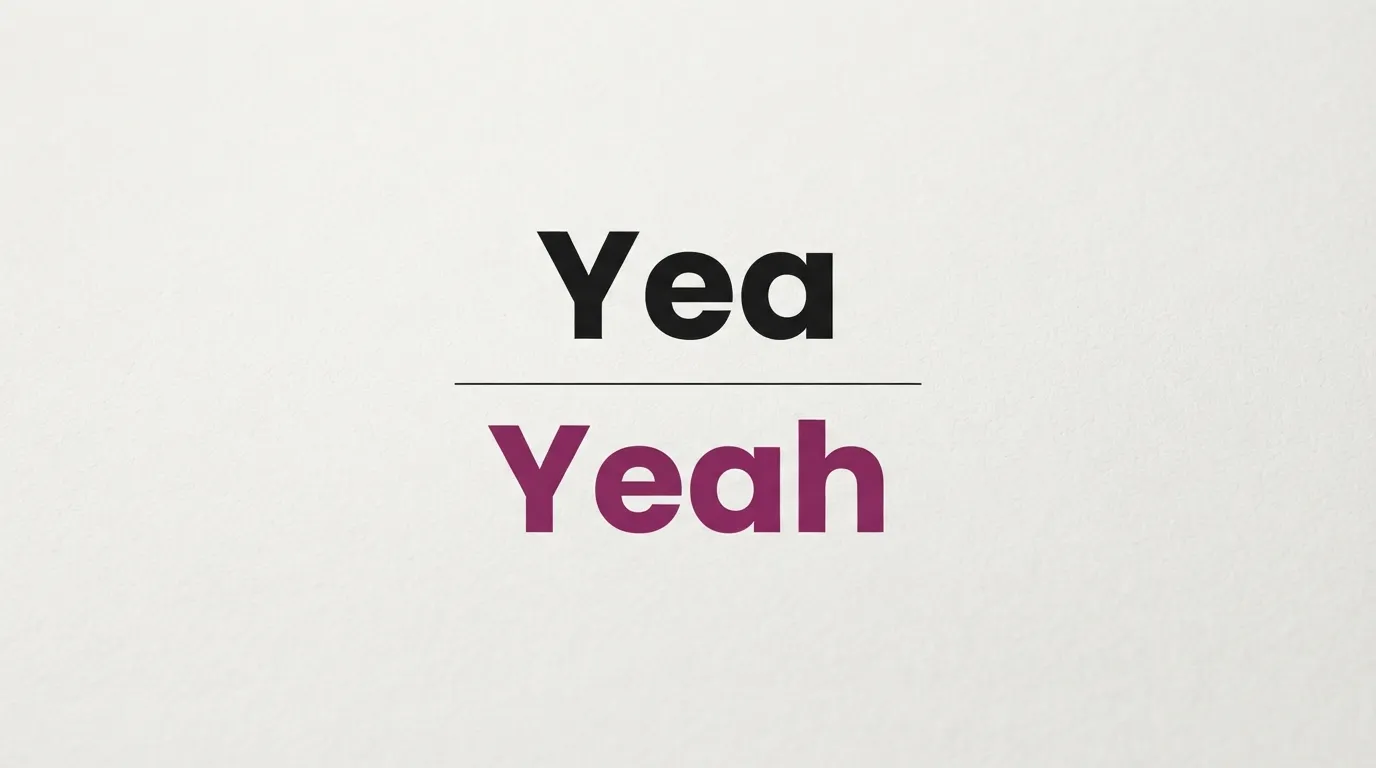
Yeah is the casual, spoken way to say “yes,” while yea is a formal word used for voting agreement or as an old fashioned way to say “yes” in writing.
I once texted a friend “yea, sounds good” and got asked if I was voting on something. That tiny typo changed the whole tone of my message.
Yea and yeah look almost identical. They sound close enough when spoken that most people never question the spelling. But on paper, they mean two very different things.
One belongs in a courtroom or a congress vote. The other belongs in a group chat. Mixing them up makes your writing look off, even if nobody can explain exactly why.
This guide clears up the confusion for good. You will learn the real meaning of each word, where they come from, and exactly when to use one over the other.
Whether you are drafting a text message or covering a city council vote, this guide has the exact answer you need.
By the end, you will never hesitate over yea or yeah again.
Yea or Yeah: Quick Answer
Yeah is the informal, everyday spelling of “yes.” You use it in texts, chats, and casual conversation.
Yea is a formal word meaning “yes,” almost always used in voting contexts, as in “the yeas have it.”
Example: “Yeah, I’ll be there at six.” (casual agreement) Example: “All in favor say yea.” (formal vote)
The Origin of Yea and Yeah
Yea is the older word by far. It comes from Old English gēa, meaning “yes,” and it stayed in formal English for centuries, especially in religious texts, legal settings, and parliamentary voting.
Yeah came much later, as a casual, spoken shortening of “yes” that grew out of everyday speech. It became common in the twentieth century, especially in American English, as informal writing started mirroring the way people actually talk.
The confusion exists because both words sound almost the same out loud. Say “yea” and “yeah” quickly, and most listeners cannot tell them apart. Only the spelling reveals which one you actually mean.
Older English texts, including some translations of the Bible, use “yea” frequently as a general word for “yes” or “truly.” That gives the word a slightly poetic, old fashioned feel that has stuck around even today. Meanwhile, “yeah” grew up alongside radio, film, and later television, spreading through spoken dialogue long before it became common in written text.
Yea vs Yeah: Key Differences
Here is a clear breakdown of how these two words split, with real examples for each.
| Term | Meaning | When to Use | Region/Context |
| Yea | Formal “yes,” used in voting | Legislative votes, formal agreement, old fashioned writing | Common in US legal and political settings |
| Yeah | Casual “yes” | Texting, talking, informal writing | Common everywhere in spoken English |
More examples:
- “Yeah, that movie was great.” (casual)
- “The motion passed with 12 yeas and 3 nays.” (formal vote)
- “She nodded and said yeah under her breath.” (casual)
- “The council recorded the yea votes first.” (formal)
A simple trick: if you would say it out loud to a friend, use yeah. If you are recording a formal vote or writing something old fashioned and ceremonial, use yea.
Which Version Should You Use?
Your choice depends entirely on the setting and tone of what you are writing.
- For texting, casual emails, or everyday conversation, use yeah. It matches how people actually speak and feels natural to readers.
- For formal voting records, legal documents, or ceremonial writing, use yea. This spelling signals seriousness and tradition.
- For fiction or dialogue meant to sound formal or old fashioned, yea can add flavor, especially in historical or biblical style writing.
- For business writing, stick with yeah only in very casual internal messages. Avoid both words in polished, professional documents where “yes” is the safer choice.
Common Mistakes with Yea or Yeah
Mistake 1: “Yea, I’ll send the file over.” Correction: “Yeah, I’ll send the file over.” Why it happens: writers assume yea is just a shorter, quicker way to type yeah.
Mistake 2: “The board recorded 10 yeahs and 2 nays.” Correction: “The board recorded 10 yeas and 2 nays.” Why it happens: people default to the more familiar spelling without knowing the formal voting term.
Mistake 3: Using yea in casual texts to sound proper. Correction: Use yeah instead, since yea reads as oddly formal or even confusing in casual chats. Why it happens: writers think yea looks more “correct” simply because it is shorter.
Mistake 4: Spelling yeah as “ya” or “yah” in formal writing. Correction: Stick with full “yes” in formal writing, and save yeah for casual contexts only. Why it happens: phonetic spelling habits from texting bleed into writing that calls for more polish.
Mistake 5: Assuming yea and yeah are just regional spelling variants. Correction: They are not regional variants. They serve two separate purposes, formal voting versus casual agreement. Why it happens: since both words sound alike, people assume the difference is just about accent or dialect.
Mistake 6: Writing “yea” in a review or comment to sound enthusiastic. Correction: Use “yeah” or even “yes!” instead, since yea reads as flat and out of place in enthusiastic, casual writing. Why it happens: writers borrow the spelling from voting language without realizing it carries a formal, neutral tone.
Yea or Yeah in Real-World Examples
Professional email: “Yes, I can join the call at 3pm.” (formal writing avoids both yea and yeah entirely)
News headline: “Senate Passes Bill with 62 Yeas, 38 Nays”
Social media post: “Yeah, best weekend ever, no notes 🎉”
Formal document: “The resolution carried by a vote of 9 yeas to 4 nays.”
Notice how yeah fits naturally into casual, spoken style writing, while yea only appears in formal vote counts and ceremonial contexts.
Yea or Yeah: Data, Trends, and Usage
People search for this comparison because both words show up constantly in writing, yet very few writers understand the real split between them.
Search interest tends to spike around election seasons and major legislative votes, when news coverage uses “yea” and “nay” heavily in headlines and articles.
The intent behind this search is almost always informational. Readers want a clear rule they can apply immediately, not a long grammar lecture.
This matters now because texting and casual writing have made “yeah” nearly universal, while “yea” has become rare enough that many younger writers do not recognize it at all outside of history class or news coverage of votes.
Journalists covering government proceedings still rely on yea and nay constantly, since official vote tallies use those exact words in transcripts and press releases. That keeps the formal spelling alive, even as everyday usage shifts almost entirely toward yeah.
Content written for younger audiences, like social captions or casual blog posts, leans heavily on yeah, since it mirrors real speech patterns and feels more relatable than a stiff “yes.”
Yea or Yeah: Full Comparison Table
| Term/Variant | Meaning | Region/Context | Best Used When |
| Yea | Formal “yes” used in voting | US legal, political, and ceremonial writing | Recording formal votes or writing old fashioned dialogue |
| Yeah | Casual, spoken “yes” | Everyday English worldwide | Texting, chatting, or writing casual dialogue |
Quick Decision Cheat Sheet
Use this fast checklist whenever you pause on which spelling to use:
- Are you texting a friend or writing casually? Use yeah.
- Are you recording a formal vote count? Use yea.
- Are you writing dialogue for a historical or biblical character? Yea can work here.
- Are you writing a business email? Skip both and write “yes” instead.
- Not sure at all? Default to yeah, since it fits almost every everyday context.
Keep this list handy for texts, articles, and any dialogue writing where the tone needs to feel just right.
Yea and Yeah in Everyday Language
Beyond formal votes and casual chats, these words show up in familiar phrases you have probably heard before.
“The yeas have it” is the classic phrase used when a vote passes, heard in courtrooms, city councils, and even school elections.
“Yeah, right” is a sarcastic phrase used to express disbelief, completely unrelated to actual agreement despite using the word yeah.
“Oh yeah?” often signals a playful challenge or surprise in conversation, showing how flexible the casual spelling has become in everyday speech.
These small phrases show how differently the two words have evolved, even though they started from the same root meaning.
Frequently Asked Questions
Q: What does yeah mean?
A: Yeah is the casual, spoken version of “yes.” It fits texting, talking, and informal writing perfectly.
Q: How do you use yea correctly?
A: Use yea for formal voting contexts, as in “the yeas have it,” or in old fashioned, ceremonial style writing.
Q: Yea vs yeah, what’s the real difference?
A: Yeah means casual agreement. Yea means formal agreement, almost always tied to voting. They are not interchangeable spellings of the same word.
Q: Is yeah acceptable in formal writing?
A: No. Formal writing should use “yes” instead of yeah. Save yeah for casual emails, texts, and conversation.
Q: Which version is correct, yea or yeah, for texting a friend?
A: Yeah is correct here. Yea would look strange and overly formal in a casual text message.
Q: Where does this confusion come from?
A: Yea and yeah sound nearly identical out loud, so many writers assume they are simply two spellings of the same casual word.
Q: Can yea be used outside of voting contexts?
A: Yes, though rarely. Writers sometimes use yea in historical fiction or biblical style dialogue to sound formal and old fashioned.
Q: Does yeah ever appear in professional writing?
A: Rarely, and only in very casual internal messages between coworkers. Client facing or formal documents should always use “yes” instead.
Q: Is there a difference between yeah and yea in British English?
A: The split works the same way in British English. Yeah stays casual, and yea stays tied to formal voting, though British writing uses “aye” more often than yea for votes.
Final Thoughts
Yea and yeah split cleanly once you know the rule. Yeah handles casual, everyday agreement. Yea handles formal votes and ceremonial writing.
The fastest test is simple. Picture yourself speaking out loud to a friend versus recording a formal vote. That mental picture almost always points you to the right word.
Getting this right keeps your writing sounding natural in casual settings and accurate in formal ones, without ever mixing the two up again.
Now you know exactly how to use yea or yeah, go try it in your next piece of writing. Bookmark this guide so you never second guess it again.
See More: Disk or Disc: The Real Difference, Finally Clear

My name is Ayesha Sadiqah, the writer behind this website. I write in-depth articles on English spelling, word comparisons, grammar, and vocabulary to help learners make better language choices. Every guide is carefully researched and designed to provide accurate, practical, and easy-to-understand information.