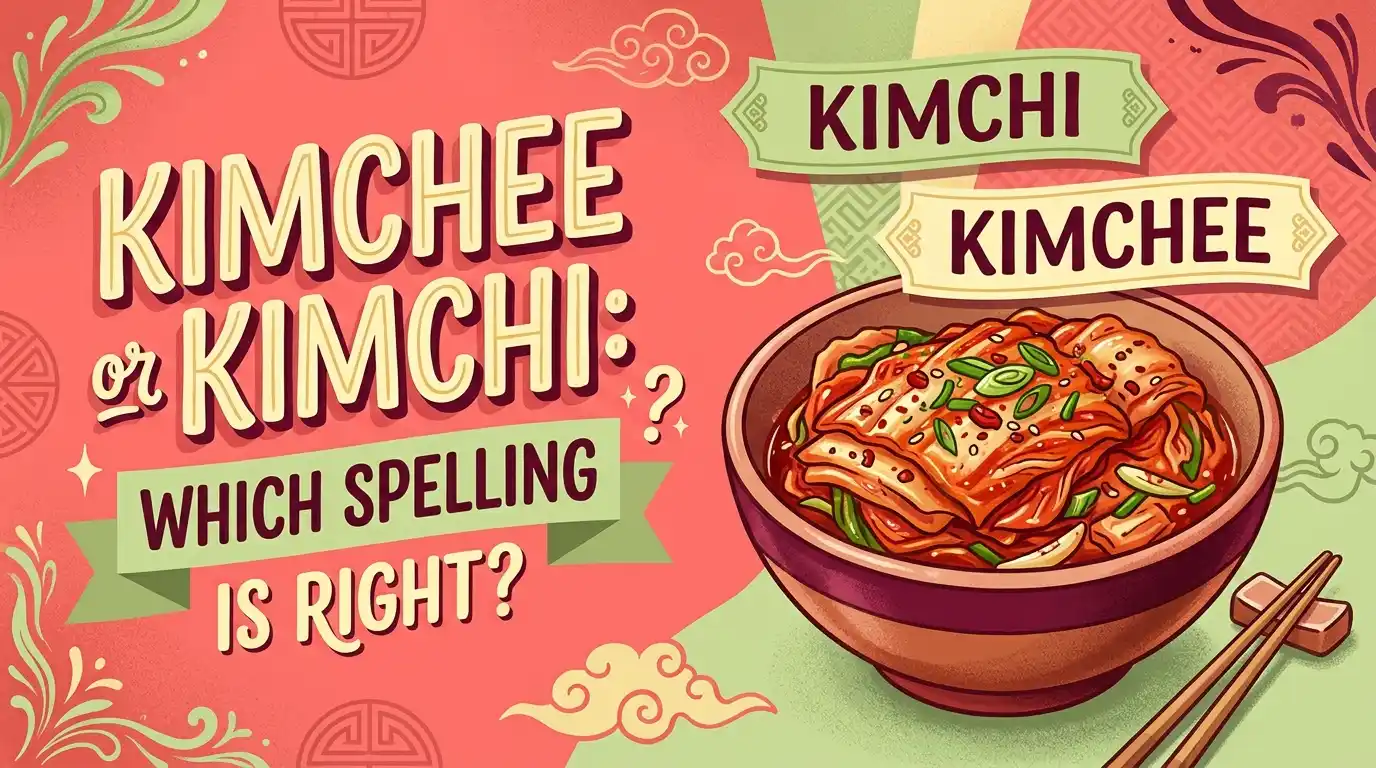
Kimchi is the standard English spelling of the spicy Korean fermented vegetable dish. Kimchee is an older variant that some dictionaries list, but most food writers, menus, and style guides now use kimchi.
My neighbor once handed me a jar with a handwritten label. It said “homemade kimchee.” A week later, I saw “kimchi” on a menu at a Korean restaurant. Same food. Different spelling.
I stood there confused. Which one was right? Had somebody made a mistake?
Many people search this word for the same reason. Both spellings look fine, and both sound the same. So you pause before you type.
This guide clears it up fast. You will learn the meaning, the history, and the common slip ups. You will also get a cheat sheet to save. Let us start with the short version.
Kimchee or Kimchi: Quick Answer
Kimchi is the correct and most common spelling today. It names a Korean side dish made from salted, seasoned, fermented vegetables. Napa cabbage and Korean radish are the most common.
Kimchee appears in older articles, product labels, and casual writing. It is not a typo, but it is less standard.
Two quick examples:
- We served kimchi with the grilled pork.
- She keeps a jar of kimchi in the fridge at all times.
If you want zero risk, write kimchi.
Where Does the Word Kimchi Come From?
The word comes from Korean. It is often traced to an old term meaning “soaked” or “sunken” vegetables. That fits the process well, since vegetables sit in salt and brine.
Over many centuries, the word changed shape in spoken Korean. It slowly became the form we know now. Korean writing uses its own alphabet, so English needs a way to show the sounds in Latin letters. That process is called romanization.
Here is where the confusion starts. Korean sounds do not match English letters perfectly. Writers made different choices. Some chose kimchi. Others chose kimchee because the ending sounds like “chee.” Older American cookbooks and brands often used the second form.
Today, the official Korean system writes the word as gimchi. English speakers, however, settled on kimchi. So you may see three forms in the wild.
Fun fact: In 2013, UNESCO added the Korean tradition of making and sharing kimchi, called kimjang, to its list of cultural heritage. The food is a big part of Korean identity.
Kimchee vs Kimchi Explained: Key Differences
Think of this as a spelling map. One food, a few forms.
| Term | Meaning | When to Use | Region or Context |
| Kimchi | Korean fermented vegetable dish | Almost always | US, UK, Canada, Australia |
| Kimchee | Same food, older variant | Rarely, or when quoting a brand | Older texts, casual writing |
| Gimchi | Official Korean romanization | Korean language or government texts | South Korea, linguistics |
| Kim chi | Same food, split into two words | Avoid it | Occasional informal writing |
A quick note on sound. Both kimchi and kimchee are said the same way: KIM chee. The difference lives only on the page.
Kimchi (Standard Spelling)
This is the form you will find in most dictionaries, news stories, and recipe sites. Use it unless you have a reason not to.
Kimchee (Older Variant)
You will see this on old labels and in older cookbooks. It still appears in some brand names. Keep it only when quoting a source or naming a company that uses it.
Gimchi (Korean Romanization)
This is the spelling used in the official Korean system. It is correct in Korean language contexts, but it looks unusual in everyday English.
Which Spelling Should You Use?
Here is the direct advice. Pick the group that sounds like you.
For Students and Writers
Use kimchi. Teachers and spell checkers expect it, and you will not lose points.
For Food Bloggers and Editors
Use kimchi. It is the form people search most, and major dictionaries and style guides prefer it.
For Menus and Brand Names
Use kimchi for general text. If a company spells its name “Kimchee,” keep the brand spelling. That is a name, not a general word.
For global or neutral writing, kimchi works everywhere.
Common Mistakes with Kimchee and Kimchi
Let us look at the errors people make most. Each one has a reason.
Mixing Spellings in One Piece
- Wrong: I love kimchi. My kimchee jar is empty.
- Right: I love kimchi. My kimchi jar is empty.
- Why it happens: Writers type fast and do not reread.
Splitting the Word in Two
- Wrong: kim chi
- Right: kimchi
- Why it happens: The word has two syllables, so people split it by ear.
Capitalizing It by Habit
- Wrong: We ate Kimchi for lunch.
- Right: We ate kimchi for lunch.
- Why it happens: Foreign food names often look like proper nouns. Kimchi is a common noun, so it stays lowercase unless it starts a sentence.
Using Gimchi in English Text
- Wrong: Add the gimchi to the stew.
- Right: Add the kimchi to the stew.
- Why it happens: Writers see the official Korean spelling and copy it. It is correct in Korean contexts, but it looks odd in everyday English.
Misspelling the Plural
- Wrong: kimchies
- Right: kimchi or kimchis (when you mean several types)
- Why it happens: Writers add “es” by habit. Kimchi is usually uncountable, like rice.
Kimchee or Kimchi in Real World Examples
Seeing the word in action helps it stick.
In a Professional Email
“Hi team, the catering order includes vegetarian kimchi dumplings. Please let me know about allergies.”
In a News Headline
“Local Shop Reports Record Sales of Kimchi as Fermented Foods Grow in Popularity”
In a Social Media Post
“Made my first batch of kimchi today. The kitchen smells wild. Worth it. #kimchi”
In a Formal Report
“The study measured probiotic levels in three types of kimchi after four weeks of fermentation.”
Notice how the spelling stays the same each time. That is the goal.
Kimchee or Kimchi: Data, Trends, and Usage
People search this word for a few clear reasons. Some check spelling for a menu or school paper. Some look for recipes. Others want to know about health, such as gut friendly foods and fermentation.
The search intent is mostly informational. Readers want a quick fact, a spelling check, or a recipe idea. Some searches lean commercial, such as where to buy kimchi or which brand is best.
Interest in fermented foods has grown across North America and Europe. Korean food has gone mainstream in many cities, and kimchi shows up on burgers, tacos, and pizza.
Why does this matter now? More writers cover Korean food every year. A correct spelling helps your content look careful and trustworthy.
Kimchee vs Kimchi Cheat Sheet
Save this for later.
| Term or Variant | Meaning | Region or Context | Best Used When |
| Kimchi | Korean fermented vegetable dish | Worldwide standard | You write anything at all |
| Kimchee | Older spelling variant | Older or informal text | Quoting a brand or old source |
| Gimchi | Official Korean romanization | Korean language texts | You write about Korean language rules |
| Kimjang | Seasonal kimchi making tradition | Culture and heritage writing | You describe the tradition |
Memory trick: Kimchi ends with chi, just like the word chili. Spicy food, spicy spelling.
Three second check:
- Start with a lowercase k.
- Write it as one word.
- End with chi, not chee.
FAQ
Q: What does kimchi mean? A: Kimchi is a Korean dish made from salted and fermented vegetables, often with chili, garlic, and ginger. It is served as a side dish or used in cooking.
Q: How do you spell kimchi correctly? A: Spell it k i m c h i. This is the form used by most dictionaries and style guides in English.
Q: Kimchee vs kimchi: what is the difference? A: There is no difference in meaning or sound. Kimchee is an older variant. Kimchi is the standard form, so choose it.
Q: Is kimchee acceptable in formal writing? A: Not really. Some dictionaries list it, but editors prefer kimchi. Use it for school, work, and publishing.
Q: Which version is correct, kimchee or kimchi? A: Kimchi is correct for general English. Use kimchee only when quoting an older source or a brand name.
Q: Where does the word kimchi come from? A: It comes from Korean. The spelling in English depends on how Korean sounds were turned into Latin letters over time.
Q: Can kimchi be used in a science paper? A: Yes. Write kimchi in the text. You can add details about the type, such as napa cabbage kimchi, on first mention.
Conclusion
Let us wrap up. Here are the key points to remember:
- Kimchi is the standard English spelling. Use it.
- Kimchee is an older variant. Use it only for brand names or quotes.
- The official Korean romanization is gimchi, but it looks odd in everyday English.
- Keep the word lowercase and write it as one word.
My final advice is simple. When in doubt, write kimchi. You will look careful, confident, and correct.
That jar from my neighbor taught me something. Even a small word can carry a big tradition. Now you know the story too.
Now you know exactly how to spell kimchi. Go use it in your next recipe, post, or paper. Better yet, share this guide with someone who has been unsure about it. They will thank you.
Read More: Socializing or Socialising: Pick the Right One

Hi, I’m Zara. Words that look almost identical but mean different things have always fascinated me, and that is what pulled me into writing about spelling and usage. Every guide gives you the answer first, then explains it clearly enough that you won’t need to look it up again.










1 thought on “Kimchee or Kimchi: The Real Spelling Answer Made Easy”