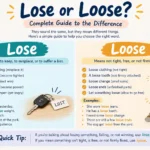
“Lying” means resting in a flat position or telling an untruth, while “laying” means placing something down. The easy test is this: if there is no object being placed, use “lying.”
I once wrote “I was laying on the couch” in an email to my editor, and she circled it in red before I even finished my coffee. That small correction stuck with me for years, because this mix up is one of the most common grammar traps in English.
You have probably typed “laying down” more times than you can count, only to wonder later if you got it wrong. You are not alone. Even people who write for a living slip on this one regularly.
The confusion exists because “lay” and “lie” look similar, sound similar, and share overlapping forms in different tenses. That overlap trips up native speakers and English learners alike.
This guide will end the confusion for good. You will learn the exact difference, see the correct forms in every tense, and walk away able to use both words with total confidence.
Laying or Lying: Quick Answer
Lying describes a state of resting flat, or it means telling something untrue. Example: “The cat is lying on the windowsill.”
Laying describes the act of placing an object somewhere. Example: “She is laying the blanket on the bed.”
The key difference comes down to objects. “Lay” always needs something to act upon. “Lie” never does.
The Origin of Laying and Lying
Both words trace back to Old English, where “licgan” meant to recline and “lecgan” meant to place something down. These two separate verbs have existed side by side for over a thousand years, yet their forms grew closer over time.
The real trouble started because the past tense of “lie” is “lay.” Yes, that is confusing on purpose, or at least it feels that way. So the word “lay” can either mean the present action of placing something, or the past tense of lying down.
This overlap is why so many writers, even skilled ones, second guess themselves constantly. English rarely offers a clean explanation, and this pair is a perfect example of that mess.
Laying vs Lying Explained: Key Differences
| Term | Meaning | When to Use | Example |
| Lie | To recline or rest flat | No object involved | “I lie down every afternoon.” |
| Lay | To place something down | Requires an object | “I lay the book on the table.” |
| Lying | Present form of lie | Describes a state of resting | “He is lying in bed.” |
| Laying | Present form of lay | Describes placing an object | “She is laying the tiles carefully.” |
Here is a simple test you can run every time. Ask yourself if the sentence has an object receiving the action. If yes, you need a form of “lay.” If no, you need a form of “lie.”
Which Version Should You Use?
For everyday conversation, most people default to “laying” out of habit, even when “lying” is correct. This happens so often that it sounds normal, but it is still a grammar error in formal writing.
For professional writing and reports, always run the object test before choosing your word. If you are describing a person or animal resting, choose “lying.” If you are describing someone placing an object, choose “laying.”
For creative writing, both words show up naturally depending on the scene. A character can be lying on a bed while another character is laying flowers beside them, both in the same sentence.
For English learners, memorize this simple rule: “lay” needs a target, “lie” does not. Practicing with real examples will make this second nature within a few weeks.
Common Mistakes with Laying and Lying
| # | Mistake | Correction | Why It Happens |
| 1 | “I am laying down for a nap” | “I am lying down for a nap” (no object involved) | Speakers borrow the more familiar sounding word regardless of grammar |
| 2 | “The dog is laying on the rug” | “The dog is lying on the rug” (the dog is resting, not placing anything) | People assume “laying” applies to any resting position |
| 3 | “Yesterday I lay the papers on the desk” used for resting | “Yesterday I lay on the couch” is correct for resting; use “laid” for placing objects | Confusion between “lay” as present tense of placing and past tense of resting |
| 4 | “She has laid in bed all day” | “She has lain in bed all day” (the past participle of lie is lain) | Many writers do not know the participle form even exists |
| 5 | “He was lying the bricks carefully” | “He was laying the bricks carefully” (bricks are the object being placed) | Writers overcorrect after learning “lying” applies to resting |
Laying and Lying in Real World Examples
Professional email: “Please confirm the contractor is laying the new flooring by Friday. The report has been lying on my desk since Monday.”
News headline: “Workers Spend Hours Laying Cables Across the City as Residents Report Lying Awake From the Noise”
Social media post: “Nothing beats lying in the sun all weekend. Just finished laying out my vacation photos in a new album.”
Formal document: “The technician is responsible for laying the foundation according to code. Any equipment left lying on site overnight must be secured.”
Laying or Lying: Data, Trends and Usage
This grammar pair ranks among the most searched word confusions in English, especially among students, writers, and editors checking their own work. It also draws heavy traffic from people preparing for English proficiency exams.
The search intent here is almost entirely informational. Readers want a clear rule they can apply immediately, not a long explanation of grammar theory.
English learners in regions where verb conjugation works differently, including many parts of Asia and Europe, search this comparison often. Native speakers search it too, particularly when writing something formal like a resume, article, or workplace report.
This topic matters now because written communication has exploded through messaging apps, social platforms, and remote work emails. A misused word here can quietly hurt your credibility, even if the reader never mentions it.
Laying vs Lying Comparison Table
| Term or Variant | Meaning | Region or Context | Best Used When |
| Lie or lying | To recline or rest | Universal English usage | No object is involved in the action |
| Lay or laying | To place something down | Universal English usage | An object receives the action |
| Lain | Past participle of lie | Formal and written English | Describing a completed state of resting |
| Laid | Past tense and participle of lay | Formal and written English | Describing a completed act of placing |
Frequently Asked Questions
Q: What does lying mean?
A: “Lying” means resting in a flat position, or it can mean telling something false. Context makes the meaning clear, since both uses share the same spelling.
Q: How do you use laying correctly?
A: Use “laying” when someone places an object somewhere, such as “She is laying the napkins on the table.” It always requires an object in the sentence.
Q: Laying vs lying, what is the real difference?
A: “Lay” requires an object to act upon, while “lie” does not. This single rule solves almost every confusion between the two words.
Q: Is laying acceptable in formal writing?
A: Yes, but only when used correctly with an object present. Using “laying” without an object, as in “I am laying down,” is considered incorrect in formal writing.
Q: Which version is correct, laying or lying, for describing a nap?
A: “Lying down for a nap” is correct because no object is involved. “Laying down for a nap” is a common but incorrect substitution.
Q: Where does the confusion between lay and lie come from?
A: It comes from the fact that “lay” is both the present tense of placing something and the past tense of lying down, which creates overlap across different sentences.
Q: Can laying be used in a construction or building context?
A: Yes. Phrases like “laying bricks” or “laying a foundation” are correct, since bricks and foundations act as the objects being placed.
Final Thoughts
Getting “laying or lying” right comes down to one simple question. Is there an object receiving the action? If yes, use a form of “lay.” If no, use a form of “lie.”
Remember these key points. “Lying” describes resting or telling an untruth. “Laying” describes placing something down. The past tense forms, “lay” and “laid,” add another layer, so keep the object test in mind whenever you write.
Now you know exactly how to use laying and lying correctly. Try applying this rule in your next email, report, or story. Bookmark this guide so you never second guess this pair again, and share it with anyone who has ever paused mid sentence wondering which word fits.
Read More: Whose or Who’s: The Real Difference Explained

My name is Ayesha Sadiqah, the writer behind this website. I write in-depth articles on English spelling, word comparisons, grammar, and vocabulary to help learners make better language choices. Every guide is carefully researched and designed to provide accurate, practical, and easy-to-understand information.