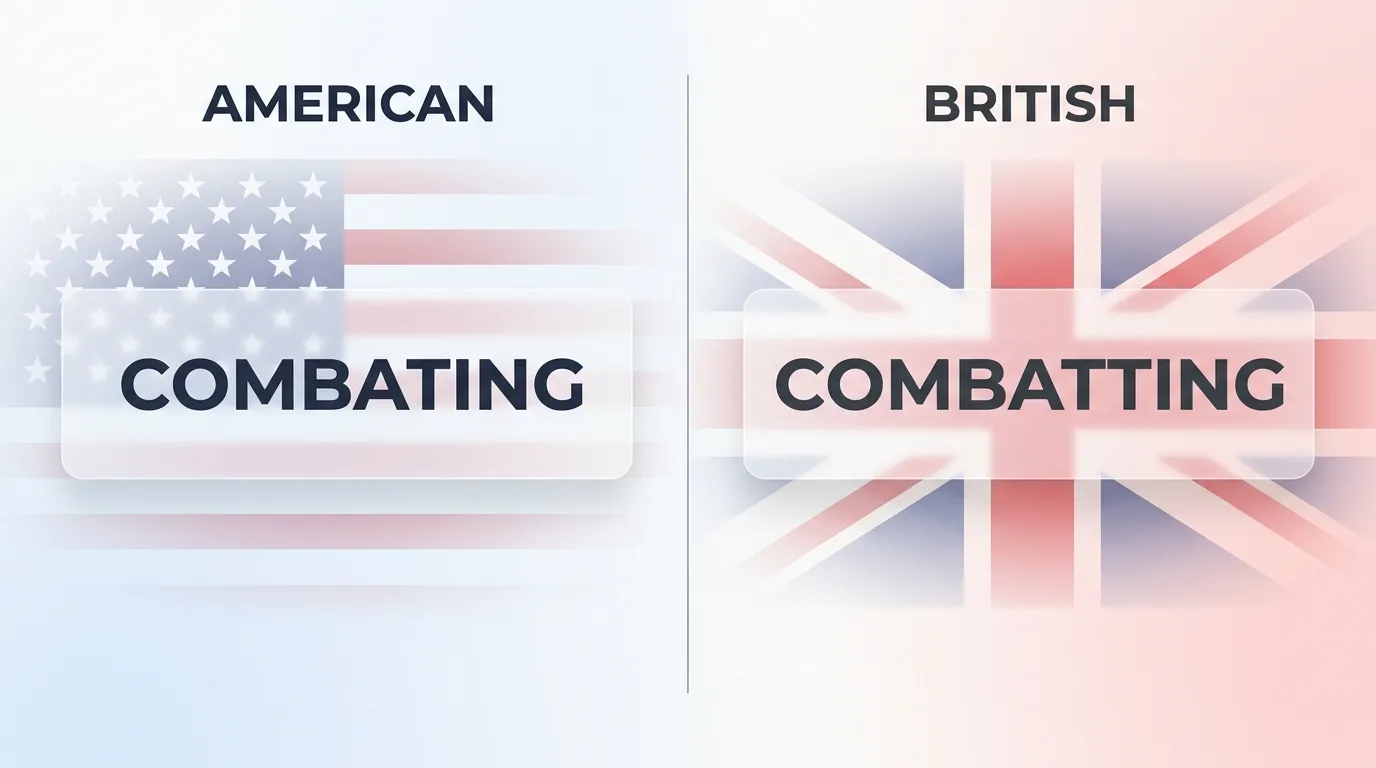
Combating is the standard American spelling, while combatting is a common British and Canadian variant. Both mean fighting against something, and both are widely accepted.
The Report That Made Me Pause
Last year I edited a company report for a client based in London. I typed “combating climate change” without a second thought, since that spelling always looked right to me. My client sent it back with a note: “Should this be combatting? We use British English here.”
I froze for a second. Was I wrong the whole time? I had used combating in dozens of articles before, and nobody had ever flagged it. That single comment sent me digging through style guides and dictionaries to figure out what was actually going on.
Here is what I found. Neither of us was wrong. This is not really a spelling mistake at all. It is a regional split, similar to color and colour, or traveling and travelling. If you have ever paused over one extra letter t in this word, this guide will settle the confusion completely, with a printable cheat sheet and quiz included.
Combating or Combatting: Quick Answer
Combating drops the second t before adding ing, and it is the preferred spelling in American English.
Combatting keeps the double t, following British spelling conventions for many similar words.
Two quick examples:
- “The city launched a new program aimed at combating poverty.” (American style)
- “The charity focuses on combatting hunger across the region.” (British style)
Both sentences are correct. The only difference is which regional spelling convention the writer follows.
The Origin Behind Combating and Combatting
The word combat comes from Old French, rooted in the idea of fighting or struggling against something. English absorbed it centuries ago, and writers have used it as both a noun and a verb ever since.
The spelling split happened much later, tied to a broader pattern in English grammar. American English generally avoids doubling a final consonant before adding ing or ed, unless the stress falls directly on the final syllable. British English tends to double that consonant more often, regardless of stress patterns.
Linguists sometimes call this the doubling rule, and it explains far more spelling quirks than most people realize. Once you understand it for one word pair, you start noticing it everywhere, from everyday verbs to less common ones you might not expect.
You can see the same pattern in other word pairs, like traveling versus travelling, or canceling versus cancelling. Combating and combatting simply follow that same regional rule, inherited from decades of separate dictionary traditions on each side of the Atlantic.
Dictionary makers on each side of the ocean worked mostly independently for a long stretch of history. Noah Webster, who built the first major American dictionary, intentionally simplified many British spellings to create a distinct American standard. That single decision, made two centuries ago, still shapes small spelling choices like this one today.
Combating or Combatting Explained Key Differences
| Term | Meaning | When to Use | Region or Context |
| Combating | Fighting against something, single t spelling | American style writing, US publications | United States, most global business writing |
| Combatting | Fighting against something, double t spelling | British style writing, UK and Canadian publications | United Kingdom, Canada, Australia in some cases |
A simple trick that works almost every time: check which English style guide your audience expects. American readers expect combating. British and Canadian readers often expect combatting, though American spelling has become more common globally due to software defaults.
Which Version Should You Use
Your audience and platform should guide this choice more than personal preference.
- For American publications and US based businesses: Use combating, since it matches standard American dictionaries and most style guides like AP and Chicago.
- For British, Canadian, or Australian publications: Use combatting, since it follows traditional British spelling conventions still common in those regions.
- For global or neutral content, such as international reports: Pick one spelling and stay consistent throughout the entire document, since mixing both looks careless.
- For students taking standardized tests: Follow whichever spelling your test format expects, since American tests like the SAT expect combating, while British exams expect combatting.
- For content teams managing multiple writers: Build a shared style guide entry for this word early on, so every contributor uses the same spelling automatically, rather than leaving the choice up to each individual writer.
Common Mistakes with Combating and Combatting
- Mistake: Switching between both spellings within the same article or document. Correction: Pick one spelling and use it consistently throughout. Why it happens: writers copy sentences from different sources without noticing the spelling shift.
- Mistake: Assuming one spelling is simply wrong. Correction: Both spellings are correct, just tied to different regional standards. Why it happens: many writers only learn one version in school and assume the other is a typo.
- Mistake: Ignoring your publication’s style guide. Correction: Always check whether your company or platform follows American or British spelling rules before publishing. Why it happens: writers focus on content quality and forget smaller consistency details like regional spelling.
- Mistake: Trusting spellcheck blindly. Correction: Set your document language correctly, since spellcheck tools flag whichever spelling does not match your selected region. Why it happens: many writers never check their document’s language setting, leading to confusing red underlines.
- Mistake: Overcorrecting after learning about the split, and second guessing every similar word. Correction: Learn the general pattern once, single t for American style, double t for British style, and apply it confidently across similar words. Why it happens: new information about spelling rules can create temporary doubt, even in previously confident writers.
Spot the Mistake Exercise
Read this sentence and find the inconsistency. “The organization is combating hunger while also combatting poverty across three continents.” Did you catch it? This sentence mixes American and British spelling in the same paragraph, which should be corrected to match one consistent style throughout.
This kind of small inconsistency slips past most writers because both words are spelled correctly on their own. Spellcheck software rarely flags either version as wrong, since both exist in major dictionaries. Only a careful human read, focused specifically on consistency rather than correctness, tends to catch this particular slip before publishing.
Combating and Combatting in Real World Examples
A professional email: “Our team remains focused on combating supply chain delays this quarter.”
A news headline: “City Council Approves New Plan for Combatting Rising Crime Rates”
A social media post: “Proud to support local efforts combating food insecurity in our community.”
A formal document or report: “This policy outlines new measures for combatting misinformation across digital platforms.”
Combating and Combatting Data Trends and Usage
Searches for “combating or combatting” spike heavily among writers, editors, and students working across international audiences. This search falls into the informational category, since people want a clear explanation rather than a product or service.
American search volume leans heavily toward combating, while searches from the United Kingdom, Canada, and Australia show much stronger interest in combatting. This regional split mirrors the spelling itself almost perfectly, which confirms how closely tied this word is to geography rather than correctness.
This topic matters right now because so much content gets published for global audiences through websites and social media. Writers often serve readers from multiple English speaking countries at once, making spelling consistency a small but noticeable signal of polish and professionalism.
Content teams working across international markets often build internal style guides specifically to resolve choices like this one before writing even begins. Deciding on combating or combatting once, at the project level, saves individual writers from making that same judgment call sentence by sentence throughout a long document.
Standalone Comparison Table
| Term or Variant | Meaning | Region or Context | Best Used When |
| Combating | Fighting against something | United States and global business writing | Your audience expects American English |
| Combatting | Fighting against something | United Kingdom, Canada, and Australia | Your audience expects British English |
Quick Cheat Sheet You Can Save
Keep this short list nearby whenever you write:
- American English audience? Use combating, single t.
- British or Canadian audience? Use combatting, double t.
- Set your document language correctly before trusting spellcheck.
- Stay consistent throughout your entire piece of writing.
- Apply the same single t versus double t pattern to similar words like traveling and travelling.
- When unsure, check your platform’s official style guide first.
Print this list, save it as a note on your phone, or pin it above your desk. It turns a confusing regional spelling question into a five second check.
Test Your Knowledge Combating or Combatting Quiz
Try these five sentences. Pick combating or combatting, then check your answers below.
- The American nonprofit focused on ___ homelessness in major cities.
- The British council announced new funding for ___ air pollution.
- Our global report used the spelling ___ throughout, following US style.
- The Canadian agency published guidelines for ___ workplace discrimination.
- The Australian newspaper ran a headline about ___ wildlife trafficking.
Answers: 1 combating, 2 combatting, 3 combating, 4 combatting, 5 combatting
How did you score?
- Five correct: You have mastered this regional spelling split completely.
- Three to four correct: Review the cheat sheet once more before your next project.
- Zero to two correct: Save the cheat sheet and try the quiz again tomorrow.
Frequently Asked Questions
Q: What does combating mean? A: Combating means actively fighting against or working to stop something harmful, like poverty, crime, or disease. It follows the American English spelling convention.
Q: What does combatting mean? A: Combatting carries the exact same meaning as combating, fighting against something. It simply follows the British English spelling convention with a doubled t.
Q: Combating vs combatting, what is the real difference? A: There is no difference in meaning at all. The only difference is regional spelling preference, American versus British and Canadian English.
Q: Is combatting acceptable in formal writing? A: Yes, combatting is fully acceptable and standard in British, Canadian, and Australian formal writing, including reports, articles, and official documents.
Q: Which version is correct for American publications? A: Combating is correct for American publications, since it follows US dictionary standards and major style guides like AP and Chicago.
Q: Where does the word combat come from? A: Combat comes from Old French, describing fighting or struggling against something. English adopted it centuries ago as both a noun and a verb.
Q: Can both spellings appear in the same global document? A: They should not appear together in the same document, since mixing spellings looks inconsistent. Pick one regional style and use it throughout, and note that choice in your style guide for future reference.
Final Thoughts
Combating and combatting are not a right versus wrong situation at all. Remember the core idea: single t follows American style, double t follows British style, and both mean exactly the same thing. Check your audience, pick one spelling, and stay consistent throughout your writing.
This same single t versus double t pattern shows up across dozens of other English word pairs, so learning it once for combating and combatting quietly helps you with future spelling questions too. That kind of small pattern recognition adds up over time, making you a faster and more confident writer overall.
You now know exactly how to use combating or combatting with confidence. Bookmark this guide so you never second guess this word again, and share it with a coworker or classmate who writes for international audiences.
See More: Discrete or Continuous: The Real Difference Explained

My name is Ayesha Sadiqah, the writer behind this website. I write in-depth articles on English spelling, word comparisons, grammar, and vocabulary to help learners make better language choices. Every guide is carefully researched and designed to provide accurate, practical, and easy-to-understand information.