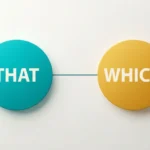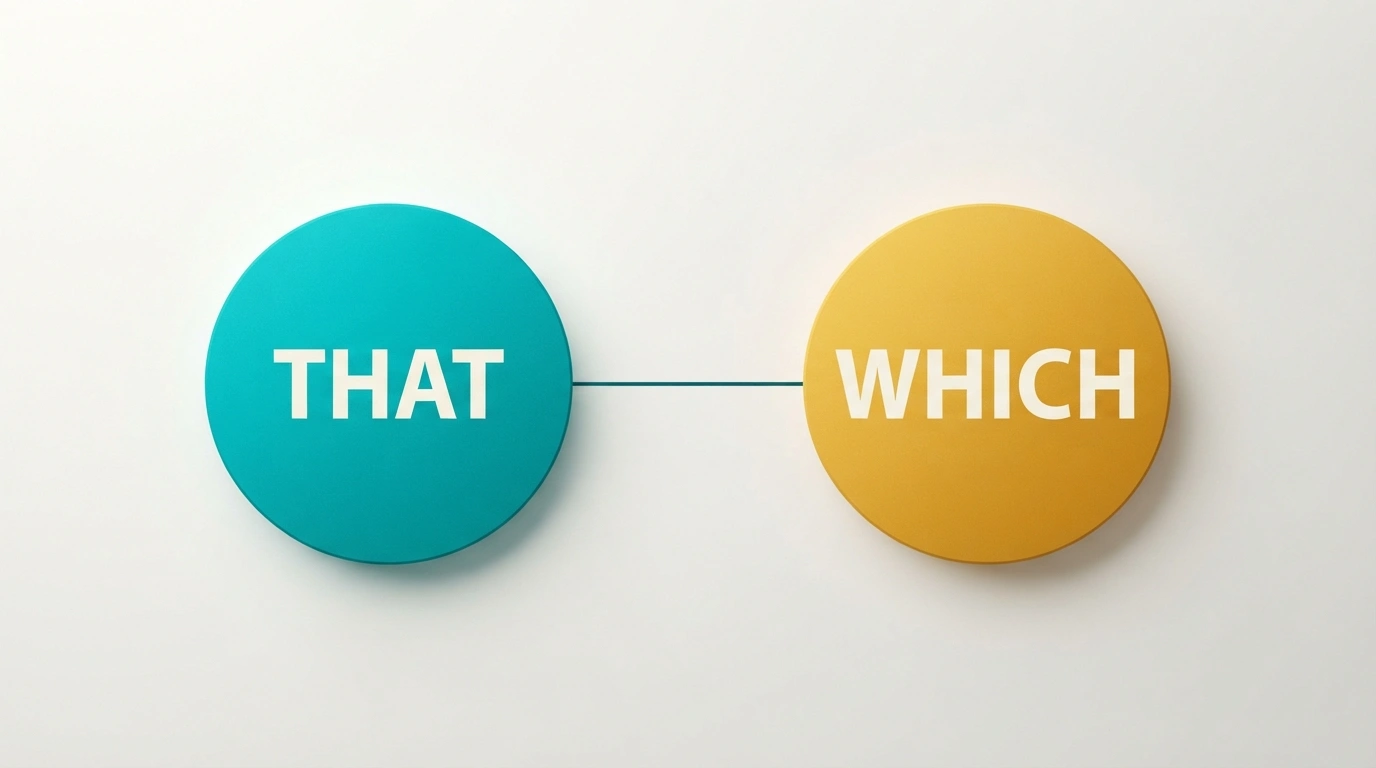
Use “that” to introduce a clause that is essential to the sentence’s meaning, and use “which” to introduce extra, nonessential information, usually set off by a comma. Both words are correct. The choice depends entirely on whether the clause changes the core meaning of the sentence.
I once rewrote the same sentence four times trying to decide whether to use “that” or “which.” The sentence was simple: “The report which I finished yesterday needs your approval.” Something about it felt wrong, but I could not explain why until a colleague pointed out the missing comma and the wrong word choice entirely.
That single correction changed how I thought about the two words forever. “That” and “which” are not interchangeable twins. They each signal something different to the reader, and mixing them up can quietly confuse the meaning of an otherwise clear sentence.
Most people search this question because they sense something is off in their own writing but cannot pinpoint the rule. This guide breaks the rule down clearly, shows exactly where each word belongs, and clears up the small grammar habits that trip up even experienced writers.
Even professional editors admit this rule takes real practice to apply automatically. The good news is that once you understand the underlying logic, rather than memorizing a list of examples, the correct choice starts to feel obvious in almost every sentence you write.
That or Which Quick Answer
“That” introduces a restrictive clause, meaning information required to identify exactly what is being talked about. “Which” introduces a nonrestrictive clause, meaning extra information that could be removed without changing the sentence’s core meaning.
Example: “The laptop that has a cracked screen belongs to Sam.” (identifies which laptop)
Example: “My laptop, which has a cracked screen, still works fine.” (adds extra detail about one specific laptop)
The Origin of the That or Which Rule
Both “that” and “which” have existed in English for centuries, and for a long time, writers used them almost interchangeably. The strict modern rule separating restrictive and nonrestrictive clauses became widely accepted mainly through American style guides in the twentieth century, including influential guidance from writers like William Strunk and E. B. White in “The Elements of Style.”
British English has historically been more relaxed about this distinction, and many British writers still use “which” for restrictive clauses without controversy. American style guides, including AP and Chicago, generally hold the line more firmly, which is exactly why so many writers search this question today, especially when writing for an international or professional audience.
The rule itself did not exist as a formal instruction until relatively recently in the language’s long history. For centuries, writers moved between “that” and “which” based on rhythm and personal taste rather than a fixed grammatical principle, which is part of why the distinction still feels somewhat arbitrary to many learners encountering it for the first time.
That vs Which Explained: Key Differences and Variations
The core difference comes down to whether the clause is essential or extra. Here is how the main patterns compare.
| Term | Meaning | When to Use | Region/Context |
| That | Introduces essential, identifying information | No comma before it, clause cannot be removed without changing meaning | Standard everywhere, strongly preferred in American style guides |
| Which | Introduces extra, nonessential information | Comma before it, clause can be removed without changing meaning | Standard everywhere, more flexible in British English |
| Which (restrictive, no comma) | Introduces essential information without a comma | Common in British English, discouraged in strict American style | More accepted in British and international English |
| Who | Introduces a clause about a person | Used instead of that or which when the subject is a person | Standard everywhere |
Notice that the comma is doing real work here. Removing or adding a comma before “which” can genuinely change what a sentence means, not just how it sounds.
Consider a simple pair of sentences to see this in action. “The employees that finished the training received a certificate” implies only some employees finished, and only those employees got a certificate. “The employees, which finished the training, received a certificate” sounds odd because “which” should not refer to people at all, revealing a second, related error hiding inside the sentence.
Which Version Should You Use?
For professional and business writing, especially following American style guides like AP, use “that” for essential clauses and “which” only for extra, nonessential detail set off by commas.
Then For British or international audiences, “which” without a comma is often accepted for essential clauses, though following the American rule still reads as clear and correct everywhere.
For academic and formal writing, stick closely to the strict rule, since inconsistent usage can distract careful readers and make writing feel less polished.
For global or neutral use, following the American pattern, “that” for essential information and “which” with a comma for extra detail, is the safest, most widely understood choice.
Common Mistakes with That or Which
Mistake: Using “which” without a comma for essential information. Correction: “The car that I bought last year needs new tires,” not “The car which I bought last year needs new tires.” Why it happens: Writers often treat the two words as fully interchangeable, forgetting that the comma signals a real difference in meaning.
Mistake: Using “that” to introduce nonessential, extra information. Correction: “My car, which I bought last year, needs new tires,” not “My car, that I bought last year, needs new tires.” Why it happens: Writers sometimes default to “that” out of habit, even when the clause is clearly extra detail rather than essential identification.
Mistake: Forgetting the comma before “which” in a nonessential clause. Correction: Always place a comma before “which” when it introduces extra information, as in “The building, which was built in 1920, is now a museum.” Why it happens: The comma is easy to overlook during fast writing or editing, especially in longer sentences.
Mistake: Using “which” to refer to a person. Correction: Use “who” instead, as in “The manager who approved the request is on vacation,” not “The manager which approved the request is on vacation.” Why it happens: Writers occasionally apply object pronouns to people out of habit, especially when translating from languages with different pronoun rules.
Mistake: Overcorrecting and removing every instance of “which,” even when it is genuinely nonessential. Correction: Keep “which” for true extra detail. The goal is accuracy, not avoiding the word entirely. Why it happens: After learning the rule, some writers swing too far and avoid “which” altogether, even in sentences where it is the correct choice.
That or Which in Real World Examples
In a professional email: “Please review the attached contract, which includes the updated payment terms we discussed.”
And In a news headline: “City Approves Budget That Prioritizes Public Transit Funding”
In a social media post: “Finally tried that new coffee shop that everyone keeps talking about. Worth the hype.”
In a formal document or report: “The policy applies to all employees who work more than twenty hours per week, a threshold that was updated last quarter.”
Each example shows the clause doing a different job. Some identify exactly what is being discussed, and others simply add helpful, removable detail. Reading each sentence aloud without the clause is a quick way to test which category it falls into.
That or Which: Data, Trends, and Usage
People search “that or which” constantly because the rule feels subtle, even though it changes meaning in a real, noticeable way. This search falls into the informational category, since readers want a clear grammar explanation rather than a product or service.
Interest tends to spike around editing tasks with real stakes, such as polishing a resume, finalizing a business proposal, or following a specific publication’s style guide. Students and content writers search this pairing especially often, since many composition courses and editing jobs test this exact distinction directly.
This matters now because so much professional writing gets reviewed by editors, clients, or automated grammar tools that flag this exact issue. Getting it right the first time saves revision time and signals careful, precise writing to anyone reading closely.
Grammar checking software has also raised the visibility of this rule considerably. Many popular writing tools now flag a comma missing before a nonessential “which,” which has made the distinction far more familiar to everyday writers than it was even a decade ago.
That vs Which Comparison Table
| Term/Variant | Meaning | Region/Context | Best Used When |
| That | Introduces essential, identifying detail | All English speaking regions | The sentence needs this clause to make sense |
| Which | Introduces extra, removable detail | All English speaking regions | The clause could be deleted without changing the core meaning |
| Which without a comma | Introduces essential detail in a more relaxed style | Common in British and international English | Following British conventions or a less strict style guide |
| Who | Introduces a clause about a person | All English speaking regions | The subject of the clause is a person, not an object |
Frequently Asked Questions
Q: What does that or which mean in grammar? A: “That” introduces a clause essential to a sentence’s meaning, while “which” introduces extra, nonessential information that could be removed without changing the core meaning.
Q: How do you use that or which correctly in a sentence? A: Use “that” without a comma for essential clauses, as in “The book that changed my life is on the shelf.” Use “which” with a comma for extra detail, as in “The book, which changed my life, is on the shelf.”
Q: That vs which, what is the real difference? A: The difference is whether the clause is required to understand the sentence. Essential clauses use “that.” Extra, removable clauses use “which,” set off by a comma.
Q: Is which acceptable in formal writing without a comma? A: In strict American style guides, no. British and international English are more flexible, but following the American rule remains the safest, clearest choice in formal writing.
Q: Which version is correct, that or which? A: Both are correct in the right context. The rule depends on whether the information is essential or extra, not on personal preference alone.
Q: Where does the that or which rule come from? A: The strict modern distinction became widely accepted through American style guides in the twentieth century, though both words have existed in English for centuries with more flexible historical use.
Q: Can that or which be used interchangeably in casual writing? A: Casual writing often blurs the line, but using each word correctly still improves clarity, even in relaxed or conversational contexts. Texting a friend rarely calls for strict grammar, but a work email usually does.
Final Thoughts
The choice between “that” and “which” comes down to one clear question: does the clause identify something essential, or does it simply add extra detail? “That” handles essential information without a comma, while “which” handles extra information with one.
Remember these key points: check whether removing the clause changes the sentence’s meaning, always add a comma before a nonessential “which,” and switch to “who” whenever the subject is a person rather than an object. Following this pattern keeps professional and academic writing clear and precise.
Now you know exactly how to choose between them. Bookmark this guide so you never second guess “that or which” again, and share it with a coworker or classmate who has ever paused mid sentence wondering which word actually belongs there, whether they are drafting an email, an essay, or a company report.
Read More: Truly or Truely: The Correct Spelling Explained

Hi, I’m Zara. Words that look almost identical but mean completely different things have always fascinated me, that’s what pulled me toward writing about spelling and usage. I focus on digging into where these mix-ups actually come from, whether it’s a British-American split or just a rule English never bothered to make consistent. My goal with every guide is simple: give you the answer fast, then explain it well enough that you never have to look it up again.