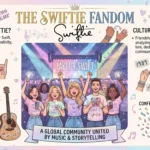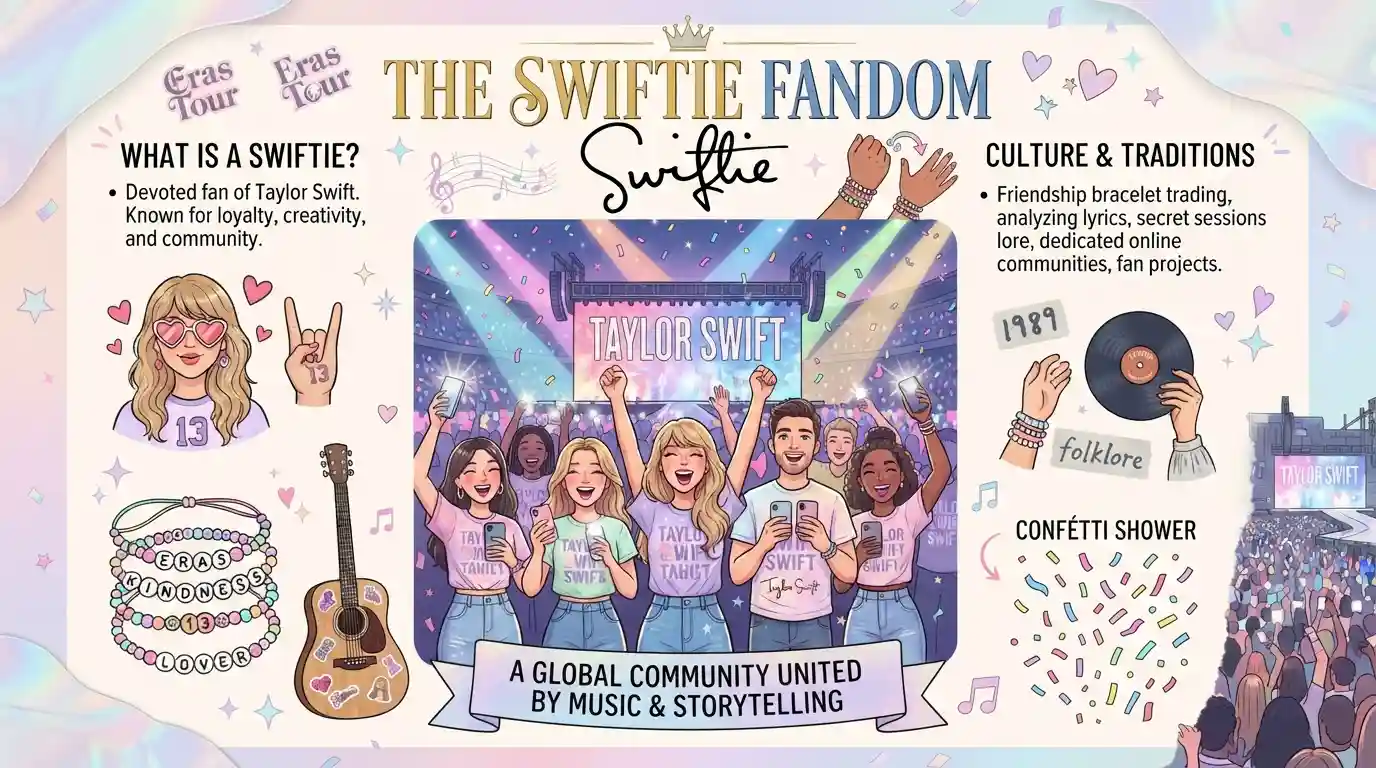
The correct term is Swiftie, not swifty. Swiftie is the official, widely recognized name for a Taylor Swift fan, used by Taylor Swift herself, her team, and millions of fans worldwide.
I still remember the first time I typed “swifty” into a caption and got roasted in the comments within minutes. A friend messaged me almost instantly: “It’s Swiftie, not swifty. Please fix that before someone screenshots it.”
That small mistake taught me something bigger. Fandom names carry weight. They are part of an identity that millions of people wear proudly, and getting the spelling wrong can make you look like an outsider even when you genuinely love the music.
If you have ever paused mid sentence, unsure whether to write Swiftie or swifty, you are not alone. This confusion pops up constantly on social media, in casual conversation, and even in articles written by people who should know better.
This guide settles the debate for good. You will learn the correct spelling, where the word came from, why the confusion exists, and how to use it confidently in writing, conversation, and online posts. By the end, you will never second guess yourself again.
Swiftie or Swifty: Quick Answer
Swiftie is the accepted and correct spelling for a fan of Taylor Swift. It follows the same pattern as other fan names that end in “ie,” similar to how fans of other artists get nicknames tied to the star’s name.
For example: “She has been a Swiftie since the Fearless album dropped.” That sentence reads naturally to anyone familiar with fan culture.
“Swifty,” on the other hand, is a spelling mistake, though a common and understandable one, since “swift” plus “y” feels like a natural way to form an adjective in English.
The Origin of Swiftie
The word Swiftie grew organically out of fan communities in the early 2010s, as Taylor Swift’s popularity expanded beyond country music into mainstream pop.
Fans needed a name for themselves, the same way fans of other major artists have their own identities. Taylor Swift and her team eventually embraced the term publicly, using it in official merchandise, social media posts, and even during concerts.
This official adoption cemented Swiftie as the standard spelling. Once a brand or celebrity endorses a specific version of a fan name, that version tends to become the accepted norm, even if alternate spellings float around casually.
The confusion with “swifty” likely comes from English spelling patterns. Words like “chatty,” “witty,” and “crafty” all end in “y” after a consonant, so it feels instinctive to spell a Swift related word the same way. But fan names do not always follow strict grammar logic. They follow branding and community usage instead.
Swiftie Explained: Key Differences and Variations
| Term | Meaning | When to Use | Region or Context |
| Swiftie | Official name for a Taylor Swift fan | Always, in any context | Global, used everywhere |
| Swifty | Common misspelling of Swiftie | Never for fan identity | Occasionally used as a nickname or unrelated word |
| Swiftie Nation | A collective term for the fan community | Social media, fan events | Mostly online communities |
| Swiftian | Refers to something in Taylor Swift’s style | Describing music or aesthetic | Music journalism and reviews |
Notice that “swifty” is not entirely meaningless. It shows up occasionally as a nickname (for someone with the last name Swift) or in unrelated contexts, but it should never be used when referring to a Taylor Swift fan.
Which Version Should You Use?
For casual fans and social media posts, always use Swiftie. It matches what the community expects and avoids confusion.
For content creators and bloggers, Swiftie is essential for accuracy and credibility. Readers who are actual fans will notice the mistake immediately, and it can undermine trust in your content.
For journalists and formal writing, Swiftie remains correct even in professional publications. Major outlets like Billboard, Rolling Stone, and Variety consistently use Swiftie when referring to the fan base.
For global or neutral use, Swiftie works everywhere. There is no regional variation here. Unlike some words that change spelling between American and British English, Swiftie stays consistent worldwide.
Common Mistakes with Swiftie
Mistake 1: Writing “swifty” instead of Swiftie.
Correction: Always use Swiftie. This is the single most common error people make.
Mistake 2: Capitalizing it inconsistently, like “swiftie” in the middle of a sentence.
Correction: Swiftie is typically capitalized, similar to a proper noun, since it directly references Taylor Swift’s name.
Mistake 3: Adding an apostrophe, writing “Swifti’s” when referring to multiple fans.
Correction: The plural is simply Swifties, no apostrophe needed unless showing possession.
Mistake 4: Confusing Swiftie with Swiftian.
Correction: Swiftie refers to a person. Swiftian refers to a style or quality, as in “a Swiftian twist in the lyrics.”
Mistake 5: Assuming swifty is a regional British spelling.
Correction: There is no regional exception here. Swiftie is used the same way across the US, UK, Australia, and everywhere else.
Each of these mistakes happens because English spelling can feel unpredictable, especially with newer fan created words that do not follow strict textbook rules.
Swiftie in Real World Examples
In a professional email:
“Our marketing team identified a strong overlap between Swiftie audiences and our target demographic for the summer campaign.”
In a news headline:
“Swifties Camp Overnight for Eras Tour Tickets in Record Numbers”
Also In a social media post:
“POV: you and your best friend are both Swifties and just found out you have matching tour outfits.”
And In a formal report or document:
“The economic impact of Taylor Swift’s Eras Tour, driven largely by Swiftie spending on merchandise, travel, and accommodations, has been documented in multiple regional economic studies.”
Each example shows how naturally Swiftie fits into different writing styles, from casual social posts to formal business documents, without ever needing the incorrect “swifty” version.
Swiftie: Data, Trends and Usage
Search interest in “Swiftie” spikes dramatically around major Taylor Swift events, including album releases, tour announcements, and award show appearances. This pattern shows the term is deeply tied to real time fan engagement rather than just a static dictionary word.
Search intent for this keyword falls mostly into the informational category. People typing “Swiftie or swifty” into Google are usually trying to confirm correct spelling before using it themselves, whether in a caption, article, or conversation.
Younger audiences, particularly Gen Z and younger Millennials, drive most of the search volume and social conversation around this term. This aligns with Taylor Swift’s core fan demographic.
Interest in the correct spelling matters more now than ever, since Taylor Swift’s cultural presence has grown far beyond music into economics, pop culture commentary, and even academic study. Universities have offered courses examining her impact, and business schools have studied Swiftie spending habits as a case study in fan economics.
Standalone Comparison Table
| Term or Variant | Meaning | Region or Context | Best Used When |
| Swiftie | Correct term for a Taylor Swift fan | Global, all contexts | Any time referring to a fan |
| Swiftie Nation | Collective fan community term | Mostly social media | Referring to fans as a group |
| Swiftian | Style or quality tied to Taylor Swift | Music journalism | Describing music, lyrics, or aesthetic |
| Swifty | Common misspelling | Rarely appropriate | Avoid when discussing fans |
Frequently Asked Questions
Q: What does Swiftie mean?
A: Swiftie is the term used to describe a devoted fan of Taylor Swift. It reflects belonging to her global fan community and is widely recognized across music, media, and pop culture.
Q: How do you use Swiftie correctly in a sentence?
A: Use it as a noun referring to a fan, such as “She’s a huge Swiftie” or “Swifties flooded social media after the album announcement.” Capitalize it since it ties directly to a proper noun.
Q: Swiftie vs swifty, what’s the difference?
A: Swiftie is the correct, widely accepted spelling. Swifty is a common misspelling that should be avoided when referring to Taylor Swift fans specifically.
Q: Is Swiftie acceptable in formal writing?
A: Yes. Major publications and formal reports regularly use Swiftie when discussing Taylor Swift’s fan base, since it is now considered standard terminology.
Q: Which version is correct, Swiftie or swifty?
A: Swiftie is correct. Swifty is not an accepted alternative in this context, even though it might seem like a natural spelling choice at first glance.
Q: Where does the term Swiftie come from?
A: It emerged organically from fan communities in the early 2010s and was later embraced officially by Taylor Swift and her team, which cemented it as the standard term.
Q: Can Swiftie be used in academic or business writing?
A: Yes. Given the documented economic and cultural impact of Taylor Swift’s fan base, Swiftie has appeared in academic papers, business case studies, and formal economic reports.
Conclusion
Getting this one right is simple once you know the rule. Swiftie is correct. Swifty is a mistake, even though it might feel like a natural spelling at first glance.
Remember these key points: Swiftie is the official, widely used term. It stays consistent across every region and writing context. Swifty should be avoided entirely when referring to Taylor Swift fans. And when in doubt, follow the spelling used by major publications and Taylor Swift’s own team.
Now you know exactly how to use Swiftie correctly, so go update that caption, fix that article draft, or settle that group chat debate once and for all.
Bookmark this guide so you never second guess Swiftie again.
Read More: Theater or Theatre: The Complete, Proven Guide

Hey, I’m Ayeza. I started this site because I kept hitting the same wall over and over: typing a word, freezing, and not trusting my own instinct on the spelling. Now I research these mix-ups properly so you don’t have to, and I write every guide the way I wish these explanations had been written for me.