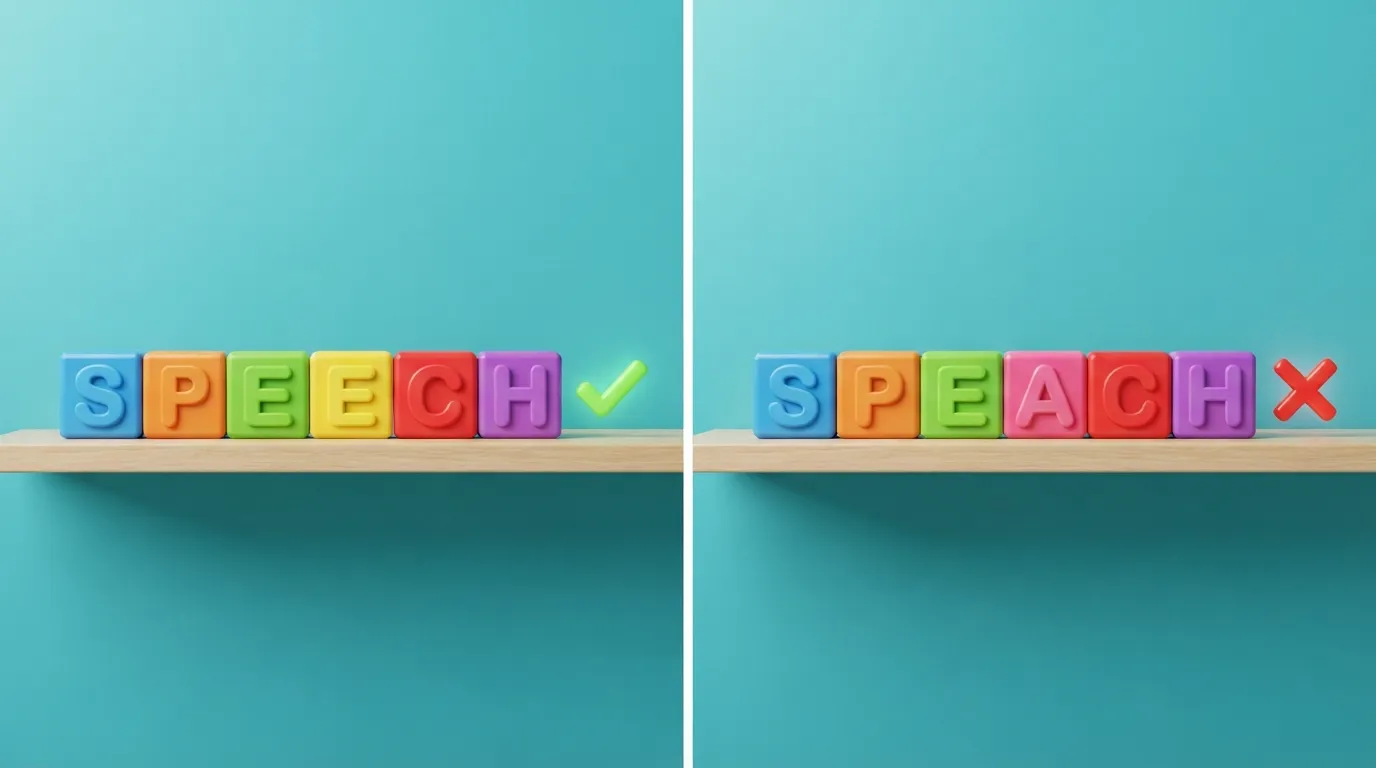
Speech is the correct spelling. Speach is a common misspelling that mixes up the vowel pattern from similar looking words like “teach” or “beach.”
I once watched a colleague spend twenty minutes editing a presentation slide, convinced something looked off. She had typed “speach” three times without noticing. When I pointed it out, she stared at the screen in disbelief.
That moment stuck with me. Smart, educated people misspell this word constantly. The mistake often comes from muscle memory built around similar words like “teach,” “reach,” or “beach,” all of which use the same “ea” sound but different letter patterns.
This guide clears up the confusion for good. You will learn why speech is correct, where the word comes from, and how to avoid the trap that catches so many writers. By the end, spelling it correctly will feel automatic.
Speech or Speach Quick Answer
Speech is the only correct spelling. It refers to the ability to talk, or to a formal talk given to an audience.
For example, “She practiced her speech before the big presentation.” Notice the “ee” in the middle. That double e is the part most people get wrong.
Once that pattern sticks in your memory, you will never second guess it again.
The Origin and Background of Speech
Speech traces back to Old English, where the word “sprecan” meant to speak. Over centuries, the language shifted and shortened until it became the noun “speche,” and eventually settled into the modern spelling, speech.
English vowel patterns rarely follow one simple rule. Words like “teach,” “reach,” and “beach” all use “ea” for the same long e sound. Somewhere along the way, many writers assumed speech should follow that same pattern.
That assumption creates the misspelling speach. It feels logical based on similar words, even though it breaks the actual spelling rule for this particular term.
Speech Explained: Key Differences and Variations
Here is how the correct spelling compares to the common error.
| Term | Meaning | When to Use | Region or Context |
| Speech | The act of speaking or a formal talk | Always, in any writing | Standard across all English dialects |
| Speach | Misspelling of speech | Never in correct writing | Common typo, no accepted use |
| Speeches | Plural form of speech | Multiple talks or addresses | Formal and academic context |
Your brain often relies on patterns it has seen before. Since “teach” and “reach” use “ea,” it assumes speech should too. Breaking that automatic pattern takes a bit of conscious effort.
Which Spelling Should You Use?
For students writing essays, always use speech. Teachers and professors expect the standard spelling in every assignment.
For public speakers and presenters, use speech in your notes, slides, and scripts. A misspelled word on a slide can distract your audience from your message.
For content writers and bloggers, choose speech every time. Search engines favor correctly spelled content, and readers notice small errors quickly.
For casual conversations or texting, small typos happen and rarely matter. Still, building the correct habit will help everywhere else in your writing.
Common Mistakes with Speech
Mistake 1: Writing “speach” instead of “speech.”
Correction: Speech, with “ee” in the middle, not “ea.”
Mistake 2: Confusing speech with speach as a valid alternate spelling.
Correction: There is no accepted alternate spelling. Speech is the only correct form.
Mistake 3: Mixing up speech with speech’s possessive form, like “speechs.”
Correction: The plural is speeches, not speechs.
Mistake 4: Using speech when the intended word is language or dialect.
Correction: Speech refers to spoken communication or a talk, while language refers to a broader system of words and grammar.
Mistake 5: Dropping a letter and writing “spech.”
Correction: Speech needs both e’s, forming the full “ee” sound.
Each of these errors comes from the same root cause. Familiar vowel patterns from other words quietly override the actual spelling rule for this one.
Speech in Real World Examples
A wedding toast often opens like this: “I want to thank everyone for being here as I give this speech in honor of the happy couple.”
News outlets frequently report headlines such as: “President Delivers Speech on Economic Recovery Plan”
Social media users often post lines like: “Just finished writing my graduation speech and I’m already nervous!”
Formal business documents tend to phrase it this way: “All keynote speakers must submit their speech outline by Friday for review.”
Each example shows how naturally the word fits across different types of writing, from casual posts to formal reports.
Speech Data, Trends and Usage
Search data shows that “speech or speach” gets searched thousands of times monthly, especially among students preparing presentations and professionals writing public addresses. Most searches fall into the informational category, since people mainly want confirmation of correct spelling.
Interest spikes around graduation season, wedding season, and major political events, when speeches become a common topic online. English learners also search this term often, since the “ea” versus “ee” pattern trips up many non native speakers.
This matters today because more communication happens through written text than ever before. A single spelling error in a shared document or social post can quietly undermine credibility.
Speech vs Speach Comparison Table
| Term or Variant | Meaning | Region or Context | Best Used When |
| Speech | Correct spelling for spoken communication or formal talk | Global standard in English | Always, in any writing |
| Speach | Incorrect spelling, common typo | Nonstandard, avoid entirely | Never appropriate |
| Speeches | Plural of speech | Multiple talks or addresses | Formal and academic writing |
Speech Frequently Asked Questions
What does speech mean?
Speech refers to the ability to speak, spoken communication in general, or a formal talk delivered to an audience. It can describe both the physical act of talking and a structured presentation.
How do you use speech correctly in a sentence?
Use speech as a noun describing spoken words or a formal address. For example, “He gave a powerful speech at the conference.”
Speech vs speach, what is the real difference?
Speech is the only correct spelling. Speach is simply a misspelling with no accepted use in any form of writing.
Is speech acceptable in formal writing?
Yes, speech is the standard term used in academic papers, business documents, and official communication of every kind.
Which version is correct, speech or speach?
Speech is correct. Speach should never appear in professional or academic writing.
Where does the word speech come from?
Speech comes from Old English “sprecan,” meaning to speak, which evolved through Middle English before settling into its modern form.
Can speech be used in casual conversation?
Yes, speech works in both formal and casual contexts, whether you are discussing a wedding toast or a political address.
Why do people often misspell speech as speach?
The misspelling happens because similar words like teach, reach, and beach use “ea” for the same long e sound, leading writers to assume speech follows the same pattern.
Final Thoughts on Speech or Speach
Speech is the correct spelling, and now you understand exactly why the confusion exists. The word traces back to Old English roots, and the common misspelling comes from vowel patterns borrowed from unrelated words.
Remember the double e in the middle, and picture words like “seed” or “feet” if you need a quick mental trick. That simple association will keep you from slipping into the speach mistake again.
Bookmark this guide so you never second guess speech again. Share it with a friend, coworker, or student who has struggled with this exact spelling.
Explore more: Kindergarten or Kindergarden: Which Spelling Is Right?

My name is Ayesha Sadiqah, the writer behind this website. I write in-depth articles on English spelling, word comparisons, grammar, and vocabulary to help learners make better language choices. Every guide is carefully researched and designed to provide accurate, practical, and easy-to-understand information.