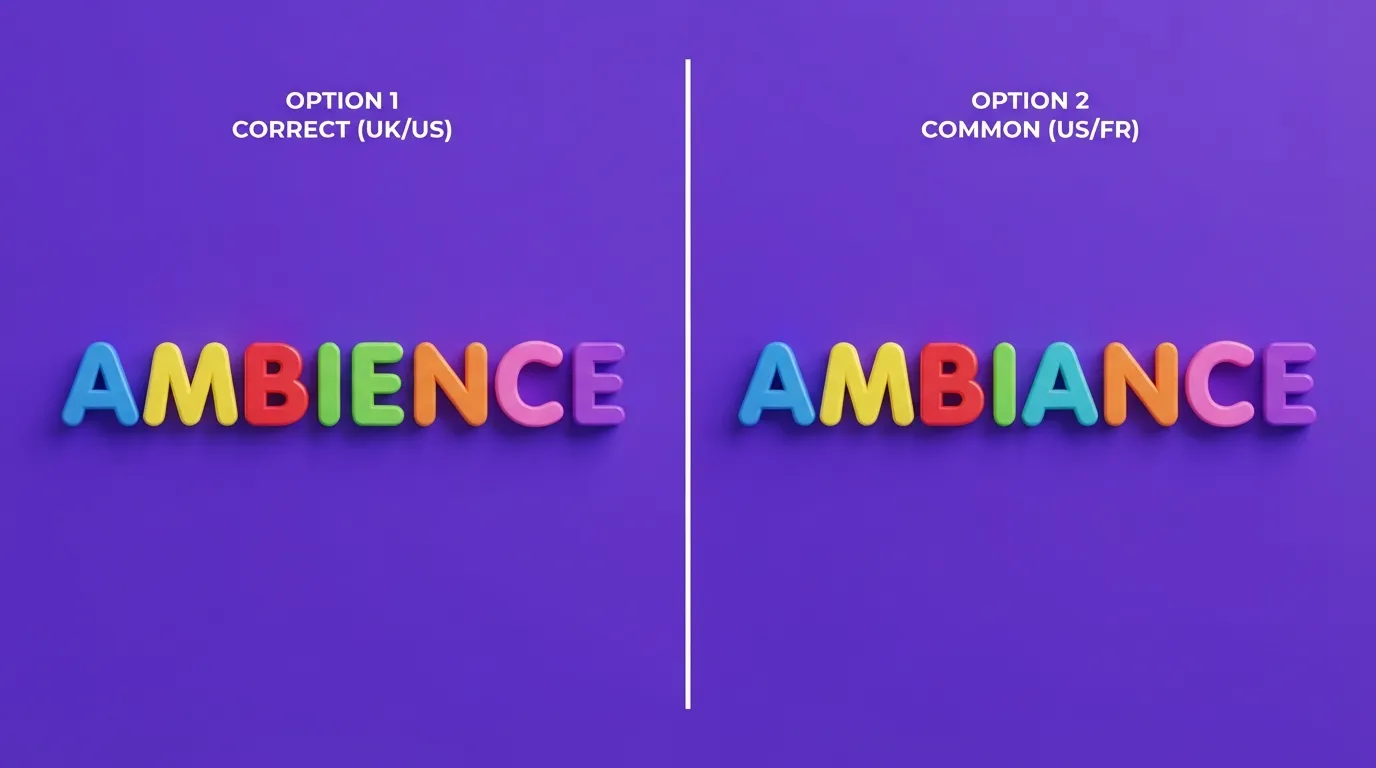
Both ambience and ambiance are correct spellings. Ambience is more common in American English, while ambiance is often preferred in British and international writing, though both mean the same thing.
Last year I helped a friend write a restaurant review for her food blog. She typed “ambiance” in one paragraph and “ambience” in the next. When she asked me which one to fix, I honestly wasn’t sure myself.
That surprised me. I had used both words for years without ever questioning them. Turns out this is one of those rare cases where two spellings are both technically correct, yet almost nobody knows why.
This guide will finally explain the difference, if there even is one. You will learn where each spelling comes from, which one fits your writing style, and how to use either version with total confidence.
Ambience or Ambiance Quick Answer
Ambience and ambiance both describe the mood or atmosphere of a place. Neither spelling is wrong.
For example, “The restaurant had a cozy ambience” and “The restaurant had a cozy ambiance” mean exactly the same thing. Your choice usually comes down to regional preference or personal style.
Once you understand that both forms are valid, the confusion disappears completely.
The Origin and Background of Ambience
Ambience and ambiance both come from the French word “ambiance,” which means surrounding atmosphere. French borrowed heavily from Latin, where “ambire” meant to go around or surround.
English absorbed the word in the twentieth century, and writers slowly split into two camps. Some kept the original French spelling, ambiance. Others anglicized it into ambience, matching patterns found in words like “science” or “audience.”
Neither version won outright. Publishers, editors, and dictionaries eventually accepted both, which explains why you still see this split today across menus, magazines, and marketing copy.
Ambience Explained: Key Differences and Variations
| Term | Meaning | When to Use | Region or Context |
| Ambience | Mood or atmosphere of a place | General writing, especially American English | United States, informal and formal use |
| Ambiance | Mood or atmosphere of a place | Design, hospitality, and luxury branding | United Kingdom, France, upscale contexts |
| Atmosphere | Broader term for overall feeling or mood | When describing emotional or physical setting together | Universal, used interchangeably at times |
Dictionaries list both forms as standard, so style guides rarely force one over the other. Many companies simply pick the version that matches their brand tone, French inspired ambiance, or the more familiar ambience.
Which Spelling Should You Use?
For American writers and bloggers, ambience tends to feel more natural and matches everyday American spelling conventions.
For hospitality, design, and luxury brands, ambiance often carries a slightly more elegant, French inspired feel that fits upscale marketing.
For academic or journalistic writing, either spelling works, though picking one and staying consistent throughout your document matters more than which one you choose.
For global audiences, ambiance may read as more universally recognized, since it stays closer to the original French spelling used worldwide.
Common Mistakes with Ambience
Mistake 1: Switching between ambience and ambiance within the same article.
Correction: Pick one spelling and stay consistent throughout your entire piece.
Mistake 2: Assuming one spelling is grammatically wrong.
Correction: Both ambience and ambiance are accepted, correct spellings in modern dictionaries.
Mistake 3: Confusing ambience with ambiguous, since the words look similar.
Correction: Ambiguous means unclear or open to multiple meanings, a completely different word.
Mistake 4: Overusing the word when a simpler term would work better.
Correction: Sometimes “mood,” “vibe,” or “feel” reads more naturally in casual writing.
Mistake 5: Misspelling it as “ambiance” with an extra letter, like “ambiaance.”
Correction: Double check the spelling matches either accepted form exactly, no extra letters added.
These errors happen because writers rarely see both spellings explained side by side. Once you know both are valid, the mental friction disappears.
Ambience in Real World Examples
A restaurant review might read like this: “The candlelit tables and soft jazz created the perfect ambience for a romantic dinner.”
Travel magazines often use lines such as: “This boutique hotel is known for its Parisian ambiance and personalized service.”
Social media captions frequently include phrases like: “Coffee shop ambience is exactly what I needed this morning.”
Interior design portfolios sometimes state: “Our team specializes in creating warm ambiance through lighting and texture choices.”
Each example shows how naturally both spellings blend into different writing styles, from casual reviews to polished marketing copy.
Ambience Data, Trends and Usage
Search data shows steady interest in “ambience or ambiance” year round, with noticeable spikes during wedding planning season and restaurant review peaks around holidays. Most searches fall into the informational category, since people mainly want spelling clarification.
Hospitality writers, interior designers, and restaurant reviewers search this term most often, since both industries rely heavily on describing mood and atmosphere. English learners also search this phrase frequently, curious why two spellings exist for one meaning.
This distinction matters now more than ever, since brand consistency across websites, menus, and social media directly affects how professional a business appears online.
Ambience vs Ambiance Comparison Table
| Term or Variant | Meaning | Region or Context | Best Used When |
| Ambience | Atmosphere or mood of a place | American English, general use | Everyday writing and casual content |
| Ambiance | Atmosphere or mood of a place | British English, French influenced branding | Luxury, hospitality, and design writing |
| Vibe | Informal synonym for overall feeling | Casual conversation and social media | Quick, relaxed descriptions |
Ambience Frequently Asked Questions
What does ambience mean?
Ambience means the mood, feeling, or atmosphere created by a place, often shaped by lighting, sound, and design. It describes how a space makes people feel emotionally.
How do you use ambience correctly in a sentence?
Use ambience as a noun describing overall mood, such as “The garden had a peaceful ambience during sunset.”
Ambience vs ambiance, what is the real difference?
There is no real difference in meaning. Both spellings describe the same concept, with ambience more common in American English and ambiance more common internationally.
Is ambiance acceptable in formal writing?
Yes, ambiance is fully acceptable in formal, academic, and business writing, especially in hospitality and design industries.
Which version is correct, ambience or ambiance?
Both are correct. Choose based on your audience, brand tone, or personal preference, then stay consistent.
Where does the word ambience come from?
Ambience comes from the French word ambiance, which traces back to the Latin root ambire, meaning to surround.
Can ambiance be used in casual conversation?
Yes, ambiance works fine in casual speech, though ambience may sound slightly more familiar to American English speakers.
Why do two spellings exist for the same word?
English absorbed the French word ambiance and slowly created an anglicized version, ambience, without fully replacing the original spelling.
Final Thoughts on Ambience or Ambiance
Both ambience and ambiance are correct, and now you understand exactly why this rare double spelling exists. The word traveled from Latin through French before English split it into two accepted forms.
Pick whichever spelling matches your audience and tone, American ambience or the more French leaning ambiance, then stay consistent across your writing. That consistency matters far more than which version you choose.
Bookmark this guide so you never second guess ambience again. Share it with a writer, designer, or reviewer who has wondered which spelling to trust
See More: Speech or Speach: The Correct Spelling Explained

My name is Ayesha Sadiqah, the writer behind this website. I write in-depth articles on English spelling, word comparisons, grammar, and vocabulary to help learners make better language choices. Every guide is carefully researched and designed to provide accurate, practical, and easy-to-understand information.