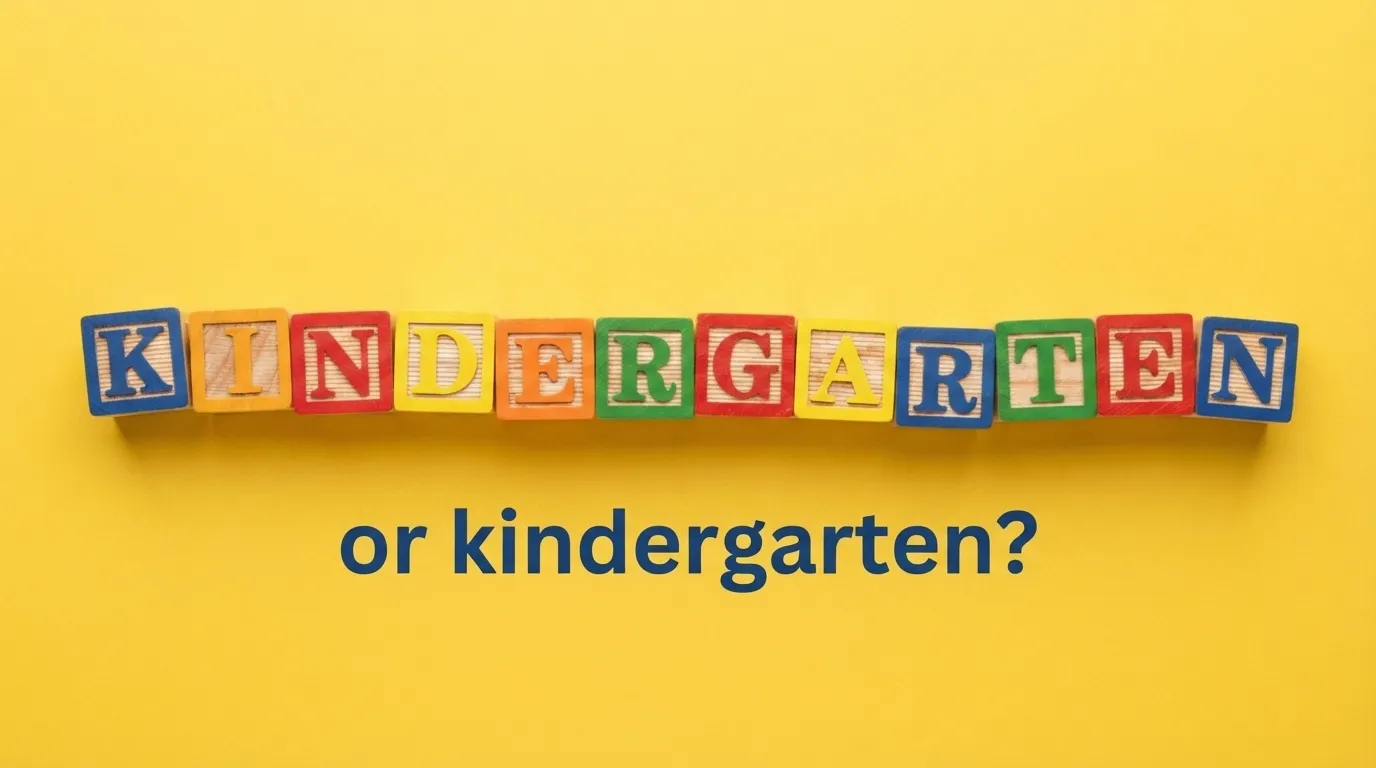
Kindergarten is the correct spelling. Kindergarden is a common misspelling that many parents and even teachers type without realizing it.
I still remember the first time I wrote a note for my daughter’s teacher. I typed “kindergarden” without a second thought. My husband read it over my shoulder and asked why I spelled it that way. I froze. I had no idea I had been getting it wrong for years.
That small moment sent me down a rabbit hole. I found out that thousands of parents make this exact mistake every single day. Some blame autocorrect. Others just never questioned the spelling they grew up seeing.
This guide will settle the confusion for good. You will learn where the word comes from, why so many people misspell it, and how to use it correctly in every situation. By the end, you will never second guess yourself again.
Kindergarten or Kindergarden: Quick Answer
The correct spelling is kindergarten. It ends in “ten,” not “den.”
Think of it this way: a garden has flowers, but kindergarten has children learning their first letters. For example, “She enrolled her son in kindergarten this fall” is correct. “She enrolled her son in kindergarden this fall” is not.
Once you notice the “ten” ending, the mistake becomes much easier to catch.
The Origin and Background of Kindergarten
The word kindergarten comes straight from German. It combines two words: “kinder,” meaning children, and “garten,” meaning garden. Put together, it literally means “children’s garden.”
A German educator named Friedrich Froebel created the concept in 1837. He believed young children learn best through play, much like plants grow best in a garden with care and attention. He opened the first kindergarten in Germany, and the idea spread across the world within decades.
Because the word ends in “garten” and sounds similar to “garden” in English, many people naturally assume it should be spelled that way too. That is where kindergarden comes from. It is a simple case of the ear tricking the eye.
Kindergarten Explained: Key Differences and Variations
Here is a breakdown of how the correct and incorrect spellings compare.
| Term | Meaning | When to Use | Region or Context |
| Kindergarten | Correct spelling of the early education program | Always, in formal and informal writing | Used worldwide in English |
| Kindergarden | Common misspelling | Never in correct writing | Informal speech or typos only |
| Pre K | A separate program before kindergarten | When referring to preschool age groups | Mostly used in the United States |
Notice that kindergarden is not a regional variant or an accepted alternative spelling. It is simply an error that spread because it sounds close to the word garden.
Which Spelling Should You Use?
For parents filling out school forms, always use kindergarten. School documents, applications, and enrollment papers require the correct spelling.
For teachers and school staff, use kindergarten in every lesson plan, report card, and email. Consistency matters, especially in professional communication.
For writers and bloggers, always choose kindergarten. Search engines and readers expect the standard spelling, and using it builds trust.
For casual texting among friends, small typos happen and usually go unnoticed. Still, building the habit of spelling it correctly will serve you well everywhere else.
Common Mistakes with Kindergarten
Mistake 1: Writing “kindergarden” instead of “kindergarten.”
Correction: Kindergarten. Remember the “ten” ending, like the number ten.
Mistake 2: Capitalizing kindergarten like a proper noun.
Correction: Kindergarten is a common noun and should stay lowercase unless it starts a sentence.
Mistake 3: Adding an extra “e,” writing “kindergardten.”
Correction: Kindergarten has no extra letters between “gar” and “ten.”
Mistake 4: Confusing kindergarten with preschool.
Correction: Preschool usually comes before kindergarten and serves younger children, often ages three to four.
Mistake 5: Writing “kinder garden” as two words.
Correction: Kindergarten is always one word with no space.
These mistakes happen because the word sounds familiar, almost like everyday English words we already know. Our brains fill in the gaps with words we recognize, and “garden” feels more familiar than “garten.”
Kindergarten in Real World Examples
In a professional email: “We are pleased to inform you that your child has been accepted into our kindergarten program starting in September.”
A news headline might read: “Local School District Expands Kindergarten Enrollment for Fall Semester”
In a social media post: “First day of kindergarten! My little one was so excited she couldn’t sleep last night.”
In a formal document: “Applicants must provide proof of age eligibility for kindergarten enrollment by August 1st.”
Notice how the word fits naturally into every setting, from casual posts to formal paperwork. Getting the spelling right in each context builds credibility, whether you are a parent, teacher, or writer.
Kindergarten: Data, Trends, and Usage
Search data shows that “kindergarten or kindergarden” is searched thousands of times each month. Most people searching this term are parents preparing to enroll their children for the first time. This makes the search intent mostly informational, though some searches lead to school registration pages, making it partly commercial too.
Parents in the United States, Canada, and the United Kingdom search this term most often, usually around late summer and early fall when school enrollment season begins. English learners also search this phrase frequently, since German loanwords in English often trip up new speakers.
This matters right now because more parents are researching schools online than ever before. A single spelling mistake on a website or form can affect how professional a school or blog appears to visitors.
Kindergarten vs Kindergarden Comparison Table
| Term or Variant | Meaning | Region or Context | Best Used When |
| Kindergarten | Correct spelling for early childhood education | Global standard in English | Always, in any writing |
| Kindergarden | Incorrect spelling, common typo | Nonstandard, avoid entirely | Never appropriate |
| Kinder | Informal shortened version | Casual conversation | Only in informal speech |
Frequently Asked Questions
Q: What does kindergarten mean?
A: Kindergarten refers to an educational program for young children, usually between ages five and six, that prepares them for elementary school. The word comes from German and literally means “children’s garden.”
Q: How do you use kindergarten correctly in a sentence?
A: Use it as a common noun, lowercase, describing the school level. For example, “My son starts kindergarten next Monday.”
Q: Kindergarten vs kindergarden, what is the actual difference?
A: Kindergarten is the correct spelling. Kindergarden is simply a common misspelling with no accepted use in formal or informal writing.
Q: Is kindergarten acceptable in formal writing?
A: Yes, kindergarten is the standard term used in formal documents, academic papers, and official school communication.
Q: Which version is correct, kindergarten or kindergarden?
A: Kindergarten is correct. Kindergarden should never be used, even casually.
Q: Where does the word kindergarten come from?
A: It comes from German, created by educator Friedrich Froebel in 1837, combining “kinder” for children and “garten” for garden.
Q: Can kindergarten be used in international English?
A: Yes, kindergarten is used consistently across American, British, Canadian, and Australian English without regional spelling changes.
Q: Why do so many people misspell kindergarten as kindergarden?
A: The word sounds similar to “garden,” a much more familiar English word, so people naturally assume that spelling is correct.
Final Thoughts
Kindergarten is the only correct spelling, and now you know exactly why. It comes from German roots meaning “children’s garden,” created by an educator who believed young kids learn best through play.
Remember the “ten” at the end, think of the number ten, and you will never confuse it with “garden” again. Whether you are filling out school forms, writing a blog post, or texting a friend, this small detail makes a real difference in how polished your writing looks.
Bookmark this guide so you never second guess kindergarten again. Share it with any parent or teacher who has typed “kindergarden” without realizing the mistake.
Read More: Gen Z vs Millennial: The Real Difference Explained

Hi, I’m Zara. Words that look almost identical but mean completely different things have always fascinated me, that’s what pulled me toward writing about spelling and usage. I focus on digging into where these mix-ups actually come from, whether it’s a British-American split or just a rule English never bothered to make consistent. My goal with every guide is simple: give you the answer fast, then explain it well enough that you never have to look it up again.