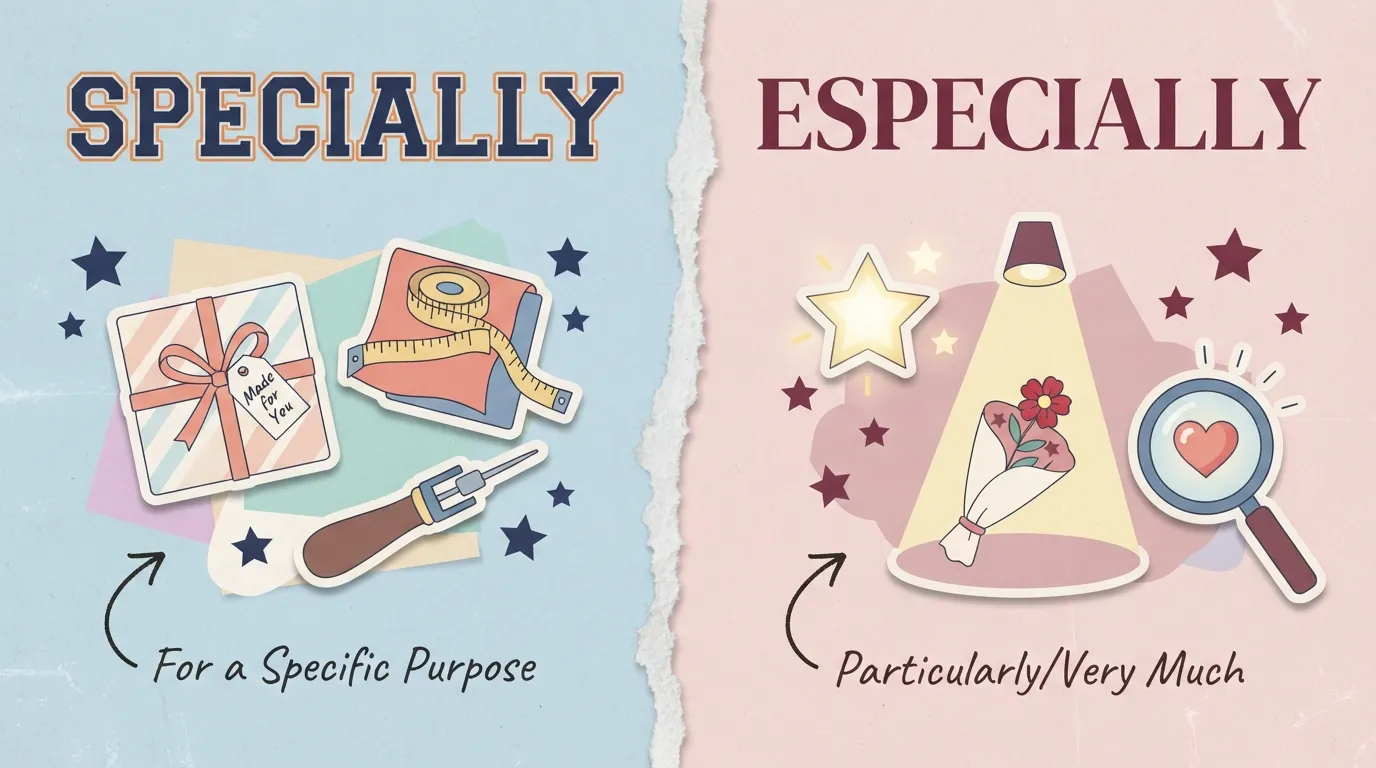
Especially means “particularly” or “above all,” while specially means “for a specific purpose.” If you can swap in “particularly,” use especially. If you mean “custom made,” use specially.
I used to write “specially” in every sentence that needed emphasis. Then an editor circled it in red three times on one page. That stung.
She told me something simple. Ask yourself if you mean “particularly” or “for one exact purpose.” That one question fixed my writing overnight.
These two words look almost the same. They sound almost the same when you say them fast. But they carry different jobs in a sentence, and mixing them up is one of the most common errors in English writing.
This guide breaks down the difference in plain terms. You will see the meaning, the history, real examples, and the exact fixes for the mistakes people make most.
By the end, you will never freeze up over specially or especially again.
Specially or Especially: Quick Answer
Especially means “particularly” or “more than usual.” Use it to highlight one thing among many.
Specially means “for a specific reason or purpose.” Use it when something was made or done a certain way, on purpose.
Example: “I especially enjoy summer.” (particularly) Example: “This cake was specially made for her birthday.” (for that exact purpose)
The Origin of Specially and Especially
Both words trace back to the Latin word specialis, meaning “individual” or “particular.” They split into two paths in English centuries ago.
Especially grew to mean “above all others.” It became the word for emphasis and comparison.
Specially kept closer to its roots. It stayed tied to purpose and function, as in something built or done for one specific reason.
The confusion exists because both words share that Latin root and both start with the same four letters. Your eye and ear want to treat them as twins. They are cousins instead.
Specially vs Especially: Key Differences
Here is the difference broken down with clear, real world examples.
| Term | Meaning | When to Use | Region/Context |
| Especially | Particularly, above all | Comparing or emphasizing one thing over others | Used equally in US and UK English |
| Specially | For a specific purpose | Describing something custom made or done on purpose | Used equally in US and UK English |
More examples:
- “I love pizza, especially with extra cheese.” (particularly)
- “This dress was specially designed for the wedding.” (custom made)
- “She was especially kind to the new student.” (more than usual)
- “The tool was specially built for this job.” (built for one reason)
A simple trick: if you can replace the word with “particularly” and the sentence still makes sense, use especially. If you can replace it with “for this exact purpose,” use specially.
Which Version Should You Use?
Your choice depends on what you are trying to say, not on region or formality. Both words are correct in every English speaking country.
- For emphasis or comparison, use especially. Example: “I especially like Mondays” makes no sense unless you mean you like Mondays more than other days.
- For purpose or intention, use specially. Example: “The gift was specially chosen for you” means someone picked it with you in mind.
- For neutral, general writing, ask which meaning fits your sentence. There is no safe default. Picking the wrong one changes your meaning.
Common Mistakes with Specially or Especially
Mistake 1: “This meal was especially prepared for you.” Correction: “This meal was specially prepared for you.” Why it happens: writers reach for the more familiar word without checking the meaning.
Mistake 2: “I specially love rainy days.” Correction: “I especially love rainy days.” Why it happens: people confuse purpose with preference.
Mistake 3: “The shoes were especially made for wide feet.” Correction: “The shoes were specially made for wide feet.” Why it happens: “made for” signals purpose, which calls for specially, not especially.
Mistake 4: Using either word to mean “very.” Correction: Neither word means “very.” Especially means “particularly.” Specially means “for a purpose.” Why it happens: both words get treated as generic intensifiers when they are not.
Mistake 5: Dropping one word entirely and using the other for everything. Correction: Learn the two separate jobs instead of picking one favorite word. Why it happens: it feels safer to stick with one word than risk the wrong choice.
Specially or Especially in Real-World Examples
Professional email: “I wanted to reach out especially about the budget concerns raised last week.”
News headline: “City Opens Specially Built Shelter for Storm Victims”
Social media post: “Had the best weekend, especially the hike on Saturday! 🌄”
Formal document: “This report was specially prepared for the board’s quarterly review.”
Notice how especially always compares or emphasizes, while specially always points to a specific purpose or design.
Specially or Especially: Data, Trends, and Usage
People search for this comparison because both words are common in everyday writing, from emails to product descriptions.
Searches for “specially vs especially” spike around back to school season and business writing periods, when people proofread more carefully.
The intent behind this search is almost always informational. People want a clear rule, not a debate.
This matters now because AI writing tools and spell checkers do not always catch this error. Spell check will not flag either word since both are spelled correctly. Only meaning tells you which one is right, so writers need to understand the difference themselves.
Specially or Especially: Full Comparison Table
| Term/Variant | Meaning | Region/Context | Best Used When |
| Especially | Particularly, above all others | US and UK, all formal and casual writing | Comparing, emphasizing, or singling something out |
| Specially | For a specific purpose or reason | US and UK, all formal and casual writing | Describing something custom made or done with intent |
Frequently Asked Questions
Q: What does especially mean? A: Especially means “particularly” or “more than usual.” You use it to point out one thing that stands out among others.
Q: How do you use specially correctly? A: Use specially when something was made, chosen, or done for one specific reason. Think “custom” or “on purpose.”
Q: Specially vs especially, what’s the real difference? A: Especially compares or emphasizes. Specially points to purpose. They are not interchangeable, even though they look similar.
Q: Is specially acceptable in formal writing? A: Yes. Specially is completely correct in formal writing when you mean something was done for a specific purpose.
Q: Which version is correct, specially or especially, in the sentence “I ___ enjoy coffee”? A: Especially is correct here, since you mean you enjoy coffee more than other drinks.
Q: Where does this confusion come from? A: Both words come from the same Latin root, specialis, and they look nearly identical, which makes writers mix them up often.
Q: Can specially be used to mean “very”? A: No. Specially never means “very.” It always points to purpose or intention, not intensity.
Final Thoughts
Especially and specially do two different jobs. Especially highlights and compares. Specially points to purpose and intention.
The fastest test is a simple swap. Try “particularly” first. If that fits, use especially. If it does not fit, and the sentence is about purpose, use specially.
Small words like these shape how clear your writing sounds. Getting them right builds trust with your reader, whether you’re writing an email, a headline, or a birthday card.
Bookmark this guide so you never second guess specially or especially again. Share it with a friend who mixes these up too.
See More: Capitol or Capital: The One Letter Mistake to Avoid

Hi, I’m Zara. Words that look almost identical but mean completely different things have always fascinated me, that’s what pulled me toward writing about spelling and usage. I focus on digging into where these mix-ups actually come from, whether it’s a British-American split or just a rule English never bothered to make consistent. My goal with every guide is simple: give you the answer fast, then explain it well enough that you never have to look it up again.