A founder is the person who started the company, while a CEO is the person currently running its daily operations. Sometimes these are the same person. Often, especially as companies grow, they are not.
I used to assume founder and CEO meant the exact same thing, until I watched a startup story unfold where the founder stepped back and hired someone else entirely to run the company as CEO.
That moment made it click. These two titles describe completely different roles, even though the same person often holds both at the very beginning.
This guide explains exactly what separates a founder from a CEO, why the confusion happens so often, and how to correctly use both titles in writing, business cards, and everyday conversation.
Founder or CEO: Quick Answer
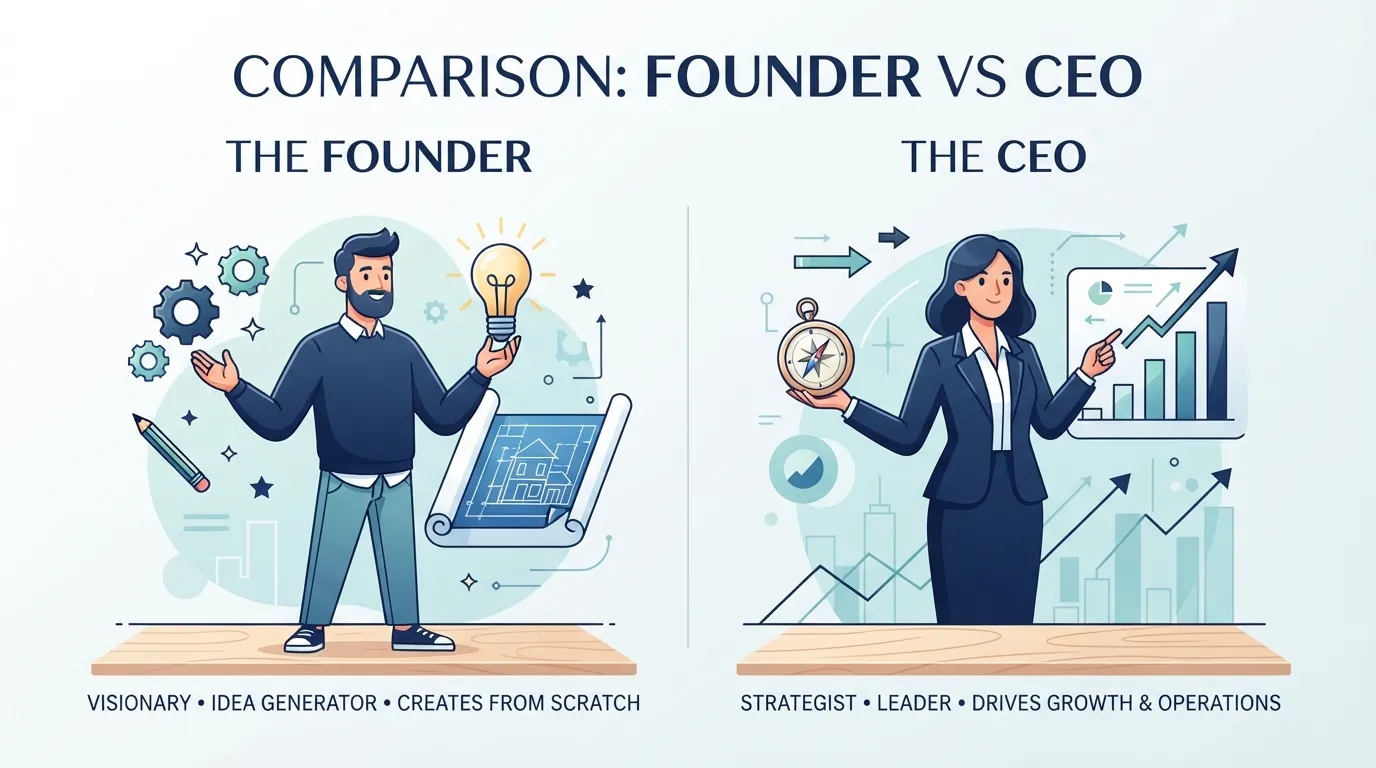
A founder is simply the person, or one of the people, who created the company. This title is permanent. Even if a founder steps down completely, they remain the founder forever.
A CEO, short for chief executive officer, is the person responsible for leading the company’s daily operations, strategy, and major decisions right now. This title can change hands as the company grows or changes leadership.
Think of founder as a historical fact and CEO as a current job title.
The Origin of These Two Titles
Founder comes from the verb found, meaning to establish or set up something new, rooted in Old French fonder and ultimately Latin fundare, meaning to lay a foundation. The word has described the creator of an institution, organization, or company for centuries.
CEO is a much newer title, becoming standard corporate vocabulary mainly in the twentieth century as companies grew large enough to require a clear, single point of executive leadership, separate from ownership. Before this title became common, similar leadership roles often used titles like president or managing director instead.
The overlap in confusion largely comes from startup culture, where the founder very often serves as CEO in the earliest days, blending both roles into one familiar face.
Key Differences and Variations
| Term | Meaning | When to Use | Region or Context |
| Founder | Person who originally created the company | Describing company history or origin story | Global business usage |
| CEO | Person currently leading daily operations | Describing current leadership and decision making authority | Global business usage |
| Founder and CEO | Person who both started and currently runs the company | Describing early stage startups or owner led businesses | Common in startup culture worldwide |
| Co founder | One of multiple people who started the company together | Describing shared company origin | Common in startup and tech industries |
| Former CEO | Someone who previously held the CEO role but no longer does | Describing past leadership | Global business usage |
Notice that founder never expires, while CEO is tied strictly to whoever currently holds that active leadership position.
Which Version or Approach Should You Use?
For describing who originally built the company, always use founder, regardless of whether that person still works there today.
For describing who currently makes major decisions and runs daily operations, use CEO, since this title reflects present responsibility, not history.
Also For early stage startups where one person still does both jobs, founder and CEO is accurate and commonly used together in bios, email signatures, and pitch decks.
And For companies with multiple original creators, use co founder for each individual, reserving founder alone for cases involving a single original creator.
Common Mistakes with Founder and CEO
Mistake 1: Assuming every founder is automatically the CEO. Correction: Many founders hire someone else as CEO once the company grows, while keeping a different role like chairman or advisor. This mistake happens because early stage startups often blur the two roles together in public perception.
Mistake 2: Dropping the founder title once someone steps down as CEO. Correction: Founder status never changes, even after someone leaves daily operations entirely. People often assume titles work like job positions that simply end, when founder actually describes a permanent historical fact.
Mistake 3: Writing CEO without specifying which company, especially for people connected to multiple businesses. Correction: Always clarify which company the CEO title applies to, since someone can be a founder of one company and CEO of a completely different one.
Mistake 4: Using founder and CEO interchangeably in formal bios once a company has grown large and changed leadership. Correction: Once a company promotes or hires a separate CEO, formal bios should list the original person only as founder, not founder and CEO. This mistake often comes from outdated bios that never get updated after leadership changes.
Founder and CEO in Real World Examples
Professional email signature: “Amara Chen, Founder, GreenLeaf Organics”
News headline: “Tech Startup Appoints New CEO While Founder Steps Into Advisory Role”
Social media bio: “Founder and CEO of a small bakery turning big dreams into fresh bread daily.”
Formal business document: “The board approved the transition, appointing a new chief executive officer while the original founder retained a seat on the board of directors.”
Notice how founder frequently appears in origin stories and personal branding, while CEO appears more often in formal leadership and governance contexts.
Data, Trends, and Usage
Searches for founder vs CEO difference spike heavily around startup funding news, leadership transitions, and business school content explaining corporate structure basics.
Searches for founder and CEO meaning trend consistently among aspiring entrepreneurs building their personal brand and social media presence for the first time.
Both terms fall mainly under informational search intent, though searches like how to become a CEO lean slightly toward career and educational intent rather than pure definition seeking.
This distinction matters now more than ever, since startup culture and personal branding have made both titles extremely visible on social media, where accuracy affects credibility, especially during funding rounds or leadership changes that attract public attention.
Standalone Comparison Table
| Term or Variant | Meaning | Region or Context | Best Used When |
| Founder | Original creator of the company | Global business usage | Describing company origin, permanent title |
| CEO | Current leader of daily operations | Global business usage | Describing present leadership role |
| Founder and CEO | Same person holds both roles | Common in early stage startups | Describing owner led, growth stage companies |
| Co founder | One of several original creators | Common in startups and tech | Describing shared company origin |
Frequently Asked Questions
Q: What does founder mean in business? A: Founder describes the person or people who originally created and established a company, a title that remains true permanently, regardless of their current role.
Q: How do you use CEO correctly in a sentence? A: Use CEO to describe whoever currently holds the top executive leadership role at a company, such as “the CEO announced a new strategy for next year.”
Q: Founder vs CEO, what’s the difference? A: Founder refers to who started the company, a permanent historical fact, while CEO refers to whoever currently runs daily operations, a role that can change over time.
Q: Is founder and CEO acceptable to use together in formal writing? A: Yes, when the same person genuinely holds both roles, founder and CEO is accurate and commonly used together in professional bios and email signatures.
Q: Which title is correct after a founder steps down as CEO? A: The person remains the founder permanently, but should only be listed as CEO for the period they actually held that active leadership role.
Q: Where does the title CEO come from? A: Chief executive officer became standard corporate vocabulary mainly in the twentieth century, as growing companies needed a clear, single point of executive leadership.
Q: Can someone be a founder without ever becoming CEO? A: Yes, some founders intentionally hire an experienced CEO from the very beginning, choosing to focus on other roles like product development or strategy instead.
Final Thoughts
Founder and CEO might overlap in the early days of a company, but they describe fundamentally different things. Founder marks a permanent piece of history. CEO marks current, active leadership responsibility.
Remember these key points. Founder never changes, even after someone leaves the company. CEO reflects whoever currently runs daily operations. And founder and CEO together only stays accurate while one person genuinely holds both roles.
Now you know exactly how founder and CEO differ, so go double check your own bio or business card to make sure your titles actually reflect your current role.
Bookmark this guide so you never second guess founder or CEO again, and share it with anyone still mixing up these two important business titles.
Read More: Jist or Gist: The Correct Spelling Explained

Hey, I’m Ayeza. I started this site because I kept hitting the same wall over and over: typing a word, freezing, and not trusting my own instinct on the spelling. Now I research these mix-ups properly so you don’t have to, and I write every guide the way I wish these explanations had been written for me.