Bronchitis or pneumonia? Bronchitis is swelling in the airways that carry air to your lungs. Pneumonia is an infection deep inside the lungs. Pneumonia is usually the more serious one.
Picture this. You have coughed for six days. Your chest feels tight. A coworker says it is bronchitis. Your aunt says it sounds like pneumonia. Now you are staring at the ceiling at 2 a.m., unsure who is right.
You are not alone. Millions of people search for this question every year. The reason is simple. Both illnesses often start after a cold. Both cause coughing. Both show up more often in cold months.
Yet they are not the same. One usually passes with rest. The other can send you to the hospital.
This guide gives you the real difference in plain words. You will get a cheat sheet, a symptom checklist, and clear rules for when to call a doctor. Keep in mind that this article teaches. It does not replace medical care. If you feel unsure, ask a doctor.
Bronchitis or Pneumonia: Quick Answer
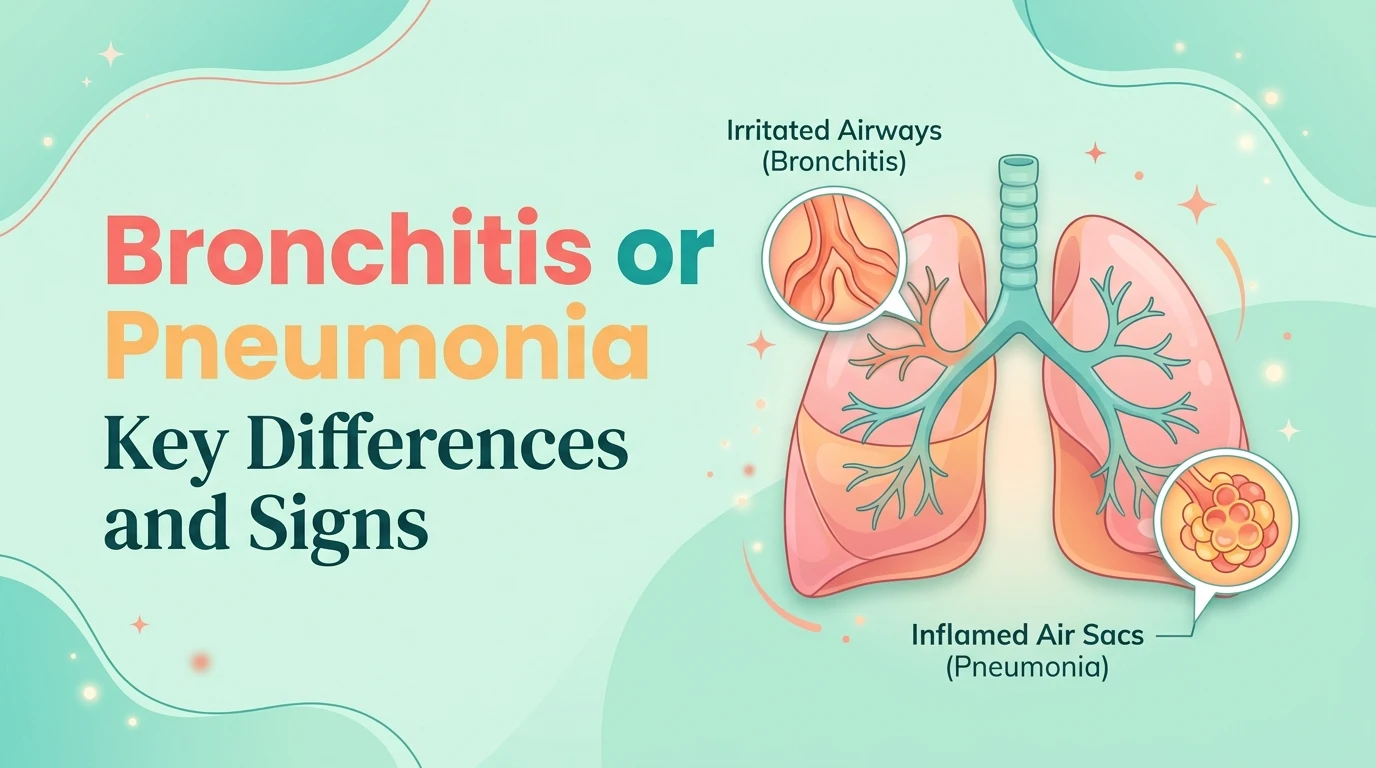
Think of your lungs as an upside down tree. The airways are the branches. Tiny air sacs sit at the ends, like leaves.
Bronchitis means the branches are swollen and full of mucus. Pneumonia means the leaves are infected and filled with fluid or pus.
For example, a person with bronchitis may cough for two weeks but still work. A person with pneumonia may have a fever, chills, and trouble breathing. So the location of the problem matters.
Where the Words Come From
The names tell you a lot. Bronchitis joins bronchus, a Greek word for the windpipe and its branches, with itis, which means swelling. So the word means swollen airways.
Pneumonia comes from the Greek word for lung. Notice the silent p. Say it as “new moan ya.”
Why the confusion? Both words sound medical, and both bring a wet cough. In everyday talk, people also use the term chest cold for bronchitis. That label makes it sound milder than pneumonia, which is often true. However, a bad cough can hide a bigger problem. That is why the difference matters.
Bronchitis vs Pneumonia: Key Differences
Here is a side by side view.
| Feature | Bronchitis | Pneumonia |
| What it is | Swollen airways | Infection in the air sacs |
| Usual cause | Mostly viruses; smoke can cause chronic type | Bacteria, viruses, or fungi |
| Cough | Dry, then mucus | Often wet with thick mucus |
| Fever | Mild or none | Often higher, with chills |
| Breathing | Wheezing, tight chest | Short breath, sharp chest pain |
| How long | Cough lasts one to three weeks, sometimes longer | Can last longer; tiredness lingers |
| Seriousness | Usually mild | Can be serious |
| Antibiotics | Usually not helpful, because most cases are viral | Often needed if bacteria are the cause |
Acute bronchitis is the short kind. It usually follows a cold or flu. Chronic bronchitis is a long term illness. Doctors describe it as a mucus cough lasting at least three months, two years in a row. It is linked to smoking and is part of COPD.
Symptom Cheat Sheet
Use this list as a quick check. It is not a diagnosis.
More likely bronchitis:
- Cough that came after a cold
- Mucus that is clear, white, or yellow
- Mild tiredness
- Little or no fever
- Chest feels sore from coughing
More likely pneumonia:
- Fever and shaking chills
- Fast or short breathing
- Sharp chest pain when you breathe or cough
- Deep tiredness
- Confusion, especially in older adults
Get help right away if you have:
- Trouble breathing
- Blue or gray lips or face
- Chest pain that does not ease
- Coughing up blood
- New confusion
One more tip. Mucus color does not prove what is wrong. Green mucus does not always mean bacteria. Only a doctor can tell.
Which Path Should You Take?
Your best step depends on who you are.
- Healthy adult with a mild cough: Rest, drink fluids, and watch your symptoms. Most bronchitis improves on its own. See a doctor if the cough lasts more than three weeks.
- Parent of a baby or young child: Do not wait. A baby with a fever and fast breathing needs urgent care.
- Adult over 65, or someone with asthma, heart disease, or lung disease: Call a doctor early. Pneumonia can hit this group harder.
- Smoker or long term cougher: Ask about chronic bronchitis and COPD. Quitting smoking helps most.
- Anyone with trouble breathing: Go to emergency care.
For prevention, wash your hands often. Do not smoke. Also ask your doctor which vaccines fit your age and health. Flu, pneumococcal, COVID 19, and RSV shots can protect some groups.
Common Mistakes About Bronchitis or Pneumonia
Mistake: “They are the same illness.” Correction: They are different. One affects airways, and the other affects the lung tissue.
Mistake: “I need antibiotics for every bad cough.” Correction: Most acute bronchitis comes from viruses, so antibiotics usually do not help.
Mistake: “Pneumonia is just a bad cold.” Correction: It is a lung infection and can become serious.
Mistake: “Walking pneumonia is not real pneumonia.” Correction: It is a mild form of pneumonia. You can still walk around, but it needs care.
Mistake: “Spelling it pnemonia or bronchitus.” Correction: Write pneumonia and bronchitis. Both keep their tricky letters.
These errors happen because the symptoms overlap. As a result, people guess. Guessing can delay the right care.
Bronchitis or Pneumonia in Real World Examples
Seeing the words in use helps you remember them.
- Email to a manager: “I have bronchitis, so I will work from home until my cough settles.”
- News headline: “Doctors urge older adults to get vaccinated to lower pneumonia risk this winter.”
- Social media post: “Day five of this cough. Doctor says bronchitis, not pneumonia. Soup and rest it is.”
- Formal report: “The patient was treated for pneumonia after a chest X ray showed infection in the lower lung.”
Bronchitis or Pneumonia: Trends and Usage
People search this question most when colds and flu spread. Many searches come from worried parents, adults with a long cough, and caregivers of older family members. The search intent is informational. People want to know which illness they have and what to do next.
Here is why it matters now. Respiratory illnesses are in the news every season. As more viruses circulate, more people wonder if a cough is serious. A clear answer can help you act sooner.
Quick Term Table
| Term | Meaning | Context | Best Used When |
| Acute bronchitis | Short term swelling of airways | Common after colds | Cough has lasted days to weeks |
| Chronic bronchitis | Long term mucus cough | Linked to smoking and COPD | Cough lasts three months or more |
| Chest cold | Informal name for acute bronchitis | Everyday speech | Talking casually |
| Pneumonia | Infection in the lung air sacs | Medical and everyday | Fever, chills, and trouble breathing |
| Walking pneumonia | Mild pneumonia | Informal | You feel unwell but can move around |
FAQ
Q: What does bronchitis or pneumonia mean? A: It asks which illness you have. Bronchitis is swollen airways. Pneumonia is an infection in the lungs.
Q: How do I tell bronchitis from pneumonia at home? A: Fever, chills, sharp chest pain, and fast breathing point toward pneumonia. However, only a doctor can confirm it, often with a lung exam or a chest X ray.
Q: Can bronchitis turn into pneumonia? A: Yes, sometimes. If you get worse after a few days, call a doctor.
Q: Is pneumonia worse than bronchitis? A: Usually, yes. Pneumonia can be serious, especially for babies, older adults, and people with other health problems.
Q: Are they contagious? A: Often, yes. The germs that cause acute bronchitis and many pneumonias spread through coughs. Chronic bronchitis is not contagious.
Q: How long does each one last? A: Acute bronchitis often clears in one to three weeks. Pneumonia can take longer, and tiredness can linger.
Q: When should I see a doctor? A: See one if you have trouble breathing, chest pain, a high fever, confusion, or a cough that lasts more than three weeks.
Conclusion
Here is what to remember. Bronchitis means swollen airways, and it is usually mild. Pneumonia means a lung infection, and it can be serious. Both begin with a cough, but their signs differ.
Use the tree picture when you are unsure. Branches mean bronchitis. Leaves mean pneumonia. Then check for red flags: fever with chills, trouble breathing, and chest pain.
My advice is simple. Do not guess when your breathing feels wrong. A doctor can listen to your lungs and tell you for sure.
Now you know exactly how to spot the difference. Bookmark this guide, and share it with someone who has been coughing for days.
Read More: Protestors or Protesters: The Real Answer, Made Easy

Hey, I’m Ayeza. I started wordiums.com because I kept freezing over words that look almost the same, unsure which one was right. Now I explain every word comparison in plain language, so you can pick the right word with confidence and move on.