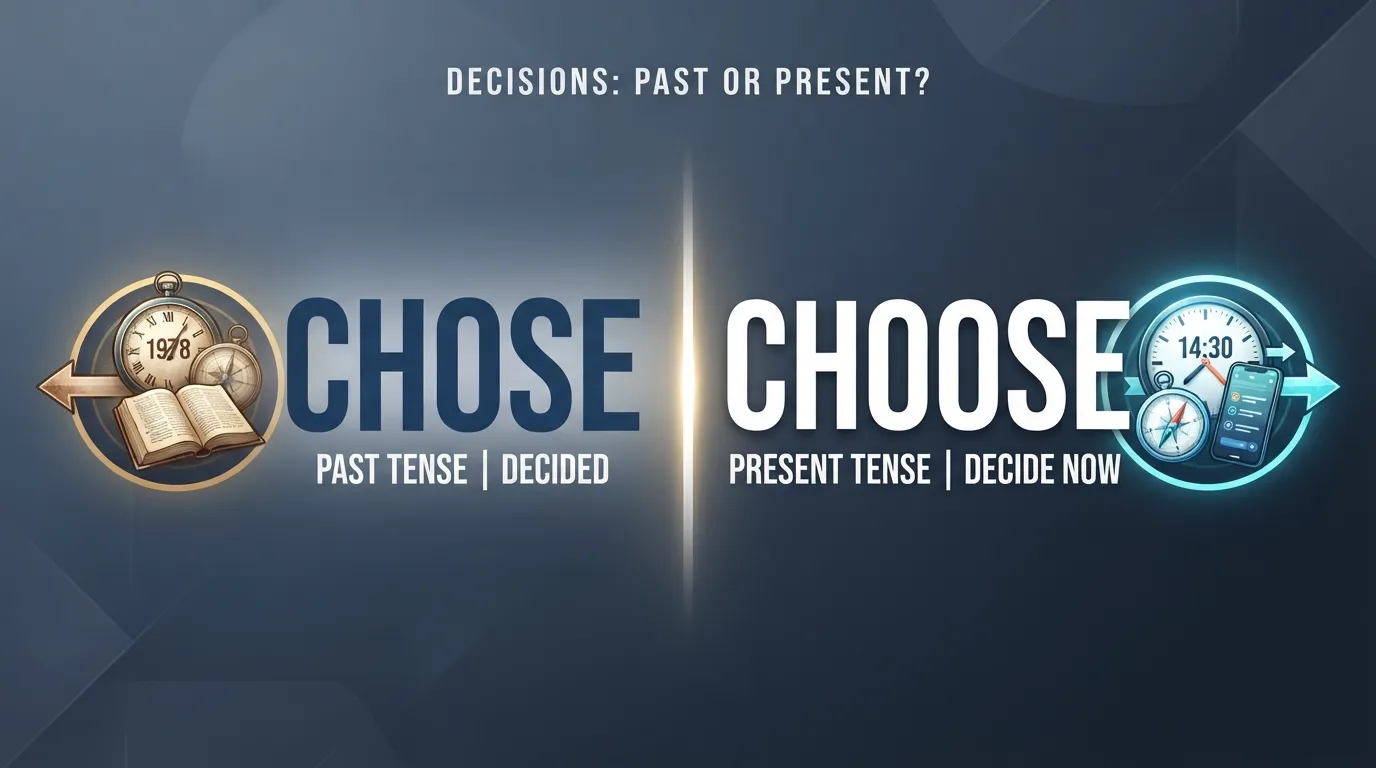
Choose is present tense, meaning to pick something now or in the future. Chose is past tense, meaning you already picked something. If the action already happened, use chose.
I once sent a job application email that said “I chose this company because of your values.” Then, two lines later, I wrote “I choose to apply because I believe in your mission.” One sentence was past tense. The other was present. The hiring manager probably didn’t notice. But I did, and it bugged me for days.
If you’ve ever paused mid sentence, unsure whether to type chose or choose, you’re not alone. These two words look almost identical, sound similar when read quickly, and both come from the same root verb. That’s exactly why so many writers, students, and even native English speakers slip up.
This guide will clear up the confusion for good. You’ll learn the exact difference, see real examples, and pick up a simple trick that makes the right word choice automatic. By the end, you won’t need to double check yourself anymore.
Chose or Choose: Quick Answer
Choose is the base form of the verb. Use it for something happening now, something habitual, or something in the future.
Chose is the simple past tense. Use it only when the action is already finished.
Example: “I choose salad for lunch most days” (a habit) versus “Yesterday, I chose pizza instead” (a completed past action).
The Origin of Choose and Chose
The verb choose comes from Old English ceosan, which meant to select or test something before accepting it. Over centuries, English speakers shortened and reshaped the word, but the core idea stayed the same: choosing means weighing options and picking one.
Chose developed as the irregular past tense form. English has many irregular verbs like this: see/saw, give/gave, choose/chose. There’s no simple rule like adding “ed” at the end. You just have to memorize the pattern, or use the trick below.
The confusion between chose and choose exists because they’re spelled so closely and both trace back to the same verb family. Add in the fact that many other verbs follow different past tense patterns, and it’s easy to see why people mix them up.
Choose vs Chose: Key Differences
| Term | Meaning | When to Use | Example |
| Choose | Present or future selection | Right now, habits, future plans | “I will choose the blue shirt tomorrow.” |
| Chose | Past selection | Completed actions only | “I chose the blue shirt yesterday.” |
| Chosen | Past participle | With have/has/had, or as an adjective | “She has chosen her path.” |
Notice the third form, chosen. This one trips people up too. It always pairs with a helping verb like has, have, or had, or works as a descriptive adjective, as in “the chosen candidate.”
Which Version Should You Use?
For students and beginners: think about timing first. Ask yourself, did this already happen? If yes, use chose. If it’s happening now or later, use choose.
For professional writers: pay close attention to tense consistency within a paragraph. If your sentence starts in past tense, don’t accidentally switch to choose halfway through.
For everyday conversation: native speakers often rely on instinct, but if you’re unsure, slow down and picture the timeline. Past events get chose. Everything else gets choose.
For global or ESL learners: the safest habit is linking choose with “now/future” and chose with “already done.” This mental shortcut works in almost every situation.
Common Mistakes with Chose and Choose
Mistake 1: “I choose him yesterday for the team.” Correction: “I chose him yesterday for the team.” Why it happens: writers default to the more familiar spelling, choose, without checking the timing word “yesterday.”
Mistake 2: “She has chose her outfit for the party.” Correction: “She has chosen her outfit for the party.” Why it happens: people confuse the simple past (chose) with the past participle (chosen), which is needed after “has.”
Mistake 3: “Next time, I chose the window seat.” Correction: “Next time, I will choose the window seat.” Why it happens: the word “next time” signals the future, but the writer accidentally uses the past tense form.
Mistake 4: “They chosen the winner last night.” Correction: “They chose the winner last night.” or “They have chosen the winner.” Why it happens: chosen can’t stand alone as a main verb. It always needs a helper like has or have.
Mistake 5: “I always choosed the same restaurant.” Correction: “I always chose the same restaurant.” Why it happens: writers try to apply the regular “ed” ending rule, but choose is irregular, so this form doesn’t exist.
Chose and Choose in Real World Examples
Professional email: “Thank you for your application. After careful review, we chose a candidate whose experience closely matched the role. We hope you’ll choose to apply again in the future.”
News headline: “Voters Choose New Mayor After Tight Election” “City Council Chose to Delay the Budget Vote”
Social media post: “Today I chose happiness over stress. Every morning, you get to choose how your day goes.”
Formal report: “The committee chose the proposal with the strongest financial projections. Future committees should choose candidates using the same criteria.”
Chose vs Choose: Data, Trends & Usage
Grammar questions like this rank among the most searched topics in English learning communities worldwide, especially among students preparing for standardized tests and non native speakers building writing confidence.
Search interest tends to spike around the school year and around job application seasons, when people are writing essays, cover letters, and reports where tense accuracy matters most.
This is mostly an informational search. People aren’t shopping for a product; they want a clear, fast answer they can apply immediately.
One reason this matters more now: with so much writing happening in emails, chats, and social posts, small grammar slips get noticed more than ever. Getting chose and choose right builds instant credibility.
Standalone Comparison Table
| Term/Variant | Meaning | Region/Context | Best Used When |
| Choose | Present/future selection | Universal English | Describing habits, current choices, or plans |
| Chose | Past selection | Universal English | Describing a finished, completed action |
| Chosen | Past participle/adjective | Universal English | After has/have/had, or describing something selected |
Frequently Asked Questions
Q: What does chose mean?
A: Chose is the simple past tense of choose. It describes a selection that already happened, like “I chose the red car.”
Q: How do you use choose correctly?
A: Use choose for present or future actions. It fits habits, ongoing choices, and plans, such as “I choose to walk to work” or “I will choose next week.”
Q: Chose vs choose, what’s the real difference?
A: The difference is timing. Choose describes something happening now or later. Chose describes something that’s already finished.
Q: Is chose acceptable in formal writing?
A: Yes. Chose is standard, grammatically correct English. It’s appropriate in reports, essays, emails, and any formal document, as long as you’re describing a completed action.
Q: Which version is correct, chose or choose, in a sentence about tomorrow?
A: Choose is correct for tomorrow, since it’s a future event. “Tomorrow, I will choose a new gym” is the right structure.
Q: Where does the word choose come from?
A: Choose comes from the Old English word ceosan, meaning to select or test before accepting. It’s part of a small group of irregular English verbs.
Q: Can chosen replace chose in a sentence?
A: Not directly. Chosen needs a helping verb like has, have, or had. “She chose the book” is correct, while “She chosen the book” is not.
Final Thoughts on Chose or Choose
Here’s what to remember: choose lives in the present and future, while chose belongs to the past. Chosen needs a helper verb and never stands alone. When in doubt, ask yourself if the action already happened.
Getting this right isn’t about memorizing complicated rules. It’s about picturing the timeline of your sentence and picking the word that matches. Once that habit clicks, you’ll never second guess yourself again.
Bookmark this guide so you always have a quick reference. And if you know someone who’s been mixing up chose and choose, send this their way. It might save them from an awkward email like the one I sent years ago.
See More: Whose or Who’s: The Real Difference Explained

My name is Ayesha Sadiqah, the writer behind this website. I write in-depth articles on English spelling, word comparisons, grammar, and vocabulary to help learners make better language choices. Every guide is carefully researched and designed to provide accurate, practical, and easy-to-understand information.