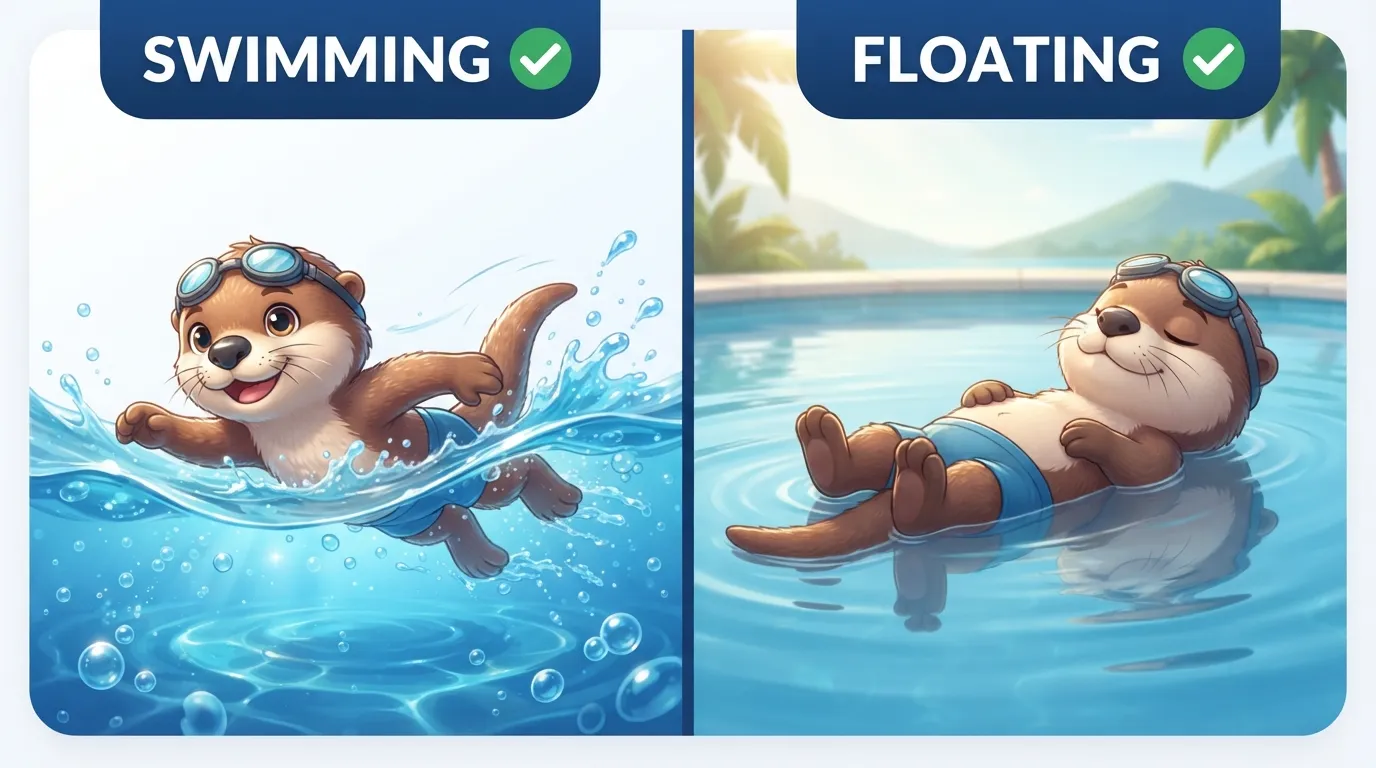
Swimming means moving through water using coordinated strokes and kicks, while floating means staying on the surface with little or no movement. Floating is the skill that keeps you alive when you get tired. Swimming is the skill that gets you somewhere.
My swim instructor once pulled me aside after a lesson and asked why I never stopped moving in the water. I told her I thought stopping meant sinking. She laughed and told me that belief has probably drowned more people than bad swimming ever has.
That conversation stuck with me for years. Most people think swimming and floating are basically the same thing, just two words for being in water. They are not the same thing at all, and mixing them up in your head can be dangerous.
Parents search this question before signing kids up for lessons. Adults search it after a scary moment in open water. Swim instructors search it to explain water safety more clearly to nervous students.
This guide breaks down exactly what separates swimming from floating, when each one saves you, and why knowing both matters more than being fast in the pool.
Swimming or Floating: Quick Answer
Swimming is active movement through water. You use your arms, legs, and breathing rhythm together to travel from one point to another.
Floating is passive rest on the surface. Your body stays still, your lungs act like a life vest, and you let the water hold you up.
Example: A swimmer crossing a lake uses strokes the entire way. A tired swimmer who stops mid lake and rolls onto their back to float is using a completely different skill to survive the same situation.
The Origin and Background of Swimming and Floating
Humans have swum for survival and food gathering for thousands of years, with evidence of swimming strokes appearing in ancient Egyptian and Assyrian art. Structured swimming instruction became widespread much later, especially once organized swim lessons and competitive swimming grew popular in the 1800s and 1900s.
Floating developed as a survival technique long before anyone called it a skill. Sailors and fishermen who fell overboard learned that a still, relaxed body sinks far less than a thrashing one. That basic discovery eventually became a formal part of modern water safety training.
The confusion between the two words grows from how people talk about water casually. Someone says “I was swimming at the lake” even when they spent most of the time floating on their back. The language blurs the line, even though the two skills use completely different muscles, breathing patterns, and mental states.
Modern water safety programs treat them as separate, equally important skills. Swimming gets you somewhere. Floating buys you time when swimming is no longer possible, whether from exhaustion, cold water, or cramping muscles.
Swimming vs Floating: Key Differences and Variations
| Term | Meaning | When to Use | Region/Context |
|---|---|---|---|
| Swimming | Active movement through water using strokes and kicks | Crossing distance, exercise, competitive sport | Universal, taught worldwide |
| Floating | Passive resting on the surface with minimal movement | Conserving energy, waiting for rescue, catching your breath | Universal, core water safety skill |
| Treading water | Active but stationary movement to stay upright | Short term, when floating feels unstable | Common in lifeguard and safety training |
Swimming burns energy fast, especially with poor technique. Floating burns almost no energy at all, which is exactly why it matters so much in an emergency.
Which Skill Should You Rely On?
For long distance swims: Rely on swimming technique, but treat floating as your backup plan the moment your arms or legs start to burn.
For open water like lakes, rivers, or oceans: Practice floating specifically, since currents and cold water drain energy far faster than a calm pool ever will.
For children learning water safety: Teach floating before advanced strokes. A child who can float can survive an unexpected fall into water long before they can swim well.
For anyone caught in a rip current: Float or tread water and signal for help instead of swimming against the current, since swimming against it wastes energy you may need later.
For casual pool time: Both skills matter less urgently, but comfort with floating still reduces panic if you ever get tired mid pool.
If you remember only one rule, remember this: swimming moves you, floating saves you.
Common Mistakes with Swimming and Floating
Mistake 1: Believing floating is easier than swimming, so nobody needs to practice it. Correction: Floating well requires relaxed breathing and body position, which many people never practice until they truly need it.
Mistake 2: Panicking and swimming hard the moment you get tired. Correction: Roll onto your back and float first. Recover your breathing, then decide your next move.
Mistake 3: Assuming everyone floats the same way naturally. Correction: Body fat percentage, lung volume, and even bone density affect how easily someone floats, so technique still matters for everyone.
Mistake 4: Fighting a current by swimming straight against it. Correction: Float or swim parallel to shore instead. Fighting the current burns energy you need to survive.
Mistake 5: Skipping float practice because a child already knows basic strokes. Correction: Strokes and floating are separate skills. Knowing one does not guarantee comfort with the other.
Each mistake usually comes from treating water skills as one single ability instead of two distinct ones that solve different problems.
Swimming and Floating in Real World Examples
Professional email from a swim school: “This session covers both floating fundamentals and freestyle swimming technique for beginner students.”
News headline: “Coast Guard Credits Floating Technique for Swimmer’s Survival After Boat Capsizes”
Social media post: “Finally taught my daughter to float on her back without panicking. Swimming lessons start next month.”
Formal safety document: “All lifeguards must demonstrate proficiency in swimming, floating, and treading water before certification.”
Notice how floating and swimming show up as separate, named skills in every example. Neither one replaces the other.
Swimming and Floating: Data, Trends, and Usage
Searches for swimming and floating spike heavily in early summer, right as pools open and families plan vacations near lakes, rivers, and beaches.
Parents make up a large share of this search traffic, usually looking for guidance on children’s swim lessons and basic water safety. Adults who experienced a scary moment in open water search the topic too, often right after the event.
This search falls mostly into the informational category, though some searches lean toward local swim lesson providers, making it a mixed informational and local intent topic.
Drowning prevention organizations continue pushing floating as a core safety skill, separate from swimming ability, because most drowning deaths involve panic and exhaustion rather than a total inability to swim at all.
Standalone Comparison Table
| Term/Variant | Meaning | Region/Context | Best Used When |
|---|---|---|---|
| Swimming | Active, propulsive movement through water | Pools, open water, competitive sport | Traveling distance or exercising |
| Floating | Passive, restful position on the surface | Open water, emergencies, safety training | Conserving energy or waiting for help |
Frequently Asked Questions
Q: What is the real difference between swimming and floating? A: Swimming is active movement using strokes and kicks, while floating is passive rest on the surface with almost no movement at all. They use different muscles and different mindsets.
Q: Which skill should kids learn first, swimming or floating? A: Most water safety experts recommend teaching floating first. A child who can float can survive an accidental fall long before they can swim confidently.
Q: Can you float if you cannot swim well? A: Yes. Floating depends more on relaxed breathing and body position than on stroke technique, so many people who swim poorly can still float safely.
Q: Is floating actually safer than swimming in an emergency? A: In many emergencies, yes. Floating conserves energy, while swimming, especially against a current, burns energy fast and can lead to exhaustion.
Q: Why do some people float more easily than others? A: Body composition plays a big role. Higher body fat and larger lung volume generally make floating easier, while very lean, muscular bodies may need more technique to stay level.
Q: Where did modern floating safety techniques come from? A: They developed from centuries of sailor and fisherman survival knowledge, later formalized into structured water safety and lifeguard training programs.
Q: Should adults practice floating even if they already know how to swim? A: Yes. Floating is a distinct skill from swimming, and practicing it builds confidence and reduces panic during unexpected exhaustion or emergencies.
Final Thoughts
Swimming and floating solve two different problems in the water. Swimming gets you from one place to another. Floating keeps you alive when moving is no longer an option.
Teach both skills, practice both skills, and never assume one replaces the other. The strongest swimmers still rely on floating the moment their energy runs low.
Next time you are near water, practice floating on purpose, not just swimming laps. That one small habit could matter more than any stroke technique you ever learn.
Share this guide with a parent, a new swimmer, or anyone who has ever panicked in deep water. It might change how they think about staying safe.
Explore More: Busing or Bussing: The Complete Guide to the Correct Spelling

I’m Zain. I got interested in commonly confused words while helping non-native English speakers prep for writing exams, where a single misused word could cost real marks. That experience shaped how I write now: I try to explain not just which spelling is correct, but why the confusion exists in the first place, since understanding the reason is what actually makes it stick.