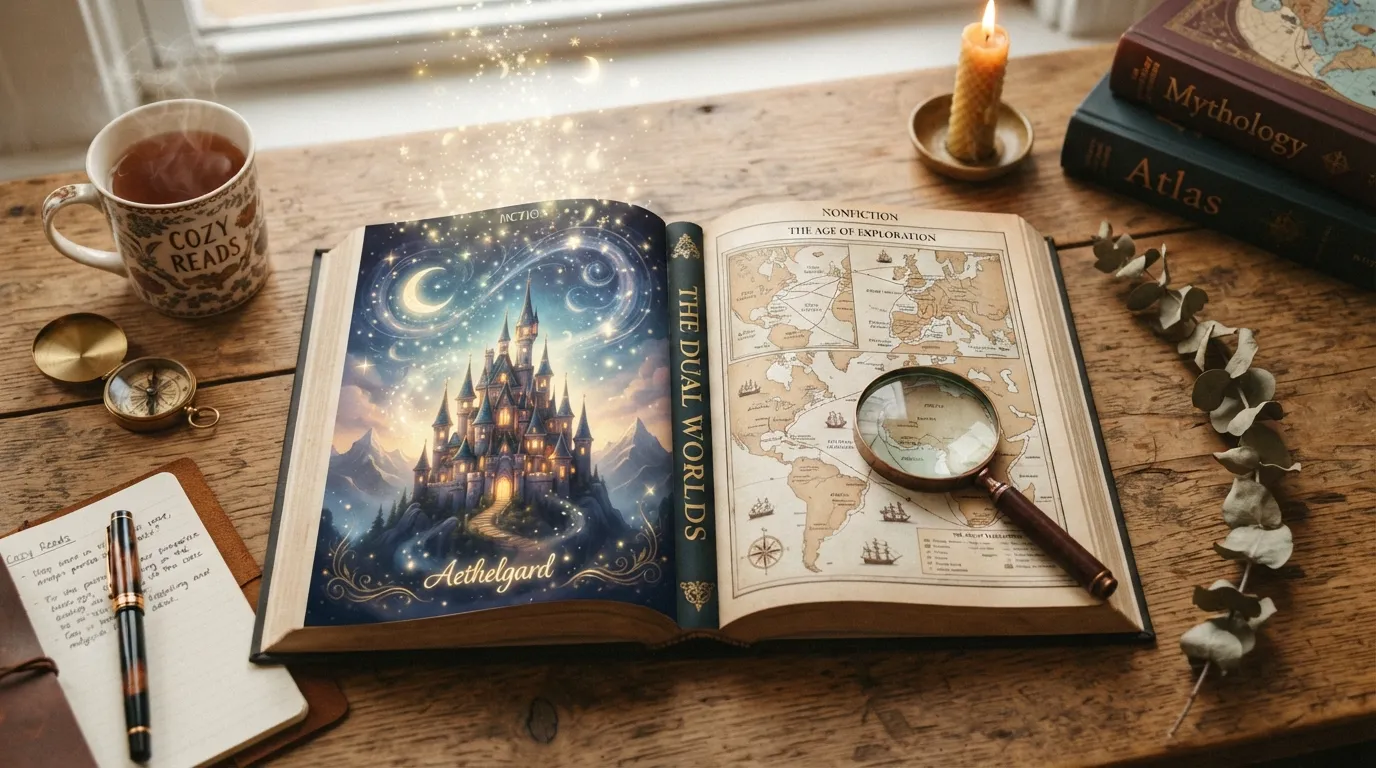
Fiction refers to stories created from imagination, while nonfiction refers to writing based on real facts, events, and people. Neither word is a misspelling of the other, they represent two different types of writing.
My son once asked me if his favorite dinosaur encyclopedia counted as a “made up story” since dinosaurs lived so long ago. I paused, realizing the question wasn’t as simple as it sounds.
That conversation made me realize how many people, kids and adults alike, mix up fiction and nonfiction more often than expected. The line feels obvious until you actually try to explain it out loud.
This guide breaks the confusion apart for good. You will learn exactly what separates fiction from nonfiction, why some books blur the line, and how to confidently sort any piece of writing into the right category.
Fiction or Nonfiction Quick Answer
Fiction means writing built from imagination, even if it borrows real settings or events. Nonfiction means writing based entirely on facts, research, or true experiences.
For example, a novel about a wizard school is fiction. A biography about a scientist’s real life is nonfiction. That single distinction, imagined versus factual, decides which category any book falls into.
The Origin and Background of Fiction and Nonfiction
The word fiction comes from the Latin “fictio,” meaning something formed or invented. Writers have shaped imaginary tales since ancient myths and folklore first spread by word of mouth.
Nonfiction developed later as a term, essentially meaning “not fiction.” Early libraries needed a simple way to separate invented stories from factual records, so nonfiction became the catchall label for everything grounded in reality.
Confusion creeps in because both categories often borrow techniques from each other. Historical novels use real events inside fictional plots. Memoirs use storytelling techniques inside true accounts. That overlap is exactly why so many readers hesitate when sorting a book on the shelf.
Fiction and Nonfiction Explained: Key Differences and Variations
| Term | Meaning | When to Use | Region or Context |
| Fiction | Writing created from imagination | Novels, short stories, screenplays | Universal across all English speaking regions |
| Nonfiction | Writing based on facts and real events | Biographies, textbooks, journalism | Universal across all English speaking regions |
| Creative nonfiction | True stories told with narrative style | Memoirs, personal essays | Growing genre in modern publishing |
Historical fiction blends invented characters with real time periods. Biographical fiction reimagines a real person’s life with invented dialogue. These hybrids explain why the fiction versus nonfiction question feels tricky sometimes, even though the core definitions stay clear.
Which Category Should You Use?
For novelists and screenwriters, fiction gives full creative freedom to invent characters, plots, and worlds without factual limits.
For journalists and historians, nonfiction demands accuracy, research, and verified sources before publishing anything as fact.
For memoirists and essayists, creative nonfiction allows storytelling techniques while staying rooted in true personal experience.
For students writing book reports, checking whether the author claims the events are true or invented instantly tells you which category the book belongs to.
Common Mistakes with Fiction and Nonfiction
Mistake 1: Assuming historical fiction counts as nonfiction because it includes real events.
Correction: Historical fiction remains fiction, since the characters and specific scenes are usually invented.
Mistake 2: Believing biographies are fiction because they read like stories.
Correction: Biographies are nonfiction, since every detail is meant to be factually accurate.
Mistake 3: Calling fantasy or science fiction “made up nonfiction.”
Correction: These genres are pure fiction, even when they explore realistic scientific ideas.
Mistake 4: Thinking memoirs are fiction since they include personal opinions and feelings.
Correction: Memoirs are nonfiction, told from the author’s true perspective and real memories.
Mistake 5: Assuming textbooks always count as reliable nonfiction without checking sources.
Correction: Nonfiction should still be evaluated for accuracy, since even factual writing can contain outdated or biased information.
Readers often blur these lines because compelling nonfiction reads just as smoothly as fiction. Strong writing style alone never determines the category. Truth versus invention does.
Fiction and Nonfiction in Real World Examples
A book club invitation might read like this: “This month we are discussing a fiction novel set during the French Revolution.”
A library catalog description often states: “This nonfiction title explores the true history of space exploration.”
A social media post could say: “Just finished an incredible fiction series and I already miss the characters.”
A publisher’s press release might phrase it this way: “Her new nonfiction memoir details her journey through recovery and healing.”
Each example shows how naturally both terms fit into everyday conversations about books, from casual recommendations to formal publishing announcements.
Fiction and Nonfiction Data, Trends and Usage
Search data shows steady interest in “fiction or nonfiction” year round, with noticeable spikes during back to school season and among students working on reading assignments. Most searches fall into the informational category, since people want clear definitions rather than product recommendations.
Teachers, librarians, and book bloggers search this term most often, since sorting books correctly matters for lesson plans and reading lists. Parents also search this phrase frequently, trying to guide their children toward age appropriate reading choices.
This distinction matters today because publishing continues blending genres through hybrid formats like narrative journalism and fictionalized biographies, making clear definitions more valuable than ever for readers trying to choose their next book.
Fiction vs Nonfiction Comparison Table
| Term or Variant | Meaning | Region or Context | Best Used When |
| Fiction | Imaginary stories and invented characters | Universal across literature | Reading for entertainment or imagination |
| Nonfiction | Factual writing based on real events | Universal across literature | Reading for research or true accounts |
| Creative nonfiction | True stories written with narrative flair | Modern publishing and memoirs | Reading personal, true experiences |
Fiction and Nonfiction Frequently Asked Questions
What does fiction mean?
Fiction means writing created entirely or partly from imagination, including characters, events, or settings that did not actually happen exactly as described.
How do you know if a book is nonfiction?
Check whether the author presents the content as factually true, researched, or based on real events, since that intention defines nonfiction.
Fiction vs nonfiction, what is the real difference?
Fiction comes from imagination, while nonfiction comes from documented facts and real experiences. That single distinction separates the two categories completely.
Is historical fiction considered nonfiction?
No, historical fiction stays classified as fiction, since it invents characters and dialogue even when the setting is historically accurate.
Which category does a memoir belong to?
Memoirs belong to nonfiction, since they describe the author’s real life experiences and memories, even when written with a storytelling style.
Where do the terms fiction and nonfiction come from?
Fiction comes from the Latin word for invented or formed, while nonfiction developed simply as a label meaning not fiction, used to organize factual writing.
Can a book blend fiction and nonfiction together?
Yes, hybrid genres like biographical fiction and narrative journalism blend factual research with fictional storytelling techniques, though publishers usually still classify them under one primary category.
Why do people confuse fiction with nonfiction so often?
The confusion happens because both genres can use similar storytelling techniques, making the writing style alone an unreliable way to judge which category a book belongs to.
Final Thoughts on Fiction or Nonfiction
Fiction and nonfiction represent two completely different approaches to writing, imagination versus documented truth. Now you understand exactly how to sort any book correctly, even the tricky hybrid genres that blend both styles.
Remember to ask one simple question, did this actually happen, or was it invented, and you will always land on the right category. That single test works for novels, memoirs, biographies, and everything in between.
Bookmark this guide so you never second guess fiction or nonfiction again. Share it with a fellow reader, student, or writer who has wondered where a favorite book truly belongs.
Read More: Ambience or Ambiance: The Complete Spelling Guide

My name is Ayesha Sadiqah, the writer behind this website. I write in-depth articles on English spelling, word comparisons, grammar, and vocabulary to help learners make better language choices. Every guide is carefully researched and designed to provide accurate, practical, and easy-to-understand information.