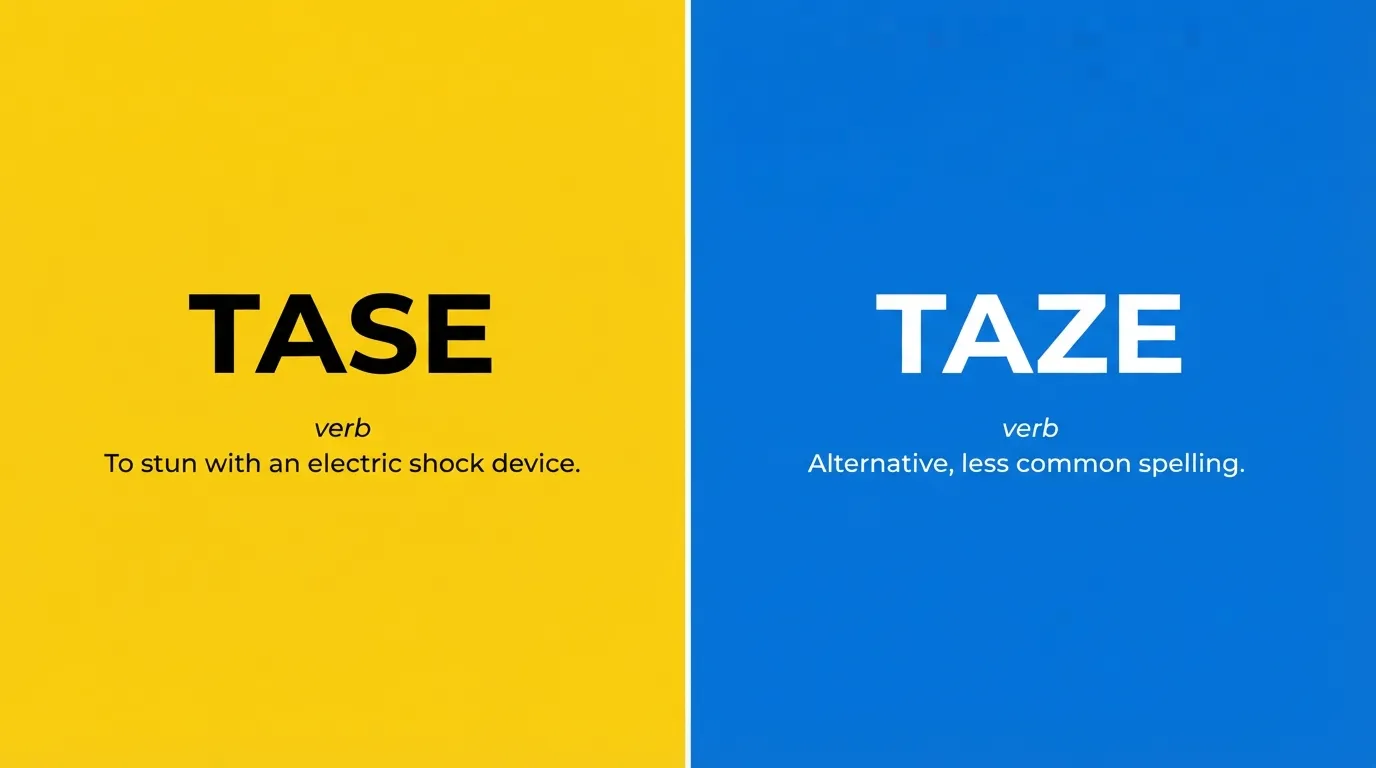
Tase is the standard, correct spelling for using an electric stun device on someone. Taze is a common variant spelling that also appears in casual writing, though tase remains the preferred form.
I remember watching a news clip years ago where the caption read “Suspect was tazed by police,” and something about the z felt off to me. I looked it up later and realized the more common spelling actually uses an s, not a z.
This confusion makes sense once you understand where the word came from. Tase is not an ancient English word with centuries of history behind it. It is a modern term, born from a product name, and that origin story explains exactly why the spelling still feels unsettled to many writers today.
This guide walks through the full story behind tase and taze, which spelling dictionaries and style guides actually recommend, and how to use the word confidently in news writing, casual conversation, or formal reports.
Words derived from brand names often cause spelling headaches like this one. Understanding the backstory here will help the correct spelling stick in your memory permanently.
Tase or Taze: Quick Answer
Tase is the verb most dictionaries and style guides recognize as standard. Example: “Officers tased the suspect after he refused to comply.”
Taze is a widely used alternative spelling, especially in casual and online writing, but it is considered nonstandard by most major dictionaries. Example: “He got tazed at the concert for jumping the barrier.”
The simple guideline: when in doubt, choose tase with an s. It matches the spelling pattern of the original trademark more closely and appears more often in edited, professional writing.
The Origin of Tase and Taze
The word comes directly from Taser, a registered trademark for an electric stun device created by Taser International, now known as Axon. The name itself was inspired by a fictional invention from an early twentieth century adventure novel, blended with an acronym referencing that story.
As the product became widely known through news coverage and popular culture, people began using “taser” informally as a verb, and eventually shortened it further into the casual verb form “tase,” dropping the r sound entirely in everyday speech.
Because the word evolved primarily through spoken use and casual writing rather than formal literary adoption, its spelling never fully standardized the way older English words did. This left room for two competing spellings, tase and taze, to develop side by side.
Dictionaries that do recognize the verb form generally lean toward tase, since it stays visually closer to the original trademarked name, Taser, than taze does. However, because the word is still relatively young and heavily tied to informal usage, spelling variation persists even in published writing today.
Tase and Taze Explained: Key Differences
| Term | Status | Meaning | Example |
| Tase | Standard, dictionary preferred | To shock someone with an electric stun device | The officer tased the intruder. |
| Taze | Nonstandard variant | Same meaning, alternate spelling | He got tazed during the arrest. |
Both spellings describe the exact same action. There is no difference in meaning between them at all. The only distinction is which spelling carries more editorial and dictionary support.
This makes tase and taze different from pairs like affect and effect, where the words mean genuinely different things. Here, the confusion is purely about spelling, not meaning.
Which Version Should You Use?
For journalism and news writing, use tase. Most major style guides and news organizations that accept the verb at all use the s spelling, since it stays closer to the trademarked source name.
For legal and official reports, use tase as well, since formal documents typically follow dictionary preferred spellings rather than casual online variants.
For casual writing and social media, taze appears constantly and will not confuse most readers, but tase remains the safer, more broadly accepted choice if you want to appear polished.
And For branding accuracy, remember that Taser itself is a trademark, so some style guides actually prefer avoiding the verb form entirely, instead writing “used a stun device” to avoid genericizing the brand name.
If you write professionally in any capacity, tase with an s is the safer, more defensible spelling to rely on consistently.
Common Mistakes with Tase and Taze
Mistake 1: Writing “tazed” instead of “tased” in a news article or formal report. Why it happens: taze feels more visually intuitive to many writers, since the z sound matches how the word is often pronounced casually.
Mistake 2: Capitalizing tase or taze as if it were still the trademarked brand name. Why it happens: writers forget that the verb form, once genericized through casual use, no longer needs capitalization the way the original trademark Taser does.
Mistake 3: Assuming both spellings appear equally in dictionaries. Why it happens: online usage of taze is common enough that people assume it carries equal official standing, when in fact tase holds stronger dictionary support.
Mistake 4: Using “taser” as a verb without modification, such as “He was tasered.” Why it happens: some writers stick closest to the original trademark spelling, unaware that tase became the more common shortened verb form over time.
Mistake 5: Mixing spellings within the same article or document, using tase in one paragraph and taze in another. Why it happens: without a clear style rule in mind, writers default to whichever spelling feels natural in the moment, leading to inconsistency across a single piece.
Tase and Taze in Real World Examples
In a professional email: “Please review the incident report regarding the officer who tased the suspect during the traffic stop.”
In a news headline: “Bodycam Footage Shows Officer Tased Suspect After Warning”
Then In a social media post: “Bro literally got tazed for climbing the stage barrier, wild night honestly.”
Also In a formal document: “The subject was tased twice before being restrained, according to the official report.”
Notice how formal contexts lean toward tase, while casual social posts lean more freely toward taze, matching the informal tone of that writing style.
Tase in Legal and Media Contexts
Because tase describes a real world tool used by law enforcement, its spelling carries weight beyond simple grammar preference. News organizations covering incidents involving stun devices need consistent language, especially when reporting on sensitive events involving use of force.
Legal documents referencing these incidents also benefit from consistent spelling, since official reports, court filings, and police records need to match across related paperwork to avoid confusion during investigations or trials.
Media style guides increasingly specify tase as the preferred verb form precisely because of this need for consistency across large newsrooms, where multiple writers might otherwise default to different spellings without a clear house rule in place.
This growing standardization mirrors how other modern, trademark derived verbs eventually settle into consistent spelling once they appear regularly enough in professional, edited writing across many publications.
How Style Guides Handle Trademark Based Verbs
Tase is not the only word that emerged from a trademarked product name. Words like google, xerox, and photoshop followed a similar path, moving from brand names into everyday verbs through casual, repeated use.
Style guides typically face a choice when this happens. They can accept the generic verb form, acknowledge its widespread use, or discourage it entirely to protect the original trademark from becoming fully generic in legal terms.
In the case of tase, most style guides that address it at all have leaned toward quiet acceptance, treating it as a standard verb rather than flagging it as a trademark violation, since the company behind the original product has generally tolerated this generic usage.
This pattern explains why tase feels increasingly normal in everyday writing, even though its origin as a shortened trademark name is relatively recent compared to most standard English verbs.
A Quick Cheat Sheet for Tase and Taze
Keep this simple reference nearby whenever you are writing about this topic professionally, so you can settle the spelling question instantly without needing to look it up again.
- Use tase for formal writing, journalism, legal reports, and professional content.
- Treat taze as acceptable only in casual, informal, or conversational contexts.
- Remember the word comes from the trademark Taser, which explains the unsettled spelling.
- Avoid capitalizing tase or taze, since the generic verb form does not need capitalization.
- Stay consistent within a single document, choosing one spelling and sticking with it throughout.
This short reference works well for journalists, content writers, and anyone covering topics related to law enforcement equipment, where consistency and accuracy both matter significantly.
Tase or Taze: Final Thoughts
Words derived from trademarks often take longer to settle into a single accepted spelling, since their journey into everyday language happens informally, through news coverage and casual conversation, rather than through traditional literary use.
Tase and taze both continue to appear in writing today, but tase carries stronger backing from dictionaries and professional style guides, making it the safer default whenever accuracy and consistency genuinely matter.
Understanding this backstory not only helps you spell the word correctly, but also gives you a clearer picture of how modern English continues to absorb and reshape brand names into everyday, functional verbs.
Tase and Taze: Data, Trends and Usage
Search interest in “tase or taze” spikes around major news events involving police use of force, viral videos, and true crime coverage, where the word appears frequently in headlines and captions. It falls under informational search intent, with people wanting quick confirmation of the correct spelling before writing or sharing content.
Journalists, content moderators, and true crime writers search this term often, since consistency matters heavily in published, professional content covering sensitive topics.
Casual searchers also look this up simply out of curiosity, especially after seeing both spellings used inconsistently across different news outlets and social platforms, which naturally raises questions about which one is actually correct.
This topic matters increasingly now, since public discussions around police equipment and use of force appear constantly in news cycles, making consistent, accurate language more important than ever for credible reporting.
Standalone Comparison Table
| Term | Meaning | Region or Context | Best Used When |
| Tase | To use an electric stun device on someone | Formal writing, journalism, official reports | Preferred spelling across most style guides |
| Taze | Same meaning, alternate spelling | Casual writing, social media | Acceptable informally, avoid in formal contexts |
Frequently Asked Questions
Q: What does tase mean? A: Tase means to shock someone using an electric stun device, most commonly associated with law enforcement tools originally sold under the Taser trademark.
Q: What does taze mean? A: Taze carries the exact same meaning as tase. It is simply an alternate, less formally accepted spelling of the same verb.
Q: Tase vs taze, what is the actual difference? A: There is no difference in meaning between the two. Tase holds stronger dictionary and editorial support, while taze remains a common but nonstandard casual spelling.
Q: Is taze acceptable in formal writing? A: Generally no. Most formal writing, including journalism and legal reports, favors the spelling tase over taze, since it stays closer to the original trademarked name.
Q: Which version is correct, tase or taze, for a news article? A: Tase is correct for news writing. It aligns with most style guide recommendations and dictionary entries for the verb form.
Q: Where does the word tase come from? A: Tase comes from Taser, a trademarked stun device name, which speakers eventually shortened into a casual verb form through everyday spoken and written use.
Q: Can taze be used casually online without confusing readers? A: Yes, taze is widely understood in casual and social media writing, even though it remains the less formally accepted spelling overall.
Q: Should Taser ever be used as a verb directly? A: Some style guides discourage this, since Taser remains a registered trademark, and using it as a generic verb can raise brand and legal concerns for publishers.
Conclusion
Tase and taze describe the exact same action, but they carry different levels of acceptance depending on where you are writing. Tase holds stronger dictionary support and remains the safer, more professional choice across nearly every formal context.
Taze still shows up constantly online, and most readers will understand it instantly, but reaching for tase keeps your writing more consistent with established style guides and published sources.
Since this word traces back to a trademarked product name, its spelling never fully settled the way older English words did, which explains why both versions still circulate widely today.
Now you know exactly which spelling to reach for, tase or taze, in any writing situation. Bookmark this guide so you never second guess it again, and share it with anyone who has debated this exact spelling with you before.
Explore More: Sew or Sow: The Simple Trick to Never Confuse Them Again

Hey, I’m Ayeza. I started wordiums.com because I kept freezing over words that look almost the same, unsure which one was right. Now I explain every word comparison in plain language, so you can pick the right word with confidence and move on.