An annual is a one season rental. It grows, blooms, sets seed and dies in a single year. A perennial is a home you own. It comes back year after year.
Years ago, I filled a sunny border with bright zinnias. They looked amazing all summer. The next spring, I stood in the garden with a cup of tea and waited. Nothing came up. I had planted annuals and expected them to behave like perennials.
That small, muddy lesson cost me a weekend and a few dollars. It also taught me why so many people search annual or perennial before they shop for plants.
The two words sound alike. Both come from the same Latin root. Plant tags use them all the time, and they rarely explain what they mean.
In this guide, you will learn what each word means, how to tell them apart in seconds, and how to choose the right one for your budget, your climate and your patience. You will also get cheat sheets, simple examples and clear answers to common questions. Let’s clear it up for good.
Annual or Perennial: Quick Answer
- Annual: a plant that finishes its whole life cycle in one growing season. It sprouts, grows, flowers, makes seed and then dies.
- Perennial: a plant that lives for more than two years. Many die back to the ground in winter and regrow from the roots in spring.
Two simple examples:
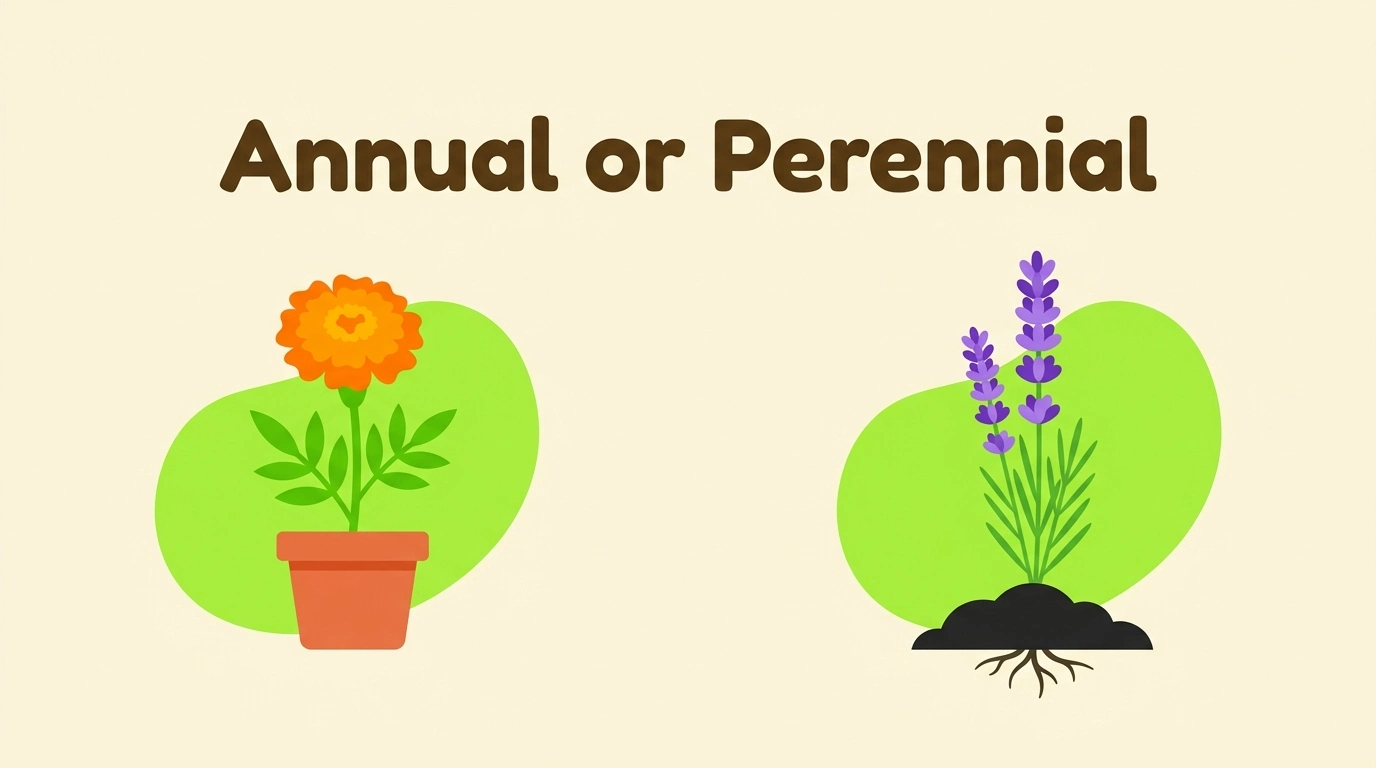
- Marigolds are annuals. You plant them again each year.
- Lavender is a perennial in many gardens. It returns each spring if the climate suits it.
One rule covers most cases: if you want to plant once and enjoy it for years, look for perennials. If you want fast color this year, look for annuals.
The Origin and Background of Annual and Perennial
Both words trace back to the Latin word annus, which means year. That shared root is why they look so close.
Annual simply means yearly. In plants, it means the whole life fits inside one year. Outside the garden, it describes things that happen once a year, such as an annual meeting or an annual report.
Perennial is built from per, meaning through, and annus, meaning year. So the word points to something that lasts through the years.
Why the confusion happens
- The words share the same root and a similar look.
- Both have a double n, so spelling slips are easy.
- Plant tags use short labels without explaining them.
- Some plants act as annuals in one climate and perennials in another.
That last point surprises many gardeners, and we will come back to it.
Annual or Perennial Explained: Key Differences
There are more than two kinds of plant life cycle. Here are the main ones.
Annuals
Annuals race through life in one season. Their goal is to make seed fast, so they often flower for a long time.
- Examples: marigold, zinnia, cosmos, sunflower, basil, lettuce, peas
- Pros: lots of color, long blooming time, low cost per plant
- Cons: you replant every year unless they reseed themselves
Some annuals drop seed and come back on their own. Cosmos and calendula often do this in a garden with bare soil. It is a bonus, not a promise.
Perennials
Perennials live for several years. Most flower for a shorter window, often a few weeks, then return next year.
- Examples: hosta, daylily, peony, echinacea, lavender, rhubarb, asparagus
- Pros: plant once, enjoy for years, less yearly work
- Cons: higher cost up front, shorter bloom time, may need dividing after a few years
Gardeners often say that perennials sleep in year one, creep in year two and leap in year three. They put roots down first, then bloom bigger later.
Biennials
Biennials take two years. They grow leaves in the first year, then flower and die in the second.
- Examples: parsley, foxglove (often grown as a biennial), carrots if left to flower
Tender perennials grown as annuals
Some plants are true perennials in warm places but cannot survive a hard frost. People treat them as annuals in cold areas.
- Examples: geraniums, tomatoes
This is why one plant can carry two labels. The plant is the same. The climate is different.
Cheat Sheet One: The Plant Tag Test
Cheat Sheet One: Annual or perennial?
- Check the tag. Does it say annual, perennial or biennial?
- Look for a hardiness zone. Compare it with your own zone.
- Ask: does it need to survive winter where I live? If yes, check the lowest temperature it can take.
- If the tag says tender perennial, expect to treat it as an annual in a cold area.
- If the tag is missing, search the plant’s botanical name before you buy.
Which Version Should You Use?
You do not choose by region. You choose by goal.
- Beginners on a small budget: start with annuals. They are cheap, quick and forgiving.
- Busy gardeners: choose perennials. They need less replanting.
- Container and balcony growers: annuals give the most color in pots.
- Gardeners who want a steady look: mix both. Perennials give the structure and annuals fill the gaps.
- Vegetable growers: plant annual crops like lettuce and peas each year. Add perennials like rhubarb or asparagus in a fixed bed.
- Writers and general readers: use annual for yearly events and perennial for things that keep returning, such as “a perennial favorite.”
My own beds use both. Perennials hold the shape. Annuals bring the surprise.
Cheat Sheet Two: Pick by Goal
Cheat Sheet Two: What do you want?
- Instant color this summer: annuals
- Low effort in the long run: perennials
- Lowest cost today: annuals
- Lowest cost over five years: perennials, in most cases
- Long blooming time: annuals
- Plants that come back: perennials
- Something for a pot or a short stay: annuals
Common Mistakes with Annual or Perennial
Here are the errors I see most often. Each shows the mistake first and then the fix.
- Expecting annuals to return. Fix: replant each spring, or let them reseed.
- Expecting perennials to bloom all season. Fix: choose long blooming types, or fill gaps with annuals.
- Ignoring your hardiness zone. A plant may be perennial in one place and an annual in another. Fix: check the zone and the lowest temperature on the tag.
- Confusing perennial with evergreen. Many perennials lose their leaves in winter. Evergreen means the leaves stay on. Fix: do not assume a perennial keeps its leaves.
- Misspelling it. Fix: both words have a double n, annual and perennial.
Why do these errors happen? Tags are short, and the words sound alike. A few extra seconds with the label saves money and spring disappointment.
Annual or Perennial in Real World Examples
In a professional email
Hi Mia, for the new office entrance, I suggest perennials along the wall and annuals in the pots by the door. That gives us color now and savings later.
In a news headline
Why More Gardeners Are Choosing Perennials to Cut Costs
In a social media post
This year’s pots are all annuals: zinnias, marigolds and cosmos. Color from June to frost! #gardening
In a formal document
The planting plan combines drought tolerant perennials with seasonal annuals to reduce yearly replanting costs.
Outside the garden
Housing costs are a perennial concern for young families.
That last example shows the figurative use. Here, perennial means something that keeps coming back.
Annual or Perennial: Data, Trends and Usage
People search this pair for a clear reason. They want to buy the right plants and avoid wasted money. Interest tends to rise in spring, when people plan beds and shop for plants.
The search intent is informational. The reader wants a quick, practical answer before a purchase.
Here is an insight worth knowing. Hardiness maps change. The United States Department of Agriculture updated its plant hardiness zone map in 2023, and many areas moved into a warmer zone. In the United Kingdom, gardeners often use the Royal Horticultural Society hardiness ratings. Either way, a plant that was once treated as an annual may now survive winter in your area. Always check the latest zone information for your location.
Standalone Comparison Table
Here is the whole comparison in a simple list. Save it for later.
- Annual
- Meaning: lives one growing season
- Context: flower beds, pots, vegetables
- Best used when: you want fast color and a fresh look each year
- Perennial
- Meaning: lives more than two years
- Context: borders, long term beds, orchards
- Best used when: you want plants that return with less work
- Biennial
- Meaning: lives two years, flowers in the second
- Context: cottage gardens, herbs, root crops
- Best used when: you can wait a year for flowers or seed
- Tender perennial
- Meaning: perennial in warm areas, killed by hard frost
- Context: pots and summer beds in cold areas
- Best used when: you want long color and can replant or overwinter indoors
- Perennial (figurative)
- Meaning: always returning, as in a perennial problem
- Context: news, business, everyday writing
- Best used when: you describe something that keeps coming back
Frequently Asked Questions
Q: What does annual or perennial mean?
A: An annual completes its life in one growing season. A perennial lives for more than two years and returns each year.
Q: How do you use annual and perennial correctly?
A: Use them to describe a plant’s life span, as in “marigolds are annuals” or “hostas are perennials.” Check the tag for the exact label and the hardiness zone.
Q: Annual vs perennial: what is the difference?
A: Annuals last one season and need replanting. Perennials last for years and usually bloom for a shorter time each season.
Q: Can annuals come back every year?
A: Not as the same plant. Some annuals drop seed and grow again, which can look like a return, but each new plant is a fresh start.
Q: Which version is correct, annual or perennial?
A: Both words are correct. The right one depends on the plant and, sometimes, on your climate. Check your zone.
Q: Where do the words come from?
A: Both come from the Latin word annus, meaning year. Perennial adds per, meaning through.
Q: Can perennial be used outside gardening?
A: Yes. People say perennial problem or perennial favorite for things that keep returning. It is accepted in formal writing.
Conclusion
You now know how to settle annual or perennial. Annuals live for one season and give quick, long lasting color. Perennials return for years and save you work. Biennials take two years, and tender perennials act like annuals in cold places.
My advice is simple. Mix both. Let perennials give your garden its backbone and let annuals fill it with color. Always check the tag and your hardiness zone before you pay.
Bookmark this guide so you never second guess annual or perennial again. And share it with a friend who is planning a new garden bed.
Read More: Preformed or Performed: The Simple Way to Choose

My name is Ayesha Sadiqah, the writer behind this website. I write in-depth articles on English spelling, word comparisons, grammar, and vocabulary to help learners make better language choices. Every guide is designed to provide accurate, practical, and easy-to-understand information.