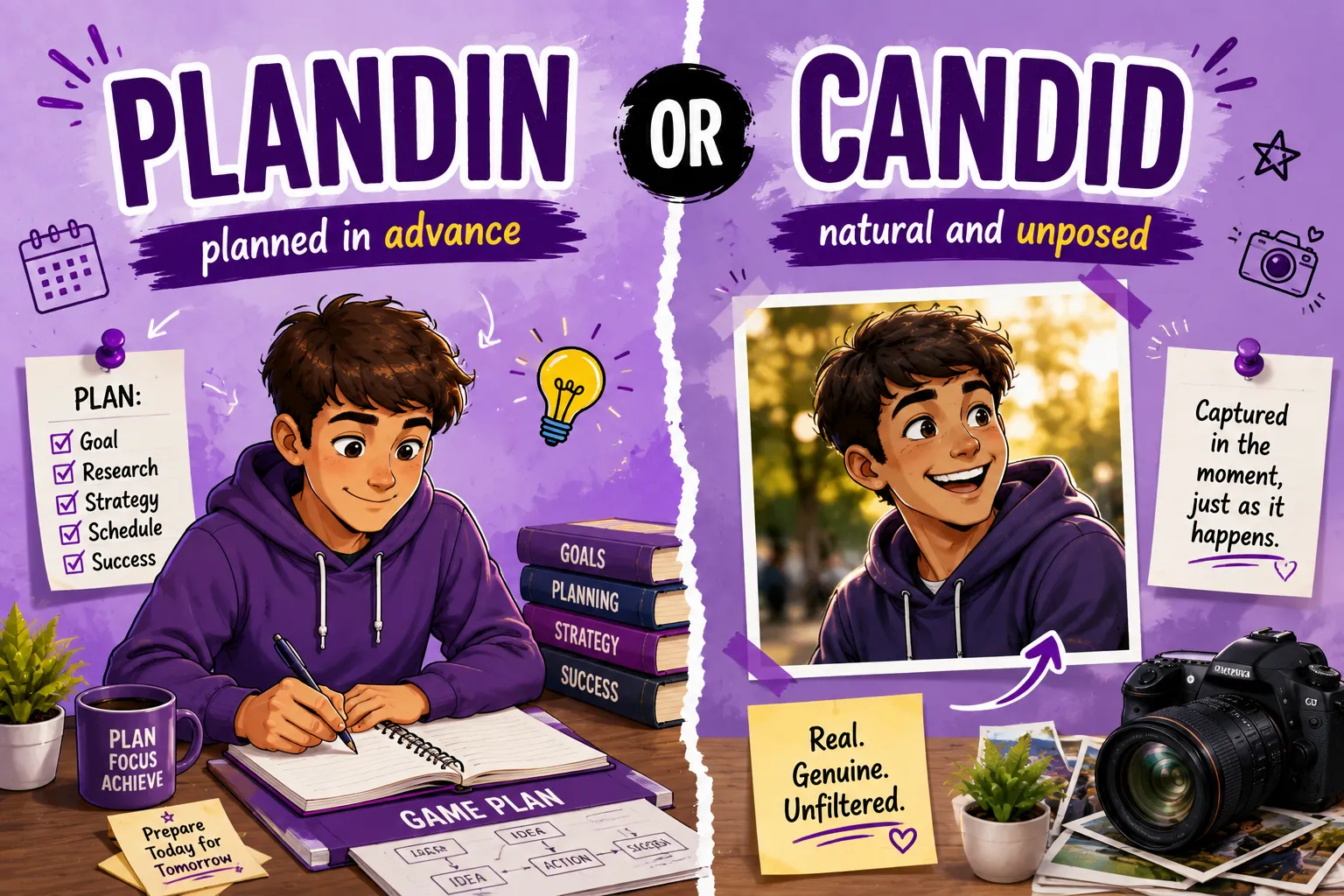
“Candid” means a photo taken naturally, without posing. “Plandid” means a photo planned to look candid, even though it is staged. They look similar, but the process behind each one is very different.
A Photo Trend That Fools Almost Everyone
I once saw a “candid” beach photo online. The lighting was perfect. The angle was flawless. The smile looked just right.
It was not candid at all. It was plandid. Someone planned every part of that shot to look natural.
This word trend confuses a lot of people today. Social media blurs the line between real moments and staged ones. This guide clears up the difference for good. You will learn what each word means. You will learn how to spot the difference too.
Plandid or Candid: Quick Answer
Candid means a photo taken in the moment, with no posing at all.
Example: A candid shot of kids laughing during a birthday party.
Plandid means a photo that looks candid, but was carefully set up first.
Example: A plandid shot of a couple “caught” laughing on a walk, actually planned in advance.
Both can look natural. Only one actually is.
The Origin of Plandid and Candid
Candid comes from Latin. The word “candidus” meant bright or white. Over time, it grew to mean honest and open. A candid photo captures a real, unfiltered moment.
Plandid is much newer. It blends “planned” and “candid” into one word. Social media influencers popularized it. They wanted a term for photos designed to look spontaneous.
This trend grew fast. Instagram made staged photos common. People wanted a word for that specific style. Plandid filled that gap perfectly.
Plandid vs Candid: Key Differences and Uses
| Term | Meaning | When to Use | Region/Context |
|---|---|---|---|
| Candid | Unposed, natural photo | Real, spontaneous moments | Used globally in photography and journalism |
| Plandid | Staged photo meant to look candid | Social media, influencer content, portraits | Common in modern online photography culture |
Examples in context:
Candid (real moment): The photographer caught a candid shot of the bride crying during her vows.
Plandid (staged shot): The influencer set up a plandid photo of herself “reading” at a cafe.
Candid (real moment): Street photographers specialize in candid shots of daily city life.
Plandid (staged shot): The couple posed for ten minutes to get one perfect plandid photo.
Which Version Should You Use?
For photojournalism or documentary work, always aim for candid shots. Authenticity matters most here.
For social media content or brand photography, plandid shots often work better. They give a polished look while still feeling relatable.
For personal memories, candid photos usually capture more genuine emotion, even if they look less “perfect.”
Common Mistakes with Plandid and Candid
Mistake: Calling every posed photo “candid.”
Correction: Use “plandid” for photos that are staged but styled to look natural.
Why it happens: many staged photos are designed specifically to look unplanned, so people assume they are truly candid.
Mistake: Assuming plandid photos are dishonest or fake.
Correction: Plandid photos are simply a style choice, not a deception, especially when labeled honestly.
Why it happens: the word “planned” carries a slightly negative feel, even though the technique is widely accepted.
Mistake: Using “candid” to describe heavily edited photos.
Correction: A true candid photo focuses on the unposed moment, not the editing style.
Why it happens: people often link “candid” with a casual look, even when heavy editing removes that authenticity.
Mistake: Thinking plandid is a spelling error.
Correction: Recognize it as an intentional blended word, not a mistake.
Why it happens: the word is new, so many readers have simply never encountered it before.
Plandid and Candid in Real World Examples
In a professional email:
“Please send both candid shots from the event and a few plandid portraits for the website.”
In a news headline:
“Plandid or Candid? Why Instagram Photos Rarely Show the Full Story”
In a social media post:
“This ‘candid’ laugh took twelve takes. Basically the definition of plandid.”
In a formal photography portfolio description:
“This collection blends candid street photography with carefully composed plandid portraits.”
Plandid and Candid: Data, Trends and Usage
Searches for “plandid or candid” grew alongside the rise of influencer culture and lifestyle photography on social media.
Content creators, photographers, and marketing teams search this topic most, since both styles serve different purposes in visual branding.
This is a mostly informational search, though it touches commercial interest for photographers marketing their specific style of work.
It matters now because audiences increasingly value authenticity. Knowing the difference helps creators label their content honestly and helps viewers spot staged content more easily.
Plandid vs Candid: Standalone Comparison Table
| Term/Variant | Meaning | Region/Context | Best Used When |
|---|---|---|---|
| Candid | Genuine, unposed photo | Photography, journalism, everyday life | Capturing real, spontaneous moments |
| Plandid | Staged photo styled to look candid | Social media, influencer marketing | Creating a polished but relatable image |
Frequently Asked Questions
Q: What does “candid” mean?
A: “Candid” describes a photo taken naturally, without posing, capturing a genuine and unplanned moment.
Q: How do you use “plandid” correctly?
A: Use “plandid” to describe a photo that was staged or planned but designed to look spontaneous and natural.
Q: Plandid vs candid, what is the real difference?
A: A candid photo is truly unplanned. A plandid photo is staged to look that way, even though it was set up in advance.
Q: Is “plandid” an acceptable word in formal writing?
A: It works well in marketing, photography, and lifestyle content, though it remains informal compared to standard vocabulary.
Q: Which one is better for wedding photography, candid or plandid?
A: Many photographers use both. Candid shots capture real emotion, while plandid shots offer polished, planned moments too.
Q: Where does the word “plandid” come from?
A: It blends “planned” and “candid” into one word, coined to describe a specific modern photography style.
Q: Can a plandid photo still feel authentic?
A: Yes, when done well, a plandid photo can still capture real emotion, even though the setup was intentional.
Final Takeaways
Here is the short version: candid means real and unplanned, plandid means staged to look that way.
Neither style is wrong. Each one serves a different purpose in photography today.
Knowing the difference helps you choose the right style for any project, personal or professional.
Bookmark this guide so you never second guess plandid or candid again, and share it with anyone who loves photography or social media content.
Explore More: Friend or Foe: What the Phrase Really Means
My name is Ayesha Sadiqah, the writer behind this website. I write in-depth articles on English spelling, word comparisons, grammar, and vocabulary to help learners make better language choices. Every guide is designed to provide accurate, practical, and easy-to-understand information.