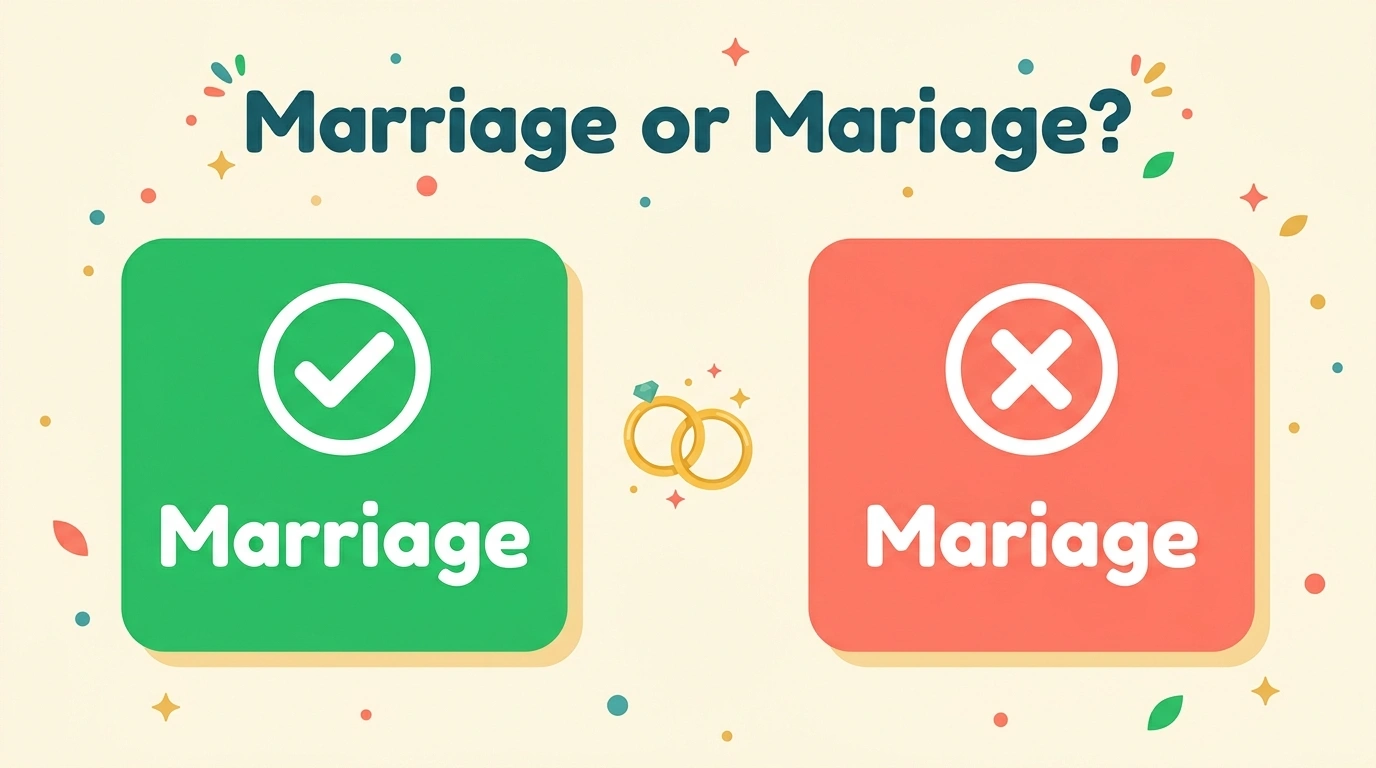
Marriage is the correct English spelling. Mariage is the French word for the same thing, so in English it counts as a typo. Remember it with this trick: marriage has two r’s, one for each person.
Picture a young woman named Sana, typing the invitation for her cousin’s wedding. She writes “Join us for the mariage of Ali and Zara.” The spell checker puts a red line under the word. She stares at it. Both spellings look right to her.
Sana is not alone. Many people mix these two spellings, and the reason is simple. Mariage is a real word, just not an English one. It looks natural because it shows up in French phrases, on shop signs, and on tea boxes.
In this guide, you will learn why the two spellings exist, which one to use, and how to never mix them up again. You will also get a cheat sheet, real examples, and answers to the questions people search most.
Let’s start with the basics.
Marriage Quick Answer
Marriage is a noun. It means the legal or formal union of two people as partners. It also means the state of being married, as in “a long and happy marriage.”
Use it like this:
- “Their marriage lasted fifty years.”
- “She wrote a book about marriage and money.”
Notice the pattern. Marriage has two r’s in the middle, then i, a, g, e. It rhymes with carriage, and both words share the same ending.
Mariage has only one r. In English, that spelling is wrong. You should only use it when you are writing French or quoting a French name.
The Origin of Marriage
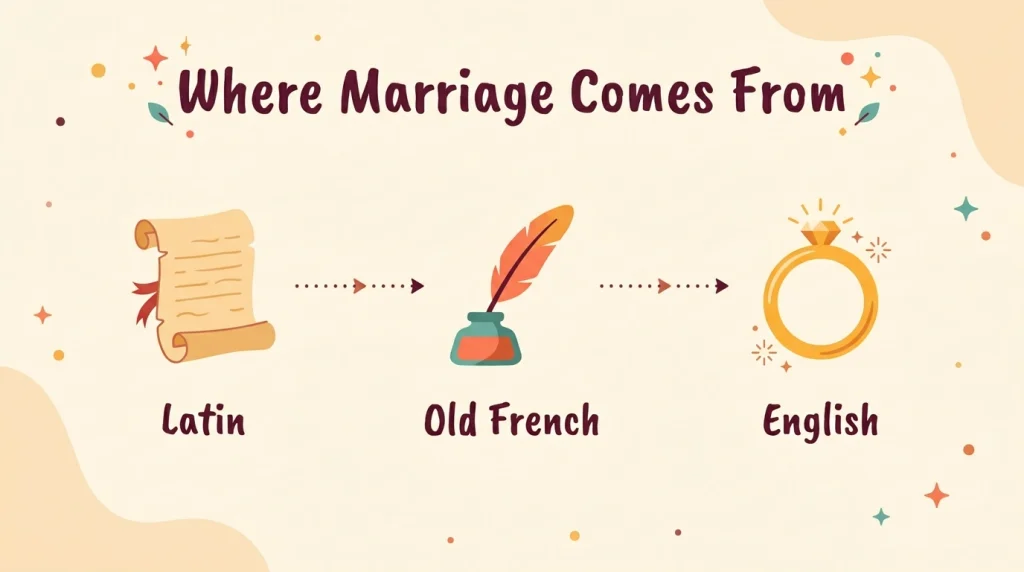
The English word marriage came from Old French. It entered English around the year 1300, and the early spelling was “mariage.” Etymonline shows this early form, with only one r.
So here is the surprise. Old English writers once used the one r spelling. Over the centuries, English spelling changed, and the second r settled in.
The French word comes from the verb marier, which means to marry. That verb goes back to the Latin maritare, which comes from maritus, meaning husband or married.
So why does the confusion live on? French still spells it mariage, brand names keep it on purpose, and both words sound the same.
Marriage vs Mariage Explained: Key Differences
Here is a quick table to compare both spellings.
| Term | Meaning | When to Use | Region or Context |
| Marriage | The union of two partners, or the state of being married | All English writing | US, UK, Canada, Australia, worldwide |
| Mariage | The French word for marriage | French text, French titles, brand names | France, Quebec, French speaking regions |
Here are clear examples for each.
Marriage in English:
- “Their marriage began in the spring.”
- “A strong marriage needs honest talk.”
Mariage in French:
- “Le mariage a lieu samedi.” This means “The wedding takes place on Saturday.”
Do you see the difference? One sentence is English. The other is French. Mixing them in one English sentence looks like a mistake.
Which Spelling Should You Use?
The advice is easy. Match the spelling to the language you write in.
- For students and teachers: Use marriage. Teachers will mark mariage as an error.
- For bloggers and business writers: Use marriage. It protects your trust with readers.
- For wedding invitations: Use marriage in English text. Keep mariage only for French invitations.
- For French content or brand names: Use mariage, and copy the name exactly. Writing “Mariage Frères” with a second r would change the brand.
- For global or neutral use: Use marriage.
If you are not sure, pick marriage. You will be right in almost every English sentence.
Common Mistakes with Marriage
Here are the errors people make most, with the fix next to each.
| Mistake | Correction | Why It Happens |
| The mariage was lovely. | The marriage was lovely. | French spelling slips into English. |
| Maraige | Marriage | Letters get swapped when you type fast. |
| Marrige | Marriage | The “ia” in the middle is missed. |
| Marriege | Marriage | The word is pronounced “ij,” so people write “ege.” |
Why do these errors happen? The ending of the word is the main trap. It sounds like “ij,” but it is written age. Many English words end this way, like carriage, package, and village.
Here is a simple fix. Say it in three parts: mar, ri, age. Each part is easy to spell.
Marriage in Real World Examples
Here is marriage used naturally in four settings.
A professional email: “Thank you for your help with the marriage certificate. We will send the final form on Monday.”
A news headline: “City Hall Reports Rise in Marriage Applications This Spring”
A social media post: “Ten years of marriage and she still laughs at all my jokes. Happy anniversary!”
A formal document: “The parties confirm that their marriage took place on the date shown on the certificate.”
Each one uses the two r spelling. Each one reads smoothly.
Cheat Sheet: Marriage or Mariage
Save this section. It answers most questions fast.
| Situation | Right Choice |
| Writing in English | marriage |
| Writing in French | mariage |
| Brand name with the French spelling | Copy the brand exactly |
| Exam, essay, or report | marriage |
| Spell checker shows a red line under mariage | Change it to marriage |
Memory tricks:
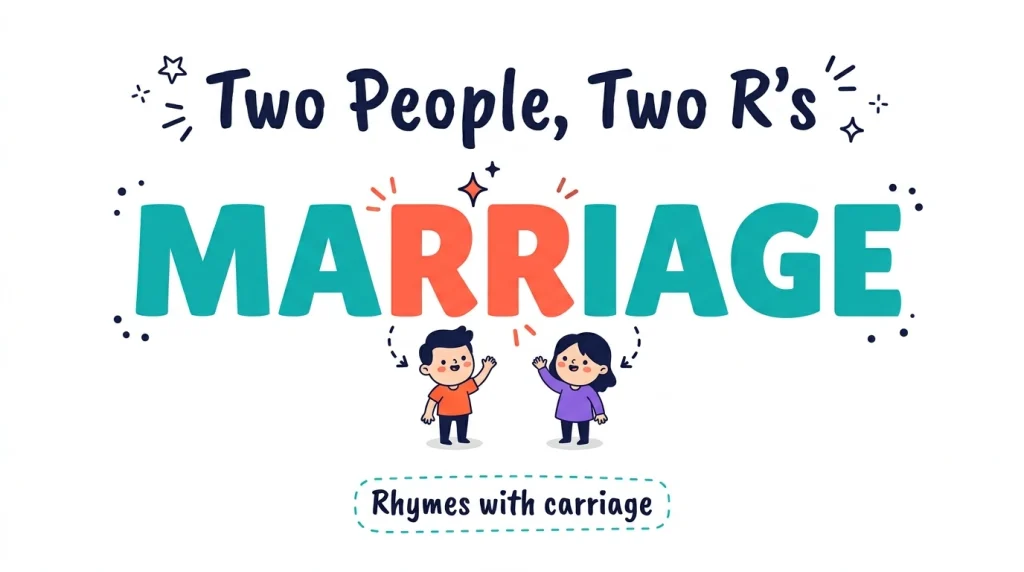
- Two r’s, two people. Marriage takes two r’s, just like a marriage takes two people.
- Rhyme it with carriage. If you can spell carriage, you can spell marriage.
- Check the ending. It is always age, never “ege” or “ige.”
Marriage: Data, Trends and Usage
Search intent: Informational. People want a quick, clear answer about spelling.
Who searches for this? Mostly students, writers, wedding planners, and learners of English. For exact search numbers by region, check Google Trends.
Why this matters now: Spell checkers do not always flag mariage, because it is a real French word. So you still need to know the difference yourself.
Standalone Comparison Table
| Term or Variant | Meaning | Region or Context | Best Used When |
| Marriage | Union of two partners; the married state | English worldwide | You write in English |
| Mariage | French word for marriage | France, Quebec, French content | You write in French or quote a French name |
| Maraige, Marrige, Marriege | None. These are typos. | Any | Never. Fix them. |
| Wedding | The ceremony itself | English worldwide | You mean the event, not the union |
Frequently Asked Questions
Q: What does marriage mean? A: Marriage means the formal union of two people as partners. It also means the state of being married. For example: “Their marriage is strong.”
Q: Is it marriage or mariage in English? A: It is marriage. The one r spelling is French. English needs the two r form.
Q: What is the difference between marriage and wedding? A: A wedding is the ceremony. A marriage is the lasting union. You attend a wedding, but you live in a marriage.
Q: Is mariage acceptable in formal writing? A: Not in English. Use it only in French text or when you copy a French title or brand name exactly.
Q: Where does the word marriage come from? A: It came into English from Old French mariage around 1300. That word grew from the verb marier and the Latin maritare.
Q: Can I use mariage in a wedding invitation? A: Yes, if the whole invitation is in French. For an English invitation, use marriage or the word wedding.
Conclusion
You now know the answer. Marriage is the correct English spelling. Mariage is the French spelling, and in English it is only right inside French text or brand names.
Here are the key points to keep:
- Use marriage in all English writing.
- Remember the two r’s and the age ending.
- Keep mariage for French sentences and names you copy exactly.
- Do not confuse marriage with wedding.
If you only remember one thing, remember this: two people, two r’s. That small trick will protect you on every essay, invitation, email, and post.
Bookmark this guide so you never second guess marriage again. And share it with someone who has been confused about it.
Read More: Optimization or Optimisation: Pick the Right One Fast

I’m Zain. Through Wordiums.com, I write clear, accurate word comparison guides that show the difference between similar words, spellings, and phrases, so readers can choose the right word in seconds.








1 thought on “Marriage or Mariage: The Easy Spelling Guide”