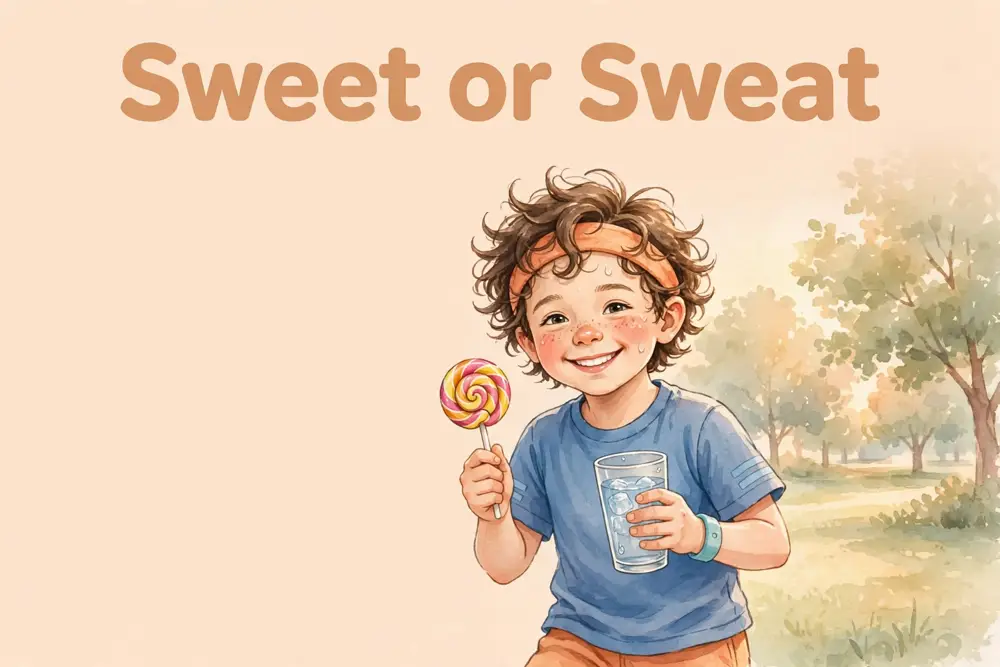
Sweet means tasting of sugar, or kind and pleasant. Sweat means the moisture your skin makes when you are hot or working hard. In short, sweet or sweat comes down to taste or moisture.
I still remember the day I mixed up these two words in front of a whole class. My essay was about a football match, and I was reading it out loud. I planned to say the players were covered in sweat after the game. Instead, I said they were covered in sweet. The class burst out laughing. My teacher smiled and asked if the players had been dipped in sugar. I felt my face turn red. That one small mix up stayed with me for years.
You may have had a moment like that too. For example, you type a message fast, and your fingers pick the wrong word. Your brain knows the meaning, but your hands do not. In fact, sweet and sweat look almost the same, and they sound almost the same too. That is why so many people confuse them. It happens in emails, in exams, in recipes, and in posts. One small letter changes the whole meaning of your sentence. This guide will fix that confusion for good. Finally, you will learn the clear difference and a simple trick.
Sweet or Sweat Quick Answer
In short, sweet is about taste and kindness. For example, sugar is sweet, and a kind word is sweet too.
On the other hand, sweat is about your body. It is the salty water on your skin when you are hot or working hard.
Next, test it with a simple question. Are you talking about taste, or about moisture on skin? If it is taste, pick sweet, and pick sweat for moisture.
For instance, “This cake is sweet” is correct. Similarly, “After the run, sweat ran down my face” is correct.
The Origin / Background of Sweet or Sweat
To begin with, sweet comes from an old English word that meant pleasant to taste. In fact, it later grew to mean kind and pleasant too, as in a sweet smile.
Similarly, sweat comes from an old English word for the moisture on skin, and it has always been linked to heat and hard work. For example, farmers and builders talked about sweat long before gyms existed.
However, the two words grew close in spelling over time. They share most of their letters, and only the middle vowel sound is different. As a result, fast writers mix them up.
Sweet or Sweat Explained: Key Differences
Above all, sweet is about taste or kindness. On the other hand, sweat is about the body and heat.
First, sweet can be an adjective. A sweet apple tastes of sugar, and a sweet person is kind.
However, sweat is a noun and a verb. Sweat is the moisture itself, and to sweat is to make it. For example, “Sweat dripped from his brow” uses the noun, while “She began to sweat in the sun” uses the verb.
In contrast, you can never sweat a cake. The meanings stay far apart, even when the spellings look close.
| Term | Meaning | When to Use | Region/Context |
|---|---|---|---|
| Sweet | Tasting of sugar | Food and drink | Everyday English |
| Sweet | Kind and pleasant | People and words | Everyday English |
| Sweat | Moisture on skin | Body and heat | Everyday English |
| Sweat | To make moisture | Exercise and work | Everyday English |
For example, remember this simple trick. Sweet rhymes with treat, and a treat is sweet. Sweat rhymes with wet, and sweat makes you wet.
Which Version / Approach Should You Use?
To begin with, ask yourself one question. Are you talking about taste, kindness, or moisture?
For example, food writers use sweet for taste, as in the mango is sweet and ripe.
In contrast, fitness writers use sweat for the body. For instance, say the workout made me sweat.
Similarly, everyday writers use sweet for kind words, as in she gave a sweet reply.
As a result, pick sweet for sugar and kindness, and pick sweat for heat and hard work.
Common Mistakes with Sweet or Sweat
Mistake: The soup was sweat and tasty.
Correction: The soup was sweet and tasty.
In fact, sweat is moisture, not taste.
Mistake: After the match, sweet poured down his face.
Correction: After the match, sweat poured down his face.
In short, sweat means moisture on skin.
Mistake: She gave a sweat smile.
Correction: She gave a sweet smile.
After all, sweet means kind and pleasant.
Mistake: The gym made me sweet all over.
Correction: The gym made me sweat all over.
In particular, sweat is the verb for it.
Mistake: I need a sweat treat after dinner.
Correction: I need a sweet treat after dinner.
For this reason, check the middle letters first.
Sweet or Sweat in Real World Examples
A professional email
Subject: Thank you for the sweet note. Hi Sara. For instance, your kind words made my day. Meanwhile, the team worked in the heat, and sweat ran down our faces by noon. Thanks, Ali.
A news headline
“Local Bakery Wins Prize for Sweetest Cake as Runners Sweat Through City Marathon.” For example, the cake is sweet, and the runners sweat.
A social media post
For instance, this mango shake is so sweet. Meanwhile, I am still sweating after my morning run.
A formal document or report
For example, the report noted sweet dishes on the dessert menu. As a result, sweat in the hot kitchen was a health concern for staff.
Sweet or Sweat Data, Trends and Usage
Overall, people search for this pair all year round. In particular, students search for it most during exam season. For example, English learners search for it with near homophones, words that sound almost the same but mean different things. As a result, this pair stays one of the most looked up spelling pairs in English.
Sweet or Sweat Comparison Table
| Term/Variant | Meaning | Region/Context | Best Used When |
|---|---|---|---|
| Sweet | Tasting of sugar | Everyday English | Food and drink |
| Sweet | Kind and pleasant | Everyday English | People and messages |
| Sweet | A candy, in British English | British English | Sweets and desserts |
| Sweat | Moisture on skin | Everyday English | Heat and exercise |
| Sweat | To make moisture | Everyday English | Work and sport |
| Sweat | Hard effort, informal use | Informal English | Work and idioms |
Cheat Sheet
Think sugar and kindness when you see sweet. Sweet has double e, like treat.
Sweat means heat and hard work. Its ea rhymes with wet.
Sweet is for taste. Sweat is for skin. You taste the sweet. Sweat is what you feel on skin.
Quick test: In short, a sweet cake works, but a sweat cake does not.
One sentence to remember: I ate a sweet treat, then I began to sweat on my run.
Frequently Asked Questions About Sweet or Sweat
Q: What does sweet mean? In short, sweet means tasting of sugar, or kind and pleasant.
Q: What does sweat mean? For example, sweat is the moisture on your skin, or the act of making it.
Q: How do I use sweet or sweat correctly in a sentence? To begin with, use sweet for taste and kindness. Next, use sweat for moisture and heat.
Q: What is the difference between sweet and sweat? In other words, sweet is about sugar or kindness, and sweat is about moisture on skin.
Q: Is sweet or sweat acceptable in formal writing? Yes, when you use the right one, and both words appear in formal writing.
Q: Which is correct, sweet or sweat? Overall, both are correct, but they mean different things, so pick sweet for taste and sweat for moisture.
Q: Can sweat be used as a verb? Yes. As a verb it means to make moisture on your skin through heat or effort.
Conclusion: Choosing the Right Word Every Time
To sum up, sweet is about sugar and kindness, and it links to taste or a warm feeling. Next, sweat is about moisture on skin, and it links to heat and hard work. Finally, the two words are not the same, so use sweet for food and kind words and sweat for the body.
For this reason, slow down for one second before you type either word and ask yourself if you mean taste or moisture. As a result, that one second will save you from the most common spelling mistake with this pair. Furthermore, your writing will look sharper, and your reader will trust you more.
To conclude, now you know how to use sweet and sweat, so try it in your next email today. In addition, bookmark this guide so you never second guess this pair again. Lastly, share it with a friend who mixes them up too.

My name is Ayesha Sadiqah, the writer behind this website. I write in-depth articles on English spelling, word comparisons, grammar, and vocabulary to help learners make better language choices. Every guide is designed to provide accurate, practical, and easy-to-understand information.