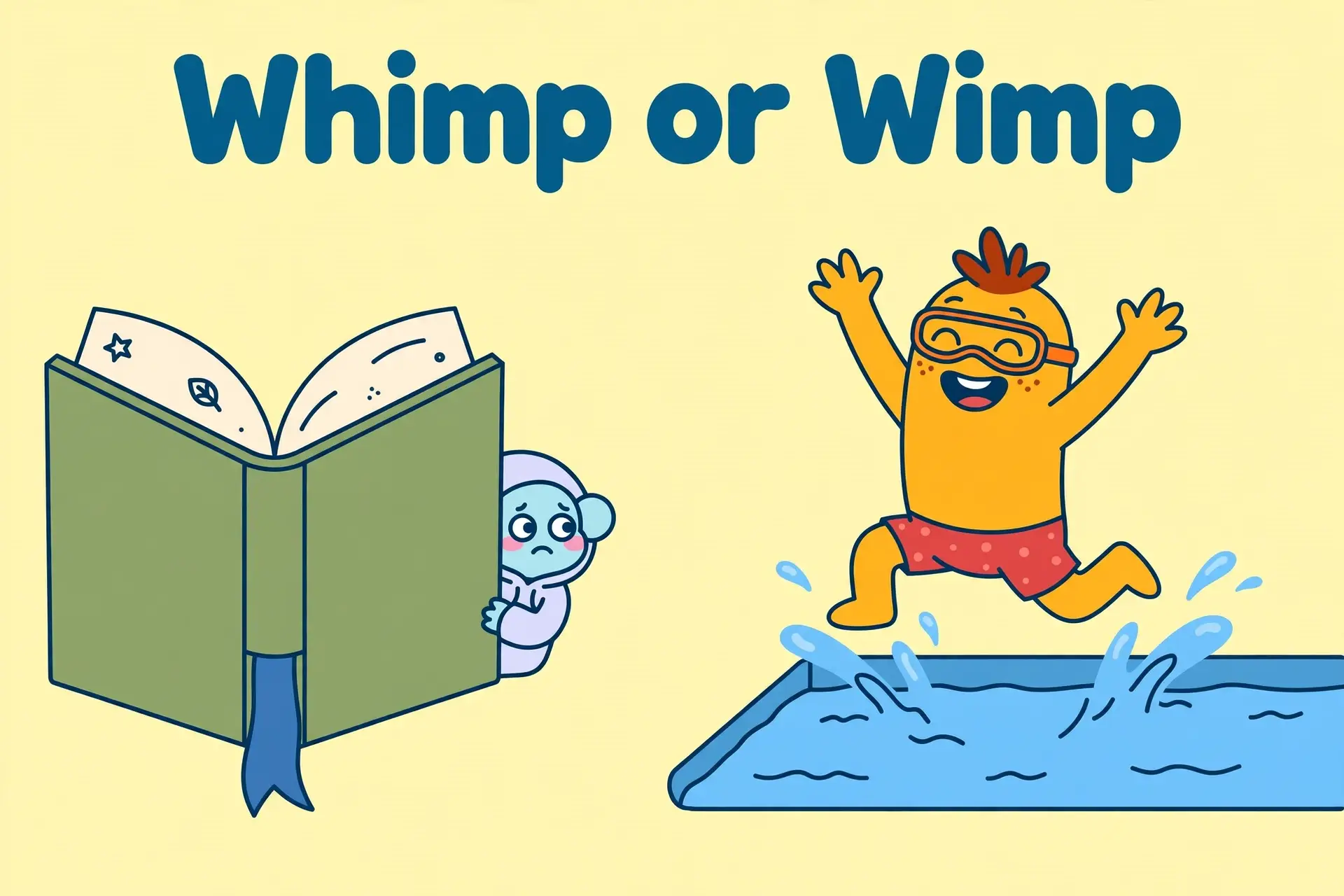
- Wimp: the correct spelling. Use it every time.
- Whimp: a common misspelling. Never use it.
I still remember the red mark on my first school essay. I had written a short story about a boy who was afraid of the dark, and I called him a whimp. My teacher circled the word and wrote wimp next to it in red ink. I felt my face turn red, since I was sure I had spelled it right. After all, the word sounded like it started with wh, just like whimper and whine. That small red circle stayed with me. You may have made the same mistake too. For example, you type a message fast, and your fingers add an extra h without thinking. Your brain knows the sound, but your hands follow the wrong pattern. In fact, whimp looks right at first glance, and that is why so many people use it. This guide ends that doubt for good. You will learn the correct spelling, the reason for the mistake, and a simple trick.
The Origin / Background of Whimp or Wimp
To begin with, wimp is a modern slang word. A major dictionary lists its first known use in 1920, with its origin still unknown. Oxford notes the same date and links the word to whimper, a soft cry of fear. In contrast, whimp has no history as the spelling for this word. It never appeared in old books as a noun for a weak person. For example, old texts used whimp as a verb for whimpering, but that use died out long ago. In short, wimp won the spelling race. The h still sneaks in today because whine and whimper both start with wh, so the ear hears wh and the hand writes wh.
Whimp or Wimp Explained: Key Differences
Above all, the difference is spelling, not meaning: wimp is the real word, and whimp is the error. First, wimp works as a noun for a weak or timid person. Next, it can work as a verb in the phrase wimp out, which means to back out of a plan from fear. In contrast, whimp has no correct use as the noun for a weak person, and it only shows up as a typo in fast writing. For instance, a teacher will mark whimp wrong in an exam. In short, one letter changes a correct word into a mistake.
| Term | Meaning | When to Use | Region and Context |
|---|---|---|---|
| Wimp | A weak or timid person | Everyday speech | Informal English, used everywhere |
| Whimp | Not a standard word | Never use it | Typo only |
| Wimp out | To back out from fear | Casual speech | Informal English |
| Wimpy | Weak or cowardly in manner | Everyday speech | Informal English |
Which Version / Approach Should You Use?
To begin with, there is no choice to make here, since only one spelling is correct. Use wimp in every case, at school, at work, and online. First, students should use wimp in exams, since teachers mark whimp as an error. Next, writers in the UK and the USA should use wimp too, since both spell it the same way. On the other hand, if you see whimp in a message, read it as a typo and move on. In short, there is no British form and no American form. Pick wimp and forget whimp for good.
Common Mistakes with Whimp or Wimp
Mistake 1: Adding an h after the w.
Wrong: “Do not be a whimp.”
Right: “Do not be a wimp.”
In fact, the h comes from whimper and whine, but wimp never had one.
Mistake 2: Thinking whimp is the British spelling.
Wrong: “Whimp is the British form.”
Right: “Wimp is the form in both British and American English.”
For example, teachers in London and New York both mark whimp wrong.
Mistake 3: Using whimp as a verb.
Wrong: “He whimped out of the race.”
Right: “He wimped out of the race.”
In short, the verb form comes from wimp, so it keeps the same spelling.
Mistake 4: Trusting spell check without looking.
Wrong: You type whimp and send the message without a second look.
Right: You type wimp and check the spelling before you send it.
After all, a fast typo can reach your teacher or boss in seconds.
Whimp or Wimp in Real World Examples
A professional email
“Hi Sara, please do not call Ali a wimp in front of the team. Thanks, Omar.”
Here, wimp describes a person in a plain way.
A news headline
“Local Hero Refuses to Back Down, Says He Is No Wimp”
For example, the headline praises courage by denial.
A social media post
“Today I learned that wimp has no h. I spelled it wrong for years.”
In short, the post turns a small spelling fix into a fun fact.
A formal document
“Note: Staff avoided labels like wimp in formal feedback.”
In fact, formal reports avoid slang like wimp, yet the spelling stays the same.
Whimp or Wimp Data, Trends and Usage
Overall, people search for this pair all year round. In particular, students search for it most during exam season. For example, English learners search for it when they write essays. As a result, guides about wh words stay popular. In short, a one letter mistake keeps this question alive, so a clear answer always helps.
Whimp or Wimp Comparison Table
| Term/Variant | Meaning | Region/Context | Best Used When |
|---|---|---|---|
| Wimp | A weak or timid person | Informal English | Everyday speech |
| Whimp | Not a standard word | Seen only as a typo | Never use it |
| Wimpy | Weak or cowardly in manner | Informal English | Casual speech |
| Wimp out | To back out from fear | Informal English | Casual speech |
Cheat Sheet: Whimp or Wimp at a Glance
Correct spelling: Wimp, with no h
Wrong spelling: Whimp, with an extra h
Meaning: A weak or timid person
Remember it: Wimp rhymes with limp
Trick: Think of whimper, then drop the er and the h
Rule: Use wimp in every place
Frequently Asked Questions
Q: What does wimp mean? In short, wimp means a weak or timid person.
Q: Is whimp a real word? No, whimp is not a standard word in modern English, only a common misspelling of wimp.
Q: Why do people spell it whimp? For example, whimper and whine both start with wh, so the ear expects an h in wimp too.
Q: Is whimp the British spelling? No, both British and American English use wimp, so there is no regional difference.
Q: Can wimp be used as a verb? Yes, wimp works as a verb in wimp out, which means to back out of a plan from fear.
Q: Is wimp rude to say? In fact, wimp is informal and mildly rude, so use it with care at work or school.
Q: How can I remember the spelling? To begin with, link wimp to limp, since both are short words with imp and neither has an h.
Conclusion
Here are the key takeaways. First, wimp is the only correct spelling, and whimp is a common misspelling. Second, the extra h comes from whimper and whine, two words that truly start with wh. Third, both British and American English use wimp, so there is no regional choice to make. Fourth, the verb form keeps the same spelling.
To sum up, my clear recommendation is simple. Use wimp in every piece of writing, from school essays to work emails. Above all, remember the trick: wimp rhymes with limp, and neither word has an h. That link will keep your spelling clean and your meaning clear.
Finally, now you know exactly how to spell this word. As a result, try it in your next message today. In addition, bookmark this guide so you never second guess wimp. Lastly, share it with a friend who still writes whimp. A small letter should never slow down good writing.

My name is Ayesha Sadiqah, the writer behind this website. I write in-depth articles on English spelling, word comparisons, grammar, and vocabulary to help learners make better language choices. Every guide is designed to provide accurate, practical, and easy-to-understand information.