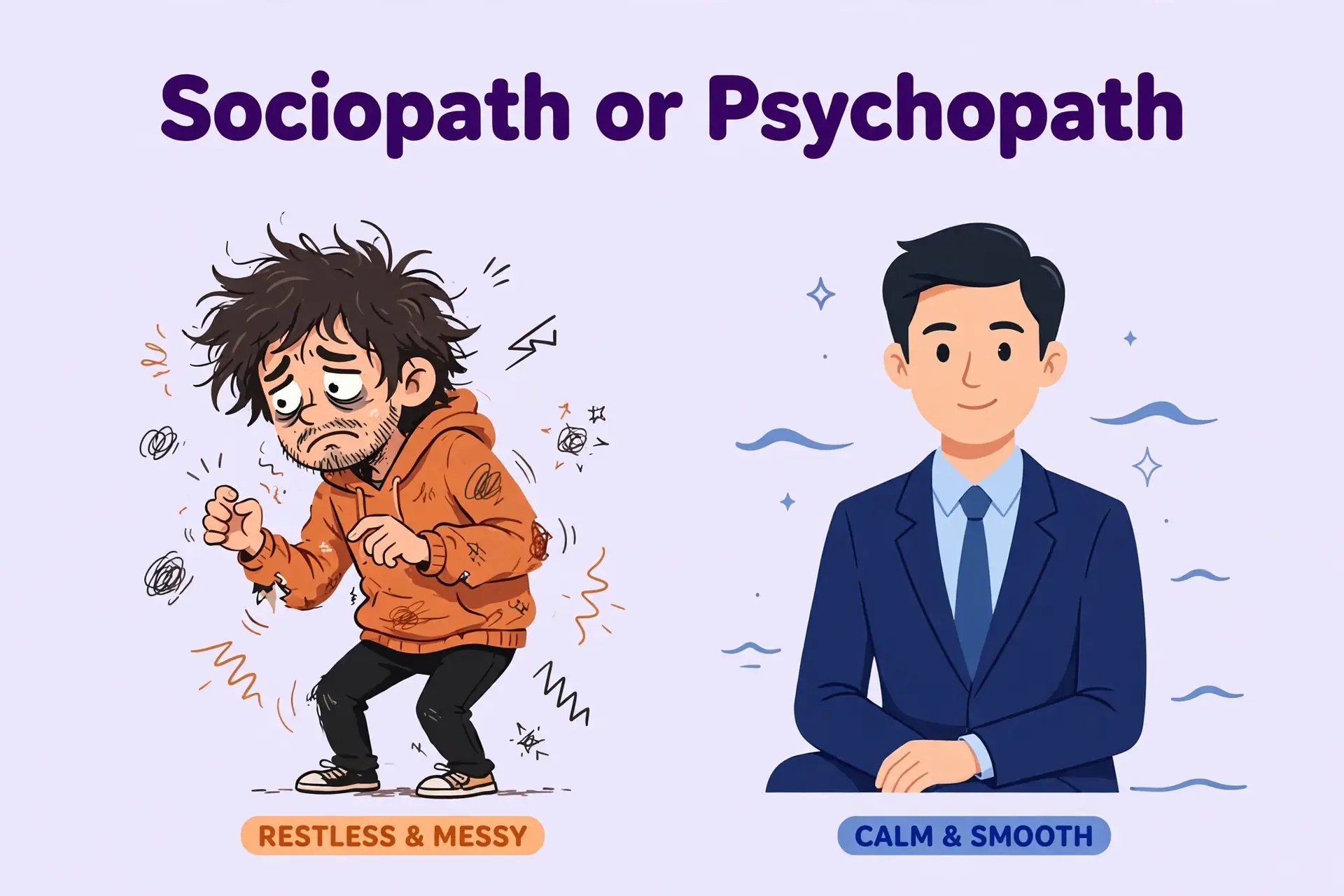
Sociopath means a person who acts in impulsive and erratic ways. Psychopath means a person who acts in a calm and calculated way with very little empathy.
I first heard both words in the same week. First, a crime show called a cold killer a psychopath. Next, a news anchor called a reckless fraudster a sociopath. For a moment, I thought the two words meant the same thing. In fact, many people use them as if they are twins. However, the words point at two very different patterns of behavior. In short, one describes a hot and messy pattern, and the other describes a cold and controlled pattern. This guide explains the real difference in plain words. You will learn what each term means, where each one came from, and which one fits the person or the story in front of you. By the end, you will never mix them up again. For instance, you will see clear examples from everyday life and from the news. Overall, the goal is simple. Use the right word, and say exactly what you mean.
The Origin / Background of Sociopath or Psychopath
To begin with, psychopath is the older word. It comes from Greek roots. Psyche means mind or soul, and pathos means suffering or disease. In fact, doctors in the 1800s used it for many kinds of mental illness. Over time, the meaning narrowed to a person with very low empathy.
Sociopath came later, in the 1930s. Doctors wanted a word that pointed at social behavior rather than the mind alone. The root socio means society, and path means disease or disorder. As a result, sociopath described trouble in how a person treated other people.
However, neither word is a formal diagnosis today. The main diagnostic guide in the United States lists antisocial personality disorder instead. For this reason, both words now live mostly in everyday talk, in books, and in films. Only a qualified professional can diagnose a personality disorder.
Sociopath or Psychopath Explained: Key Differences
Above all, the difference is control and planning, not just bad behavior. A sociopath often acts on impulse. A psychopath often acts with a plan. For example, a sociopath may lash out in anger and feel sorry after the fact. In contrast, a psychopath may stay calm and feel little guilt at all. Both patterns can harm other people.
| Term | Meaning | When to Use | Region/Context |
|---|---|---|---|
| Sociopath | Impulsive and erratic antisocial behavior | Hot, messy, hard to predict | Talk, news, crime stories |
| Psychopath | Calm and calculated behavior, very low empathy | Cold, planned, charming | Talk, books, films |
| Antisocial personality disorder | Formal diagnosis for disregard for others | A real diagnosis, not a label | Medical and legal writing |
Which Version Should You Use?
To begin with, ask who will read your words. For a school essay or a work report, use the formal term antisocial personality disorder for a real diagnosis. For everyday talk, pick the word that matches the pattern you see. In short, use sociopath for impulsive behavior and psychopath for calm and calculated behavior.
Next, think about the setting. In a novel or a film review, psychopath fits the cold and charming villain. In a news story about a reckless fraud, sociopath fits better. However, never use either word as a joke or an insult. As a result, choose with care. When in doubt, describe the behavior instead of the label. For example, name the act, not the label.
Common Mistakes with Sociopath or Psychopath
Mistake 1: Using both words as if they mean the same thing.
Wrong: “He is both, so it makes no difference.”
Right: “He shows the calm traits of a psychopath.”
In fact, they describe different patterns.
Mistake 2: Labelling a person after one bad act.
Wrong: “She lied once, so she is a sociopath.”
Right: “She lied once, but one act does not make a diagnosis.”
In short, a pattern over time matters, not a single act.
Mistake 3: Using psychopath for every cold or rude person.
Wrong: “My boss is strict, so he is a psychopath.”
Right: “My boss is strict, and I do not like his style.”
However, strict or rude is not the same as a personality disorder.
Sociopath or Psychopath in Real World Examples
Professional email
Hi Sara, Friday training will cover sociopath and psychopath. Please bring one real case from the news. Thanks, Ali.
News headline
“Court Hears Claims of Calculated Fraud in Psychopath Case”
The headline uses psychopath because the fraud was planned, not impulsive.
Social media post
Today I learned the difference. Sociopaths act on impulse. Psychopaths plan every step. Which word have you used wrong till now?
Formal document
Method: The team used antisocial personality disorder in the report. In fact, the team avoided both words because neither one is a formal diagnosis.
Sociopath or Psychopath Data, Trends and Usage
Overall, people search for both words all year round. In particular, crime shows and true crime books keep psychopath in the public eye. Similarly, news stories about fraud and scams keep sociopath in use. As a result, both words stay popular, yet most people use them as labels rather than facts. The words spread fast, while the real meaning spreads slow. For this reason, a clear guide matters.
Cheat Sheet: Sociopath or Psychopath at a Glance
Sociopath: impulsive, erratic, hot, messy
Psychopath: calm, calculated, cold, smooth
Formal diagnosis: antisocial personality disorder
Never: diagnose from a film, a quiz, or one bad act
Remember: only a qualified professional can diagnose
| Term/Variant | Meaning | Region/Context | Best Used When |
|---|---|---|---|
| Sociopath | Impulsive and erratic behavior | Talk, news | Hot and messy behavior |
| Psychopath | Calm and calculated, low empathy | Talk, books, films | Cold and planned behavior |
| Antisocial personality disorder | Formal diagnosis for disregard | Medical and legal writing | A real diagnosis |
Frequently Asked Questions
Q: What is a sociopath? In short, a sociopath shows a pattern of impulsive and erratic antisocial behavior. For example, such a person may break rules without a plan.
Q: What is a psychopath? A psychopath shows a pattern of calm and calculated behavior with very low empathy. For instance, such a person may lie with ease and feel little guilt.
Q: What is the difference between a sociopath and a psychopath? In short, a sociopath acts on impulse, while a psychopath acts with a plan.
Q: Is sociopath a real diagnosis? No, it is not. The formal diagnosis is antisocial personality disorder. In fact, sociopath and psychopath are informal terms, not medical labels.
Q: Can a sociopath feel empathy? A sociopath may feel some empathy, yet still act on impulse. However, the empathy is often weak or uneven.
Q: Can a psychopath be charming? Yes, a psychopath can seem very charming. For example, charm helps hide cold traits and win trust.
Q: Which word should I use? Use sociopath for impulsive behavior. Use psychopath for calm and calculated behavior. When in doubt, describe the behavior instead.
Conclusion
Here are the key takeaways. First, sociopath means impulsive and erratic behavior. Second, psychopath means calm and calculated behavior with very little empathy. Third, neither word is a formal diagnosis. The real diagnosis is antisocial personality disorder. Fourth, only a qualified professional can diagnose a personality disorder.
To sum up, my clear recommendation is simple. Use sociopath when the pattern is hot and messy. Use psychopath when the pattern is cold and planned. In fact, the right word shows that you understand the difference, not just the label. Above all, use both words with care. They carry heavy weight, and they can hurt people when used as jokes or insults.
Finally, now you know exactly how to use these words. As a result, try them in your next piece of writing. Next, share this guide with a friend who mixes them up. In addition, bookmark it so you never second guess the difference again.

My name is Ayesha Sadiqah, the writer behind this website. I write in-depth articles on English spelling, word comparisons, grammar, and vocabulary to help learners make better language choices. Every guide is designed to provide accurate, practical, and easy-to-understand information.