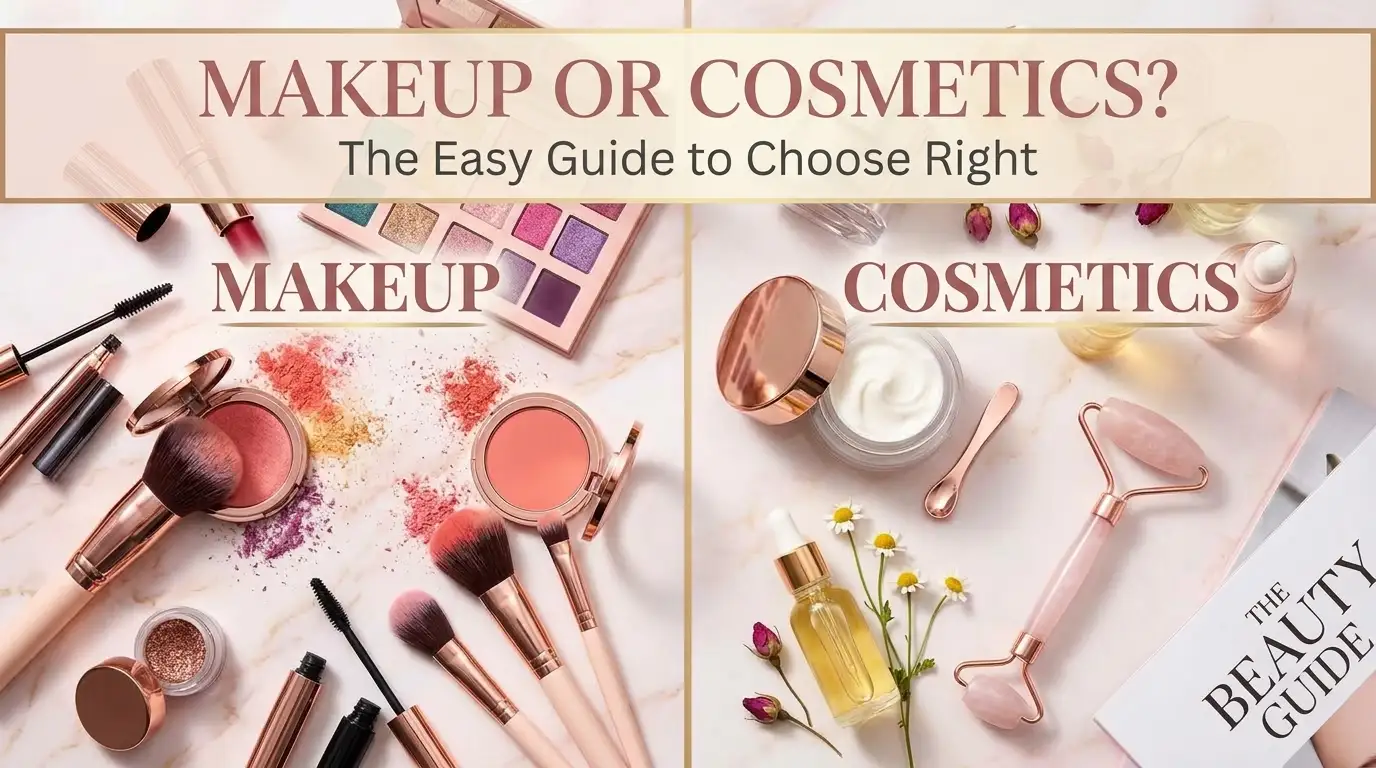
Makeup or cosmetics? Makeup means colour products you put on your face, such as lipstick, foundation, and mascara. Cosmetics is the bigger word. It covers makeup and also skincare, perfume, nail polish, and similar beauty products. Use makeup for face colour. Use cosmetics for the whole category.
A friend of mine once asked me for help with her small online beauty shop. She had stocked lipsticks, face creams, perfumes, and nail polish. Then she froze at one question.
What should she call the main menu button? “Makeup” looked friendly. “Cosmetics” looked professional. She tried both, deleted both, and typed them again.
I told her the truth. Both words are correct, but they do not mean the same thing. One is a part. The other is the whole.
That small shop problem is the same problem many writers face. Students mix them up in essays. Bloggers swap them in headlines. Shoppers type them into search bars without knowing the difference.
This guide clears up the confusion. You will learn what each word means, where each one comes from, and how to choose the right one. You will also get three cheat sheets, real examples, and answers to common questions.
Ready to sort your makeup or cosmetics doubt for good? Let us begin.
Makeup or Cosmetics: Quick Answer
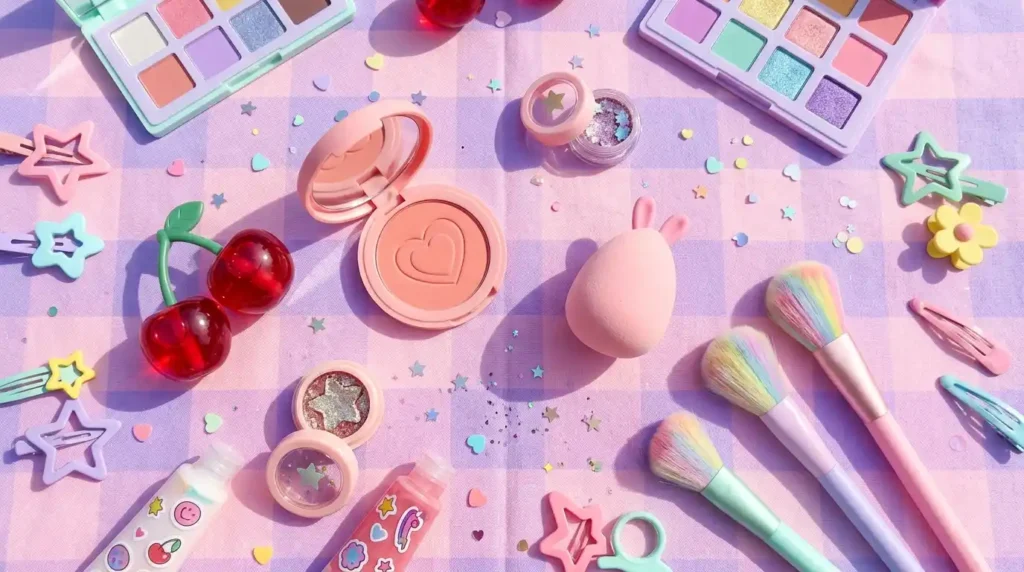
Makeup is the group of products that add colour or shape to your face. Think lipstick, blush, eyeshadow, eyeliner, mascara, and foundation. It is usually an uncountable noun, so you say “She wears makeup,” not “She wears a makeup.”
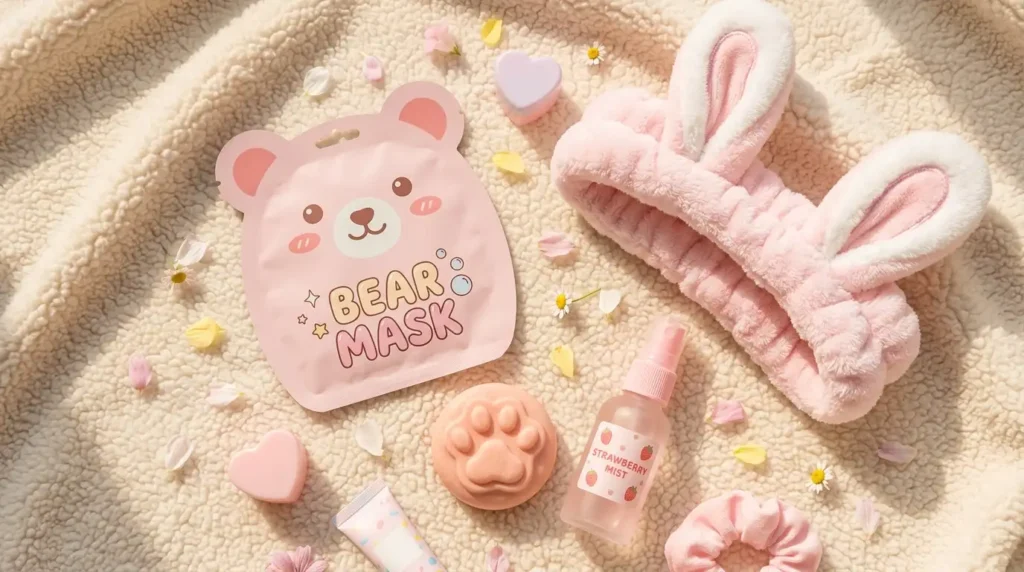
Cosmetics is a wider term. It names products used to clean, protect, or improve how a person looks or smells. That includes makeup, but also moisturizer, perfume, and nail polish. It is a plural noun.
Here are two quick examples:
- She put on her makeup before the interview.
- The store sells cosmetics from many brands, including skincare and fragrance.
Both sentences are correct. The size of the group decides the word.
The One Line Memory Trick
Picture a big circle labelled cosmetics. Inside it sits a smaller circle labelled makeup.
All makeup is cosmetics. But not all cosmetics are makeup.
The Origin and Background of Makeup or Cosmetics
The two words have very different stories.
Cosmetics is the older and more formal word. It comes from a Greek word that meant skilled in arranging or ordering things. That Greek word grew from kosmos, which meant order and also ornament. The idea was simple. Beauty is a kind of order. When you arrange your look, you are being cosmetic.
Makeup is younger and more casual. It comes from the verb phrase make up, which has many meanings in English. One of them is to put on face colour, the way an actor prepares for the stage. Over time, the phrase became a single word for the products themselves.
So one word came from ancient Greek and the other grew from everyday English. That is why cosmetics sounds more formal and makeup sounds more relaxed.
Why the Confusion Exists
There are three reasons people mix them up.
First, shops use both words for the same shelf. A sign may say “Cosmetics” while the products inside are all lipsticks and powders.
Second, people use them as casual synonyms in speech. Most listeners understand either word, so nobody corrects the speaker.
Third, both words carry extra meanings. Makeup can also mean the parts that form something, as in “the makeup of the team.” Cosmetic can also mean surface level only, as in “cosmetic changes to a plan.” These extra meanings make the pair feel slippery.
How They Sound
Makeup sounds like “MAKE up.” The stress falls on the first part. Cosmetics sounds like “koz MET iks.” The stress falls on the second syllable.
You will not confuse them in speech. The trouble starts in writing, when you must pick one.
Makeup or Cosmetics Explained: Key Differences or Variations
The two words belong to the same world, but they play different roles. Here is a quick map of the whole word family.
| Term | Meaning | When to Use | Region or Context |
| Makeup | Colour products for the face and eyes | Everyday talk about lipstick, foundation, mascara | Common in American English |
| Cosmetics | All beauty and personal care products | Shops, labels, laws, and business writing | Used worldwide |
| Cosmetic | Describing something related to beauty or only on the surface | “Cosmetic surgery,” “cosmetic changes” | Used worldwide |
| Make up (two words) | The verb meaning to apply colour or to invent | “She makes up her face.” | Used worldwide |
| Makeup artist | A professional who applies makeup | Weddings, film, fashion | Used worldwide |
| Cosmetologist | A trained professional in hair, skin, and nails | Salons and licensed beauty work | Used in many countries, especially the United States |
| Skincare | Products that care for the skin | Cleansers, creams, serums | Used worldwide |
| Fragrance | Perfume and scented products | Perfume shelves | Used worldwide |
Examples for Each Form
- Makeup: Her makeup was light and natural.
- Cosmetics: The cosmetics aisle was full of new launches.
- Cosmetic: The repair was only cosmetic, so the machine still had a fault.
- Make up (verb): The artist will make up the actors before the show.
- Makeup artist: My cousin trained as a makeup artist.
- Cosmetologist: A cosmetologist can cut hair and style nails.
- Skincare: A simple skincare routine can take five minutes.
- Fragrance: The fragrance lasted all evening.
Cheat Sheet 1: Which Product Belongs Where?
This table shows how common products fit into each group. Save it.
| Product | Is it makeup? | Is it cosmetics? |
| Lipstick | Yes | Yes |
| Foundation | Yes | Yes |
| Mascara | Yes | Yes |
| Eyeshadow | Yes | Yes |
| Blush | Yes | Yes |
| Moisturizer | No | Yes |
| Face wash | No | Yes |
| Perfume | No | Yes |
| Nail polish | Sometimes | Yes |
| Shampoo | No | Often yes, depending on the country’s rules |
Notice the pattern. Colour on the face is makeup. Almost everything beauty related is cosmetics.
Cheat Sheet 2: Clear Signals Inside a Sentence
Sometimes the sentence itself tells you which word to pick.
| If the sentence talks about | Choose |
| Putting on, wearing, or removing colour | makeup |
| A professional who applies colour | makeup |
| A whole shop section, brand line, or industry | cosmetics |
| Laws, labels, safety, or ingredients | cosmetics |
| Skin cream, perfume, or nail care | cosmetics |
| Something that is only surface level | cosmetic |
Which Version or Approach Should You Use?
Here is direct advice for each kind of reader.
- For students, use makeup when you write about personal looks, and cosmetics when you write about the industry or products in general. Teachers like clear categories.
- For bloggers and content writers, use makeup in tutorials and cosmetics in category pages. Readers who search for how to blend foundation type “makeup.” Readers who compare brands often type “cosmetics.”
- For shop owners, use cosmetics as the main category name. It covers every item you may add later. Use makeup as a sub category for face colour.
- For business and legal writing, use cosmetics. It is the standard term in safety rules, labels, and trade reports.
- For global or neutral use, choose cosmetics for the broad idea and makeup for face colour. Both are understood in American, British, Canadian, Australian, and South Asian English.
Cheat Sheet 3: The Fast Decision Guide
Ask yourself two questions:
- Am I talking only about colour on the face? Use makeup.
- Am I talking about the whole beauty category, including skin and scent? Use cosmetics.
If you are still unsure, cosmetics is the safer broad word.
Common Mistakes with Makeup or Cosmetics
Even careful writers slip here. Let us look at the five most common errors.
Mistake 1: Calling every beauty product makeup
- Wrong: Perfume is my favourite type of makeup.
- Right: Perfume is my favourite type of cosmetic product.
Why it happens: Makeup is the more popular word, so people stretch it to cover everything. But perfume and skincare are not face colour.
Mistake 2: Treating cosmetics as a singular noun
- Wrong: This cosmetics is very expensive.
- Right: These cosmetics are very expensive.
Why it happens: The word ends in s, but writers forget it is a plural form. When you mean one item, say “a cosmetic product.”
Mistake 3: Splitting the noun into two words
- Wrong: She forgot her make up bag at the hotel.
- Right: She forgot her makeup bag at the hotel.
Why it happens: The verb phrase “make up” is two words, and writers carry that habit into the noun. Some British writers prefer a hyphenated form of the noun. American writing, and most modern online writing, use one word. Pick one style and stay consistent.
Mistake 4: Using the wrong form for “surface level”
- Wrong: The company only made cosmetics changes to the plan.
- Right: The company only made cosmetic changes to the plan.
Why it happens: The writer uses the noun where an adjective is needed. Use cosmetic with no s when you describe something.
Mistake 5: Mixing the verb and the noun
- Wrong: She will makeup her mind by Friday.
- Right: She will make up her mind by Friday.
Why it happens: The one word noun looks so natural that writers use it for every sense. But when you decide, invent, or apply colour as an action, you need the two word verb.
Makeup or Cosmetics in Real World Examples
Let us see both words at work in different settings.
In a Professional Email
“Hi Nadia, the new cosmetics shipment arrives on Monday. Please set aside space near the front for the makeup display. Thanks, Hira.”
In a News Headline
“Local Cosmetics Brand Opens Fifth Store in the City”
“Bridal Makeup Trends Take Over Wedding Season”
In a Social Media Post
“Tried a five minute makeup look before work today. Simple, fresh, and done!”
“Cleaned out my cosmetics drawer and found products I forgot I owned.”
In a Formal Report
“The committee reviewed safety standards for imported cosmetics, including skincare, fragrance, and colour products.”
“Training for makeup artists should include hygiene and allergy awareness.”
In Common Phrases
- Makeup bag
- Makeup remover
- Makeup artist
- Cosmetics counter
- Cosmetics industry
- Cosmetic surgery
- Makeup exam (a test taken later, used in schools)
- Natural makeup look
Notice that every phrase matches the cheat sheets above. Colour and looks lean toward makeup. Business and categories lean toward cosmetics.
Makeup or Cosmetics: Data, Trends, and Usage
Why do people search for this pair? The words overlap in daily life, so readers want a clear line between them.
Who searches for it? Students, bloggers, shop owners, teachers, and learners of English. Many also come from beauty and retail backgrounds, where the right label matters for product pages and categories.
Where does it come up? Anywhere beauty is discussed or sold. You will see the question on shop websites, in school writing tasks, and in social media captions. In many South Asian shops, the word on the sign is often cosmetics, while online tutorials use makeup.
What is the search intent? It is informational. The reader wants a clear answer and a simple rule. Many also want to know which word is better for a title, a menu, or a product page.
Why does it matter now? Beauty content is published in huge volumes, and online shoppers use both words in search. A page that uses the right term in the right place is easier to understand and easier to find.
Here is one useful insight. People often search for the specific product, such as “lipstick” or “foundation,” more than the broad word. Use makeup and cosmetics as umbrella terms, then name the exact products to help readers.
Makeup or Cosmetics Comparison Table
Keep this table close for quick checks.
| Term or Variant | Meaning | Region or Context | Best Used When |
| Makeup | Colour products for the face and eyes | Everyday English, especially American | Talking about looks, tutorials, and personal use |
| Cosmetics | All beauty and personal care products | Shops, trade, and law worldwide | Talking about the whole category or the industry |
| Cosmetic | Related to beauty, or only surface level | Worldwide | Describing something, such as cosmetic surgery |
| Make up | Verb: to apply colour, invent, or decide | Worldwide | Describing an action |
| Makeup artist | Professional who applies makeup | Film, fashion, weddings | Naming a job |
| Cosmetologist | Trained professional for hair, skin, and nails | Mainly licensed salon work | Naming a broader beauty career |
| Skincare | Products for caring for the skin | Worldwide | Talking about creams, serums, and cleansers |
| Fragrance | Perfume and scented products | Worldwide | Talking about scent |
Frequently Asked Questions About Makeup or Cosmetics
Q: What does makeup mean? A: Makeup means products you apply to the face to add colour or change its look. Examples include lipstick, foundation, and mascara. It can also mean the parts that form something, as in “the makeup of a group.”
Q: How do you use makeup and cosmetics correctly? A: Use makeup for face colour and cosmetics for the wider category of beauty products. For example, “She wears light makeup” and “The store sells cosmetics and skincare.”
Q: Makeup or cosmetics: what is the difference? A: Makeup is a smaller group inside cosmetics. Cosmetics also includes skincare, perfume, and nail products. All makeup is cosmetics, but not all cosmetics are makeup.
Q: Is cosmetics acceptable in formal writing? A: Yes. Cosmetics is the standard term in formal, legal, and business writing. Makeup is also fine, but it is more casual and more specific.
Q: Which version is correct, makeup or cosmetics? A: Both are correct, but they fit different jobs. Choose makeup for face colour. Choose cosmetics for the full range of beauty products.
Q: Where does the word cosmetics come from? A: It comes from a Greek word meaning skilled in arranging, which grew from kosmos, meaning order and ornament. The word reached English through later forms of that Greek root.
Q: Can cosmetics include skincare products? A: Yes. In everyday use and in many national rules, moisturizers, cleansers, and perfumes count as cosmetics. Rules differ by country, so always check local guidelines for specific products.
Conclusion: Makeup or Cosmetics Made Simple
Let us pull it together.
First, makeup is face colour, such as lipstick and foundation. Second, cosmetics is the broad group that includes makeup, skincare, perfume, and nail care. Third, cosmetic with no s is an adjective, and it can also mean surface level. Fourth, the noun makeup is one word, while the verb make up is two.
My final advice is clear. When you write about colour on the face, choose makeup. When you write about the whole beauty category, choose cosmetics. And when you are unsure, cosmetics is the safer broad word.
That shop owner finally picked “Cosmetics” for her main menu and put “Makeup” inside it. Her customers found everything faster, and she never second guessed the labels again.
Bookmark this guide so you never second guess makeup or cosmetics again. Share it with someone who is still confused about it.
Read More: Monkeys or Monkies: The Easy Guide to Spell It Right

I’m Zain. Through Wordiums.com, I write clear, accurate word comparison guides that show the difference between similar words, spellings, and phrases, so readers can choose the right word in seconds.