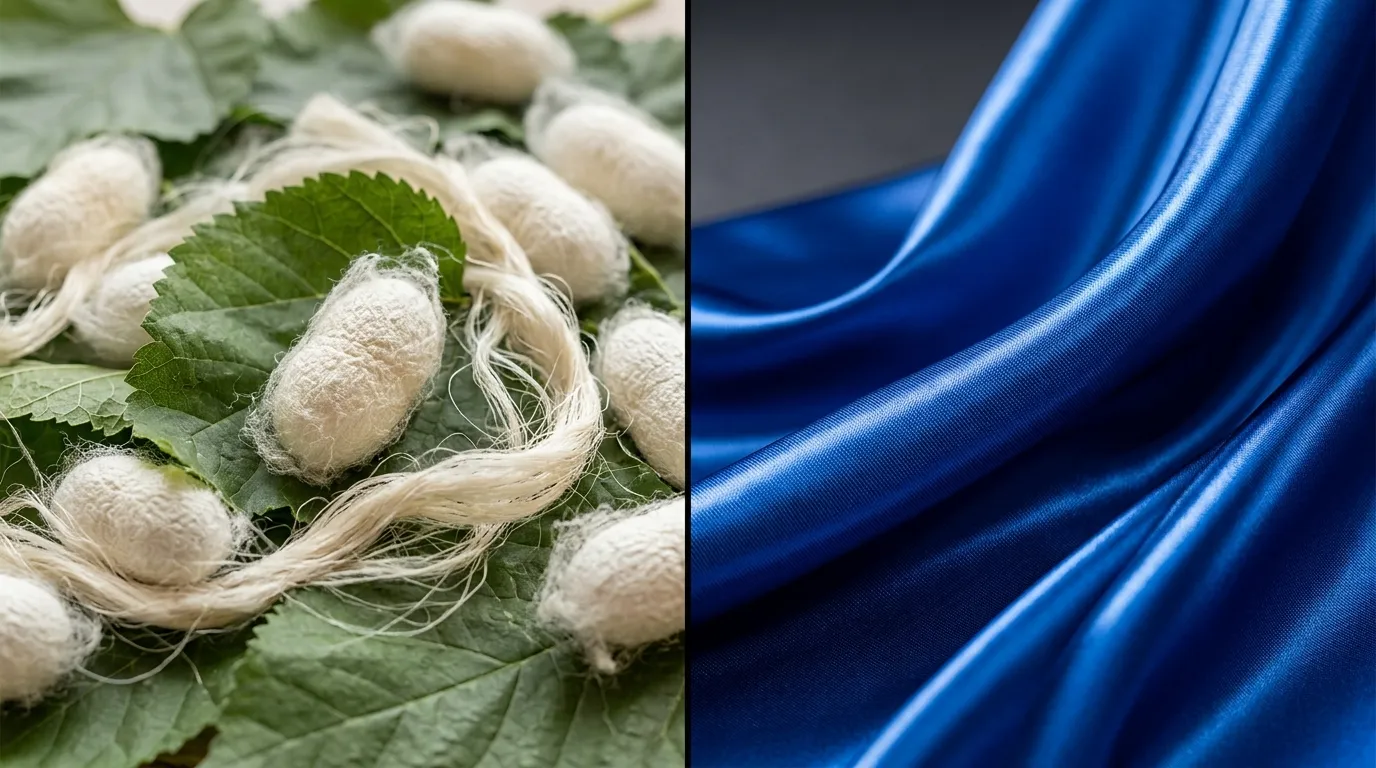
Silk is a natural fiber made by silkworms, while satin is a weaving technique that can be made from silk or from synthetic fibers, so silk is a material and satin is a fabric structure.
I once bought a beautiful shiny pillowcase labeled satin, expecting it to feel exactly like the silk scarf my grandmother gave me. It did not. It felt smooth and shiny, but noticeably different against my skin. Curious, I looked into it and discovered something most shoppers never realize. Silk and satin are not the same category of thing at all, even though people use the words as if they were twins.
Silk describes where a fiber comes from. Satin describes how threads get woven together, no matter what fiber is used. Understanding this one distinction changes how you shop, how you write about fabric, and how you avoid overpaying for something that only looks like silk. This guide breaks down the origin, the differences, and exactly when to use each term with confidence.
Silk or Satin, Quick Answer
Silk is a natural protein fiber produced by silkworms, prized for its softness, strength, and natural shine. Satin refers to a specific weave pattern where threads cross in a way that creates a glossy surface, and it can be made using silk, polyester, or other fibers.
For example, a garment tag might say one hundred percent silk satin, meaning the fabric is woven in a satin pattern using genuine silk fibers.
The Origin of Silk and Satin
Silk traces back thousands of years to ancient China, where silk production began as a closely guarded secret tied to the silkworm and the mulberry tree. Trade routes later known as the Silk Road carried this luxurious fabric across Asia, the Middle East, and Europe.
Satin gets its name from Zaitun, the medieval name for a Chinese port city famous for exporting fine woven fabric. Over time, the weaving technique itself became known by this name, separate from any single fiber type.
This history explains why silk stayed tied to a specific natural material, while satin evolved into a broader term describing a weaving method rather than a fixed ingredient.
Silk or Satin, Key Differences and Fiber Types
| Term | Meaning | When to Use | Region or Context |
| Silk | Natural fiber from silkworm cocoons | Describing genuine, high value natural fabric | Common in fashion, bedding, and luxury textile writing |
| Satin | Weaving technique producing a glossy surface | Describing fabric texture and finish regardless of fiber source | Common across fashion, home goods, and bridal industries |
A useful example: a wedding dress might be labeled silk satin, meaning genuine silk fibers were woven using the satin technique, while a budget version might be labeled polyester satin, using synthetic fiber in the same weave.
Which Version Should You Use?
Use silk when describing the actual material or fiber content of a product, especially when highlighting natural origin, breathability, or luxury status.
Use satin when describing the texture, sheen, or weave style of a fabric, regardless of what fiber was used to create it.
For clear, accurate writing, combine both terms when needed, such as silk satin or polyester satin, so readers understand both the fiber and the finish in one phrase.
Common Mistakes with Silk and Satin
Mistake: Assuming satin always means genuine silk. Correction: Satin only describes the weave. Many satin products are made entirely from polyester or nylon.
Mistake: Using silk to describe any shiny fabric. Correction: Shine alone does not confirm silk. Only fiber content confirms whether something is truly silk.
Mistake: Believing silk and satin cost the same. Correction: Genuine silk is typically far more expensive than synthetic satin, even though both can look similar.
Mistake: Writing satin sheets when the product is actually sateen, a similar weave using cotton. Correction: Check fiber labels carefully, since sateen and satin are related but distinct terms.
Mistake: Assuming all silk fabric has a glossy satin finish. Correction: Silk can be woven into many finishes, including matte styles like silk crepe or silk chiffon, not only satin.
Silk or Satin in Real World Examples
Professional email: “The sample order should specify one hundred percent silk satin for the evening gown collection.”
News headline: “Sustainable Silk Farming Sees Renewed Interest Among Textile Brands.”
Social media post: “Just switched to a satin pillowcase and my hair genuinely feels smoother.”
Formal report: “Fabric composition includes ninety five percent polyester satin and five percent spandex.”
These examples show how silk usually points to fiber origin, while satin usually points to fabric finish, sometimes appearing together for full clarity.
Silk or Satin, Data and Trends
Search interest in satin products, especially satin pillowcases and satin sheets, has grown steadily as beauty and skincare communities promote reduced hair friction during sleep. Silk related searches tend to focus more on luxury fashion, sustainable sourcing, and higher end bedding.
Retailers benefit from separating these terms clearly in product listings. Highlighting genuine silk content appeals to shoppers seeking natural, breathable fabric, while highlighting satin finish appeals to shoppers focused on affordable shine and smooth texture.
Silk or Satin Comparison Table
| Term or Variant | Meaning | Region or Context | Best Used When |
| Silk | Natural fiber from silkworms | Luxury fashion, bedding, textile heritage | Describing genuine fiber content |
| Satin | Glossy weave technique | Fashion, home goods, bridal industry | Describing fabric texture and shine |
Frequently Asked Questions
Q: What does silk mean compared to satin? A: Silk refers to a natural fiber produced by silkworms, while satin refers to a weaving technique that creates a glossy finish and can use any type of fiber.
Q: How do you use silk and satin correctly? A: Use silk when referring to the actual fiber content and satin when referring to the woven texture, and combine both terms when full clarity matters.
Q: Silk vs satin, what is the real difference? A: Silk is a raw material, while satin is a fabric structure. Genuine silk satin uses real silk fibers, but satin alone can be entirely synthetic.
Q: Is satin acceptable in formal product descriptions? A: Yes, satin is standard terminology in fashion and textile industries, though it should always be paired with fiber content for accuracy.
Q: Which version is correct, silk or satin? A: Both are correct terms, but they describe different things. Silk is about material origin, and satin is about weave style.
Q: Where does the word satin come from? A: Satin comes from Zaitun, the historical name for a Chinese port city known for producing fine woven fabric centuries ago.
Q: Can satin be used to describe bedding that is not silk? A: Yes, satin bedding is often made from polyester or a blend, and the term satin still applies correctly since it refers to the weave, not the fiber.
Final Thoughts
They often get treated as interchangeable words, but they describe two different things entirely. Silk is a natural fiber with centuries of history, while satin is a weaving technique that can use silk or synthetic threads.
Check fabric labels closely, use silk when discussing genuine material, and use satin when discussing texture and finish. Bookmark this guide so you always shop and write with confidence, and share it with anyone still unsure about difference between both.
Read More: Carpet or Rug: The Real Difference Explained

Hey, I’m Ayeza. I started wordiums.com because I kept freezing over words that look almost the same, unsure which one was right. Now I explain every word comparison in plain language, so you can pick the right word with confidence and move on.