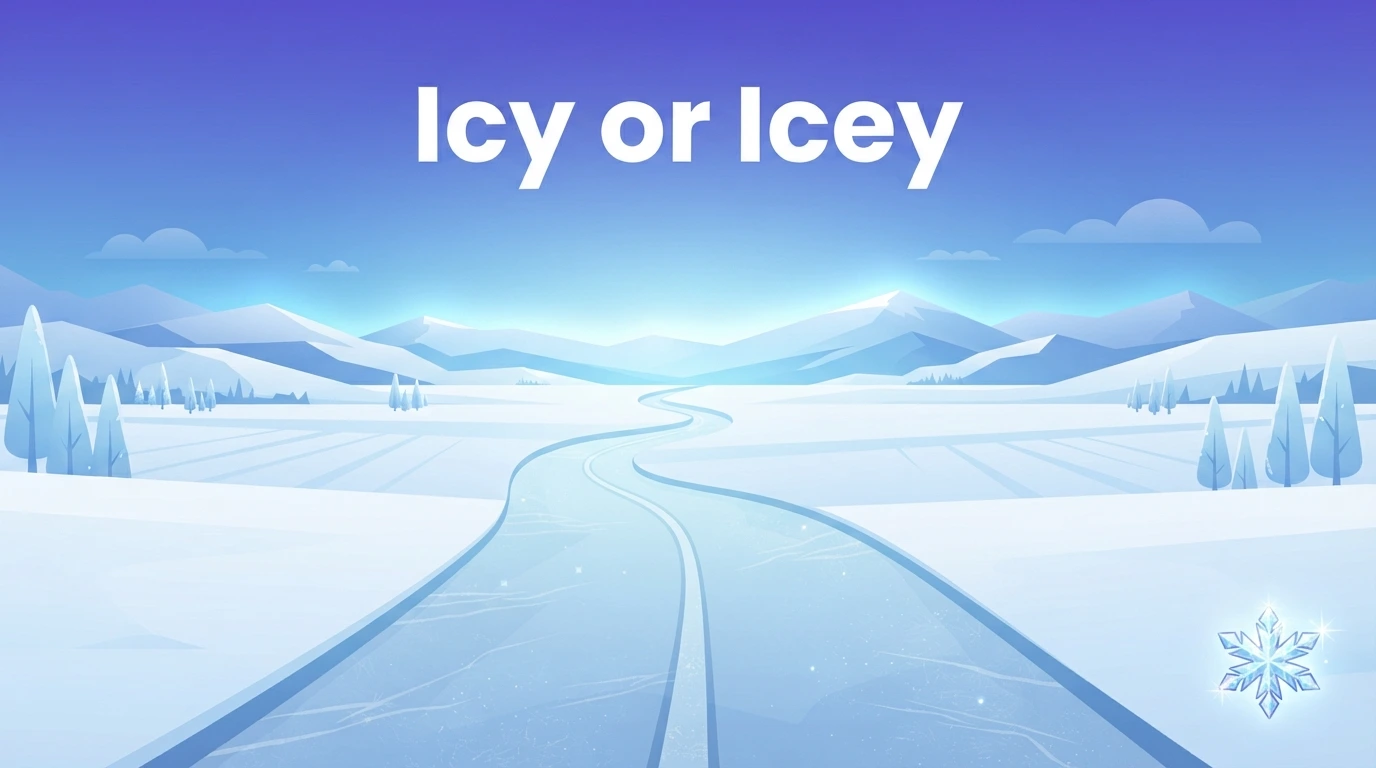
Icy is the correct spelling in standard English. Icey is a common misspelling that sounds right but never appears in any dictionary.
One winter morning, I texted a friend, “watch out, the road is icey.” She replied with a laughing emoji and one word: “icy.” I stared at my phone, genuinely unsure who was right.
Turns out, I had been misspelling a simple word for years without noticing it. And I am not alone. This mistake shows up constantly in texts, social posts, and even published articles that should know better.
The word looks like it needs that extra letter, almost like grey does with its own quiet exception. But English spelling does not always follow logic, and this is one of those small traps that catches confident writers off guard.
This guide clears up the confusion completely. You will learn the reason behind the rule, see it compared side by side with similar words, and walk away with a simple trick to remember it forever.
Icy or Icey: Quick Answer
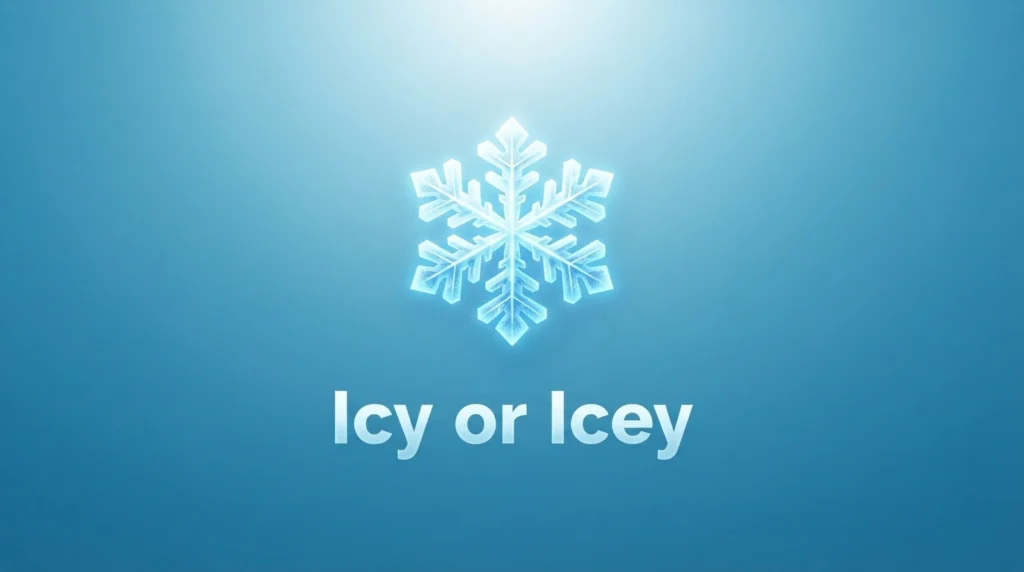
Icy is the correct, standard spelling, meaning covered in ice or extremely cold. Icey is a common misspelling with no dictionary standing anywhere in the English speaking world.
For example, “The sidewalk is icy this morning” is correct. “The sidewalk is icey this morning” is a spelling mistake, even though both versions sound completely identical when spoken aloud.
The Origin and Background of Icy
Icy comes directly from the Old English word “is,” meaning ice, combined with the adjective forming letter y at the end. This pattern shows up across a huge number of common English words, and once you see it, you cannot unsee it.
Think about rainy, windy, sunny, and cloudy. None of those words insert an extra letter before the final y. Icy follows that exact same clean, simple pattern, without exception.
So where does the confusion actually come from? Most likely, casual spelling drift. People often add letters to a word based on how it feels visually rather than its actual root. The letter e has a way of sneaking into words that already sound complete without it.
Social media and fast typing have only made icey spread further over the past decade. Spellcheck on some phones and apps simply does not catch it, especially inside quick texts or comments where nobody expects a red underline.
Icy and Icey Explained: Key Differences

| Term | Meaning | When to Use | Region or Context |
| Icy | Covered in ice, or extremely cold | Always, in every form of standard English writing | Global standard, used in weather and general description |
| Icey | A misspelling of icy | Never, in any correct or professional writing | Appears mainly in casual texting and typos |
Compare icy to other simple weather words like rainy, cloudy, and foggy. None of them use an extra letter before the y. Icy simply follows the same tidy, predictable pattern that so much of everyday English relies on.
Which Version Should You Use

The answer here is refreshingly simple, since there is really only one correct choice in every situation.
For weather reports and news writing, use icy. It is the only spelling recognized in professional journalism and published content of any kind.
For school and academic writing, use icy. Teachers and professors will mark icey as a clear spelling error every single time it appears.
For texting and casual chats with friends, still use icy. It takes zero extra effort to type correctly, and it avoids the small moment of doubt that so many people quietly experience.
For branding, product names, or social handles, icey sometimes appears as a stylized choice. That is the one narrow exception, and even then, it works only because it signals intentional branding rather than an accidental mistake.
There is genuinely no everyday context where icey is the correct or preferred spelling.
Common Mistakes with Icy and Icey
Mistake 1: Adding an extra letter out of habit Wrong: “Be careful, the stairs are icey.” Correct: “Be careful, the stairs are icy.” This happens because the extra letter feels like it softens the word visually, similar to how grey looks softer than gray to some writers.
Mistake 2: Assuming icey is a stylistic spelling choice Wrong: Believing icey is simply a modern or trendy version of the word. Correct: Icy is the only dictionary approved spelling for describing cold or ice covered conditions. Some brands and usernames use icey as a stylized name, and that usage quietly bleeds into everyday writing over time.
Mistake 3: Trusting how the word sounds instead of checking the spelling Wrong: Spelling the word purely based on pronunciation. Correct: Remember the simple root pattern, the word ice plus the letter y, nothing extra added. English pronunciation frequently fails to match its own spelling rules, and this word is a perfect example of that gap.
Mistake 4: Missing the mistake because spellcheck sometimes lets it through Wrong: Publishing content with icey left uncorrected. Correct: Manually double check weather related words before hitting publish or send. Some autocorrect systems quietly learn from frequent typing patterns and eventually stop flagging common user errors.
Mistake 5: Overcorrecting in the opposite direction Wrong: Second guessing icy so much that a writer starts adding unnecessary letters elsewhere, like spelling rainy as rainey. Correct: Trust the simple pattern once you learn it, since it applies consistently across this entire word family. This tends to happen right after someone first learns about the icey mistake and starts doubting every similar word out of caution.
Icy in Real World Examples

Professional email “Please drive carefully today, as the parking lot remains icy after last night’s storm.”
News headline “Icy Roads Cause Multiple Delays Across the Region This Morning”
Social media post “Woke up to a completely icy windshield, winter is officially here.”
Formal document “Employees should avoid the north entrance due to icy conditions until further notice.”
Every professional and public facing example above uses icy without exception, which reflects exactly how the word behaves in real published writing.
Icy: Data, Trends, and Usage
Searches for icy spike heavily during winter months, especially right after snowstorms or sudden temperature drops across colder regions. Icey gets searched often too, almost always by people trying to confirm or correct their own spelling.
This comparison gets searched most by students, content writers, and anyone drafting weather related material for school, work, or a website. Search intent here is almost entirely informational, since people simply want a fast, clear, confident answer before they finish writing.
This distinction matters more than it seems. Weather writing, school assignments, and professional emails all quietly demand correct spelling, and a small slip like icey can undermine writing that is otherwise polished and well organized.
Cheat Sheet: Icy or Icey at a Glance
- Weather reports: Always icy
- School assignments: Always icy
- Professional emails: Always icy
- Texting a friend: Still icy, no shortcuts needed
- Branding or stylized names: Icey is sometimes used intentionally
- News headlines: Always icy
- Any doubt at all: Default to icy, since it is correct one hundred percent of the time
Comparison Table: Icy vs Icey
| Term or Variant | Meaning | Region or Context | Best Used When |
| Icy | The correct standard spelling | Global, used across all English variants | Any writing at all, formal or casual |
| Icey | A common misspelling | Mostly casual texting and stylized branding | Never recommended in standard writing |
Frequently Asked Questions
Q: What does icy mean? A: Icy means covered with ice or extremely cold. It describes weather, surfaces, or temperatures that feel dangerously cold or slippery underfoot.
Q: How do you use icy correctly? A: Use icy whenever you describe something cold or ice covered, such as roads, weather conditions, or even someone’s cold personality in a figurative sense.
Q: Icy vs icey, what is the real difference? A: There is no meaning difference at all, only spelling. Icy is correct, while icey is a common misspelling with no dictionary backing anywhere.
Q: Is icey acceptable in formal writing? A: No. Formal, academic, and professional writing should always use icy. Icey will almost always get flagged as a clear spelling error.
Q: Which version is correct, icy or icey? A: Icy is correct. Icey does not appear in standard English dictionaries and should be avoided in any serious or public facing writing.
Q: Where does the word icy come from? A: It comes from the Old English word for ice, combined with the common adjective ending letter y, matching familiar words like rainy and windy.
Q: Can icey ever be used in modern writing? A: Only in stylized branding or informal social media handles, never in standard descriptive, academic, or professional writing of any kind.
Final Thoughts
This one has a clear, uncomplicated winner. Icy is correct, simple, and consistent with how English quietly forms nearly all of its weather related adjectives. Icey, by contrast, is a common but incorrect spelling that should be avoided everywhere outside of intentional branding.
Remembering the pattern makes this permanent. Icy is just the word ice with a single letter y added, exactly like rainy, windy, and sunny. No extra letters, no exceptions, no second guessing required.
Next time you describe frozen roads or a cold morning, reach for icy without hesitation, and bookmark this guide so the question never trips you up again.
Share this with someone who has been spelling icy wrong for years, they will thank you for finally settling the debate.
Explore More: Vendor vs Vender: Which Spelling Is Actually Correct?

I’m Zain. Through Wordiums.com, I write clear, accurate word comparison guides that show the difference between similar words, spellings, and phrases, so readers can choose the right word in seconds.