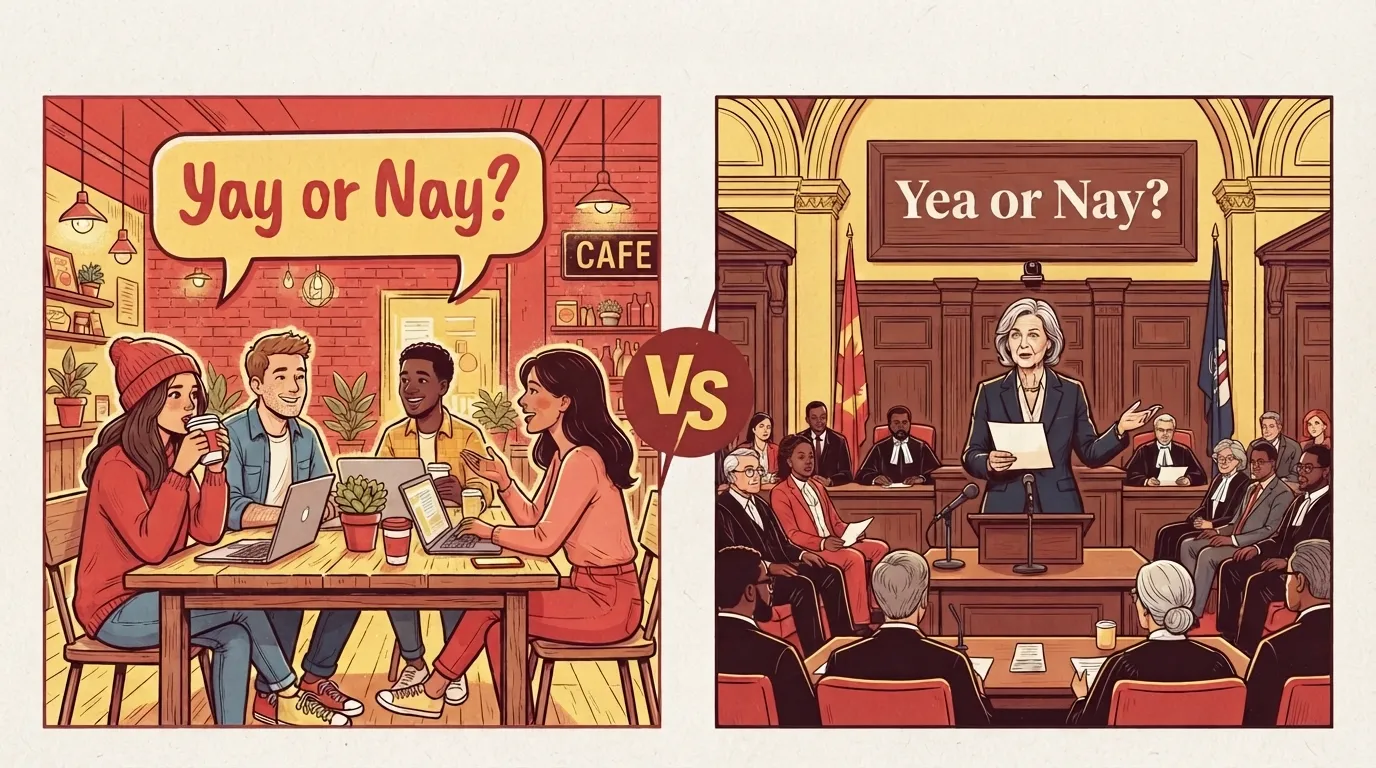
Yay or nay is a casual way of asking someone to vote yes or no on something. The more traditional, formal spelling is actually yea or nay, used in official voting.
A friend once texted me a poll asking “new logo, yay or nay?” I typed back “yay,” then paused. Was that even the right word? I’d seen “yea or nay” written somewhere in a history class about Congress voting. Suddenly I wasn’t sure which spelling was correct anymore.
If that sounds familiar, you’re not alone. Yay or nay shows up constantly in casual polls, group chats, and social media captions. But there’s a formal cousin, yea or nay, that pops up in news articles about elections and legislative votes. The two look almost identical, and most people use them without ever checking which one actually fits.
This guide clears up the confusion completely. You’ll learn where each phrase comes from, when to use which one, and how to avoid looking uncertain in your writing. By the end, you’ll never second guess this phrase again.
Yay or Nay: Quick Answer
Yay or nay is the casual, everyday version of asking for a simple yes or no opinion. You’ll see it in polls, texts, and social posts.
Yea or nay is the traditional spelling used in formal voting, especially in legislative or ceremonial contexts.
Example: “Pizza for dinner, yay or nay?” versus “The senator cast his vote: yea.”
The Origin of Yay or Nay
The word yea comes from Old English, where it simply meant “yes.” It’s been used for centuries in formal voting, especially in parliamentary and legislative settings. When you hear about a bill passing with a certain number of “yeas” and “nays,” that’s the traditional voting language still in use today.
Yay, on the other hand, is a much newer, informal exclamation of excitement or approval. Think of a child shouting “yay!” after winning a game. It has nothing to do with voting originally. It’s simply a happy, celebratory sound.
Over time, because yay and yea sound identical when spoken aloud, casual speech started blending the two. People began writing “yay or nay” in everyday polls, even though the historically correct phrase for voting is “yea or nay.” This blending is exactly why so much confusion exists today.
Yay vs Yea vs Nay: Key Differences
| Term | Meaning | When to Use | Region/Context |
| Yay | An exclamation of joy or casual approval | Informal polls, texts, celebrations | Everyday spoken and written English |
| Yea | Formal word meaning yes | Legislative votes, formal ballots | Government, ceremonies, official records |
| Nay | Formal word meaning no | Legislative votes, formal ballots | Government, ceremonies, official records |
Notice that nay doesn’t have a casual twin the way yea does. There’s no “nay” alternative spelling floating around, which is part of why the yay/yea mix up only happens on the “yes” side of the pair.
Which Version Should You Use?
For casual polls and social media, use yay or nay. It matches the light, fun tone readers expect from a quick opinion question.
For formal writing, news reporting, or anything referencing actual voting, use yea or nay. This keeps your writing historically accurate and professional.
For workplace communication, lean toward yay or nay in a casual Slack message, but switch to yes or no in anything official, like a meeting summary or a report.
For global or neutral use, when in doubt, simply write “yes or no.” It sidesteps the confusion entirely and reads clearly in any context.
Common Mistakes with Yay or Nay
Mistake 1: “The bill passed with 60 yays and 40 nays.” Correction: “The bill passed with 60 yeas and 40 nays.” Why it happens: writers default to the more familiar spelling, yay, without realizing formal voting language uses yea.
Mistake 2: “Yea! We won the game!” Correction: “Yay! We won the game!” Why it happens: since both words sound the same out loud, writers sometimes grab the wrong one when expressing excitement.
Mistake 3: “New office snacks, yea or nay?” Correction: “New office snacks, yay or nay?” Why it happens: people occasionally overcorrect, assuming yea is always more proper, even in casual contexts where yay fits better.
Mistake 4: “The committee said yay to the proposal.” Correction: “The committee said yea to the proposal.” or “The committee approved the proposal.” Why it happens: formal reporting on votes should use yea, since that’s the recognized term in official records.
Mistake 5: “It was a close vote, mostly nay’s and yay’s.” Correction: “It was a close vote, mostly nays and yeas.” Why it happens: apostrophes get added unnecessarily to plural forms, which isn’t correct for either word.
Yay or Nay in Real World Examples
Professional email: “Quick question before our meeting: keeping the current logo, yay or nay? Let me know your thoughts by end of day.”
News headline: “Senate Votes 55 Yeas to 45 Nays on New Infrastructure Bill” “Fans Weigh In: Yay or Nay on the Team’s New Jersey Design?”
Social media post: “New coffee flavor just dropped, yay or nay?? Drop your vote in the comments!”
Formal document: “Following the roll call, the motion carried with a recorded count of thirty two yeas and eighteen nays.”
Yay or Nay: Data, Trends & Usage
This phrase gets searched heavily around election seasons, when news coverage of legislative votes brings the formal “yea or nay” spelling into public view. At the same time, everyday casual polls on social platforms keep “yay or nay” trending year round.
Younger audiences and casual writers search for the informal spelling most often, usually to settle a quick debate or run a lighthearted poll. Journalists, students, and civics learners search for the formal spelling, usually while researching how votes are recorded.
This search falls mostly under informational intent, though it occasionally overlaps with entertainment or social content, especially when people are creating polls or captions.
One reason this matters now: with so much online voting, from brand polls to community decisions, getting the tone right, whether casual or formal, actually shapes how professional or playful your message comes across.
Standalone Comparison Table
| Term/Variant | Meaning | Region/Context | Best Used When |
| Yay | Exclamation of joy or casual approval | Universal, informal English | Texts, polls, social captions |
| Yea | Formal word for yes | Government, formal voting | Legislative or ceremonial votes |
| Nay | Formal word for no | Government, formal voting | Legislative or ceremonial votes |
| Yes/No | Neutral alternative | Universal English | Any context where clarity matters most |
Frequently Asked Questions
Q: What does yay or nay mean? A: Yay or nay is a casual way of asking whether someone approves or disapproves of something. It’s commonly used in quick polls, texts, and social media posts.
Q: How do you use yay or nay correctly? A: Use it when asking a light, informal question that expects a simple yes or no answer, such as “new haircut, yay or nay?”
Q: Yay or nay vs yea or nay, what’s the real difference? A: Yay or nay is informal and used in casual conversation. Yea or nay is the traditional, formal version used in official voting settings like legislatures.
Q: Is yay or nay acceptable in formal writing? A: No, not typically. Formal writing, especially anything referencing an actual vote, should use yea or nay to stay historically and grammatically accurate.
Q: Which version is correct, yay or yea, when talking about a government vote? A: Yea is correct for government votes. News articles and official records use “yea” and “nay” to report legislative outcomes.
Q: Where does the word yea come from? A: Yea comes from Old English and has been used for centuries as a formal way to say yes, especially in voting and ceremonial contexts.
Q: Can yay or nay be used in a business setting? A: Yes, but only in casual internal communication like a quick Slack poll. For official business decisions or reports, stick with “yes or no” or “approve or reject.”
Final Thoughts on Yay or Nay
Here’s what to remember: yay is your casual, everyday exclamation, perfect for quick polls and fun questions. Yea is the formal, historical word used in actual voting. Nay always means no, in both casual and formal settings, without a competing spelling to worry about.
If you’re texting friends or running a social poll, yay or nay fits perfectly. If you’re writing about legislation, elections, or anything official, switch to yea or nay to stay accurate.
Now you know exactly how to use yay or nay correctly, go try it in your next group chat or poll. Bookmark this guide so you never second guess yourself again, and share it with someone who’s mixed these words up before.
See More: Complement or Compliment: The Easy Way to Tell Them Apart

I’m Zain. I got interested in commonly confused words while helping non-native English speakers prep for writing exams, where a single misused word could cost real marks. That experience shaped how I write now: I try to explain not just which spelling is correct, but why the confusion exists in the first place, since understanding the reason is what actually makes it stick.